Wednesday, March 30, 2011

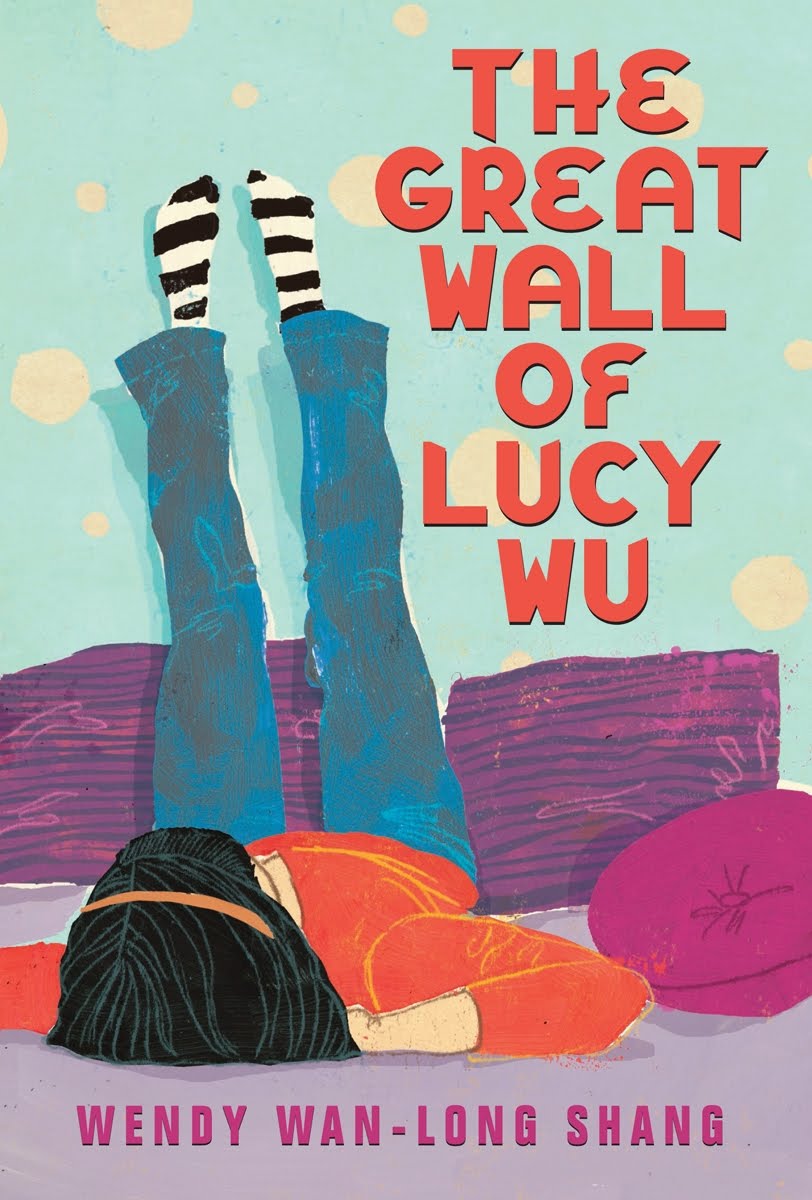
Women Writers of Color: Wendy Wan-Long Shang

Full name: Wendy Wan-Long Shang

Hometown: Fairfax, Virginia

Current location: Falls Church, Virginia

Website/Blog: wendyshang.com; I also belong to a blog of middle-grade writers called fromthemixedupfiles.com

Genre: middle-grade fiction

WiP or most recently published work: The Great Wall of Lucy Wu

Writing credits: The Great Wall of Lucy Wu, plus some legal publications. I have an article in The 4:00 Book Hook, a monthly e-newsletter on children's books, coming out next month.

How frequently do you update your site? monthly

Is your site designed for reader interaction? no

Post of note, something in particular you want readers to check out:

On the Mixed-Up Files, we really pride ourselves on covering everything related to middle-grade books. I was very proud to showcase a children's book club for teachers at my son's school. Here is the link.

Top 5 books that turned you into a writer?

Blubber, by Judy Blume: This was the first book I ever read that had a contemporary, Chinese-American character. This book taught me the importance of having characters that children can relate to.

Interpreter of Maladies, by Jhumpa Lahiri: Her prose is so delicate yet powerful. I have to say that the first time I read her work, I felt as though I was reading in a whole new way.

Take the Cannoli, by Sarah Vowell: Her work makes me laugh and think in equal measure. I would love to have that effect on a reader.

Phantom Tollbooth, by Norton Juster: For me, Juster didn't color outside the lines. He invented new colors, and molded the lines into new dimensions. Rarely a day goes by without some quote from that book popping into my head.

From the Mixed-Up Files of Mrs. Basil E. Frankweiler, by E.L. Kongisburg: Everything about this book is a marvel to me: the structure, the voice, the style. I love that in the midst of an incredible story, the author never lost sight of the hearts of the children.

100 words or less: How would you describe your work?

My work is about the modern Chinese-American experience, frequently with a humorous touch. In my book, Lucy Wu thinks she is about to have the best year of her life: she is about to rule the school as a sixth-grader and get her own room. When her dad announces that he's invited a long-lost aunt from China to stay in Lucy's room, however, she thinks that year is ruined. Lucy discovers that, just like the Chinese saying that things that look to be bad often turn out well, and vice-versa, her year may yet be wonderful.

100 words or less: Please share your thoughts on children and reading.

I believe that writing for children is a form of service. When you give a child a chance to see himself or herself reflected back in a book, whether it is by appearance or circumstance, you are telling that child, you are valued, you are not alone. When you give children the chance to see the world from a different point of view, you are also doing something valuable – you are allowing them to expand their perspective, their knowledge, their imagination and their heart.

Tuesday, March 29, 2011

Women Writers of the Caribbean - ( A Guest Post)

Educator and debut author Ashley Hope Perez was kind enough to agree to do a guest post on Women Writers of the Caribbean

Reading Women Writers of the Caribbean

There’s more to Caribbean literature than the (wonderful) well-known works like A Simple Habana Melody and In the Time of the Butterflies.

Come with me to discover the texts I teach as part of my college class on women writers of the Caribbean. These titles are not to be missed! I’ll discuss them, not in order of publication, but in the order in which I teach them.

“A Small Place” by Jamaica Kincaid (Antigua). This piece is the first text I introduce students to. I start here because Kincaid issues a forceful critique against tourism, and I want to challenge my students to find ways of reading that go beyond literary tourism. This is our st arting place for discussions of the connections between reading and ethics. The text often makes readers feel guilty, angry, and uncomfortable. We talk about why.


Prospero’s Daughter by Elizabeth Nunez (Trinidad). This is a fascinating adaptation and retelling of Shakespeare’s The Tempest. This is the first novel I teach in the course because Nunez’s critique of colonialism, valorization of the local and (re)appropriation of a master plot by a white writer are features that are pretty plain to students. This is what I call an “apprenticeship” novel that helps sensitize students to themes that they’ll encounter (more subtly) in subsequent novels.

I, Tituba, Black Witch of Salem by Maryse Condé (Guadeloupe). Here, Condé puts Tituba, a marginal historical figure from the Salem witch trials, on center stage, tracing her travels from the Caribbean to New England and back again. In addition to her reclamation of and play with the Salem history, Condé incorporates a cameo appearance by Hester Prynne of Hawthorne’s The Scarlet Letter, changing Hester’s fate in the retelling. Check out this blog for a subtle reading of I, Tituba


Wide Sargasso Sea by Jean Rhys (Dominica). This classic of Caribbean literature offers yet another instance of rewriting canonical texts, for it imagines the pre-history of the Bertha character (the madwoman in the attic) from Charlotte Brontë’s Jane Eyre. (Don’t worry; you don’t have to know Jane Eyre to enjoy Wide Sargasso Sea. The first time I read it, I hadn’t yet read the Brontë classic.) It also provides readers with an opportunity to reflect on madness as a product of heredity—or of manipulated circumstances. The power of men over women’s lives comes to the fore here.

No Telephone to Heaven by Michelle Cliff (Jamaica). One of my favorite books of all time, this novel explores identity and fragmentation at a number of levels from the national to the personal. Cliff’s masterful storytelling and stylistic finesse make this novel stand out, not merely in Caribbean literature, but in postmodern fiction in general. This is also a novel that thematizes gender identity and political violence.

The Youngest Doll by Rosario Ferré (Puerto Rico). This collection of short stories challenges readers with sudden (unmarked) shifts of perspective, cutting irony, and surreal elements that break through into otherwise realistic narratives. At her best, Ferré provokes fascination and compulsive re-reading with these feminist parables and experiments.


(Note: these stories are ostensibly translations of the texts collected in Papeles de Pandora, but having read the Spanish first, in teaching I discovered that many of the stories in The Youngest Doll have been substantially modified, their experimental edge toned down. This is apparently an authorial decision since Ferré co-translated most of the stories.)

The Pagoda by Patricia Powell (Jamaica). It’s hard to discuss this novel’s plot without giving things away since it is built around the concealment and revelation of a number of family secrets. In this novel, Powell places Asian experience in Jamaica at the center of her story. I love how Powell shows the damage people can do to one another and the possibility of healing.

The Farming of Bones by Edwidge Danticat (Haiti). I save this novel for last in teaching because I want my students to be maximally prepared to savor every aspect of it. Set in the Dominican Republic, Danticat’s novel dramatizes the massacre of Haitian workers in the D.R. during Trujillo’s dictatorship. Prepare yourself to gasp over Danticat’s exquisite prose.


Thanks for having me as a guest. Happy reading, everybody!

Ashley Hope Pérez is a passionate teacher and student of literature. She is also the author of two YA novels. What Can't Wait was just released by Carolrhoda LAB on March 1; look for The Knife and the Butterfly in 2012. She blogs about books, ideas, and writing. You can check her out online at Ashley Perez and find out the secret behind her tattoo, why she dropped out of high school at 16, and how she finds time to write while chasing her 11-month-old, Liam Miguel, who has an obsession with cat food and cabinets.

I loved Perez's debut, What Can't Wait. My review

Monday, March 28, 2011

Hello Kitty Must Die - Angela S. Choi

Hello Kitty Must Die by Angela S. Choi
28 yr old Fiona Yu is a corporate lawyer, living with her parents in San Fransisco. Fiona hates the hello kitty stereotype, a well mannered Asian American woman. The story begins with Fiona having made the decision to take her own virginity. Yes, it sounds strange because it is. This is actually mentioned in the book summary. I didn't know how this scene was going to materilize but my continuing to read would depend it.


Fiona was still a virgin at 28 in an effort to respect her parents wishes. Finally tired of the importance placed on a woman's virginity, Fiona decides to make a statement.

"I had conquered myself. I wanted to carve a notch on my own headboard. I had picked my own cherry. I had been deflowered by my own hand. I would forever own myself, my honor, my all. My virginity will always be mine.

I grabbed a piece of square cotton gauze quickly and readied myself to soak up my family's honor. I wanted to capture every drop like that man did in Memoirs of a Geisha. The collector with his glass vials of Asian virginity in his black bag. I would be my own collector. A collection of one.

When Fiona discovers she doesn't have a hymen, she feels cheated. Fiona makes an appointment with a Dr. Sean Killroy, who specializes in hymen restorations.

Fiona realizes she once knew the doctor, as Sean Deacon in middle school. The two were friends until Sean sent away for setting a girl on fire. Sean tells Fiona not to waste her time with the surgery. Fiona and Sean fall into an easy friendship. Soon Fiona figures out that Sean is also a serial killer. They never talk about this part of his life. As a criminal lawyer Fiona knows never to asks questions she doesn't want the answers to. Fiona learns a few things from her old new friend. Fiona's father sets her up on blind dates with Chinese man she has no interest in. The dates never go well.


There are probably several reasons why I should'n't like Fiona but there's something about her. As much as I enjoyed this story I know its not for everyone. Looking at other reviews, I noticed some readers didn't care for Fiona's negative stereotypical view of Asian men. I can see where they are coming from but I am still pro Fiona. Since the whole novel is a bit over the top and should not be taken seriously. The one non Asian male was a serial killer with issues.


Hello Kitty Must Die was a lot of fun and very entertaining. A great choice for anyone who enjoys dark humor.

Friday, March 25, 2011

In the Time of Butterflies - Algonquin Book Club

I am currently reading In the Time of Butterflies by Julia Alvarez and loving it. When I found out it was the first book selected for the new Algonquin Book Club, I decided to finally pick it up. Some novels are classics for a reason, In the Time of Butterflies is one of them. Looking forward to watching out the book club webcast, author Edwidge Danticat interviews Julia Alvarez about In the Time of Butterflies. The event was held at a Miami bookstore and sold out, 250 tickets.

Tuesday, March 22, 2011

When A Novel is Written And No One Is Around to Read It

At the end of Feburary, I said I would buy someone their book of choice if they named 10 female authors of color, who have written mysteries since 2009. I didn't think I would have to payout. But I was wrong. The winner wanted Redemption in Indigo by Karen Lord. (an excerpt) I got something, an introduction to a mystery series. The latest is Blood Hina by Naomi Hirahara. (an excerpt) I won't get a chance to read check this out anytime soon but I like having it on my reading radar.

Novels written by female authors of color are at a disadvantage readers simply aren't hearing about them. That old riddle comes to mind " If a tree falls in a forest and no one is around to hear it, does it make a sound"
Most of the novels I've discovered by female authors of color have been thanks to other bloggers. I can't even remember the last one I've learned about because of a major publication review. Vida, Women in the Literary Arts recently released the very skewed amount reviews of male and female authors in several major publication. I didn't think it was going to be good but that's just ridiculously awful.

Friday, March 18, 2011

Weekly Links: Color Me Brown

A weekly compilation of interesting links we (the staff at Color Online) discover. Leave a link in the comments to your own review/interview/discussion post/guest post/anything having to do with literature/literature & race/literature & gender or to another post you found that you want to spotlight.


The Best Damn Creative Writing Blog ranked the Top 25 Most Influential Black Fiction Writers on Twitter

Below you will find a gallery of 25 published black fiction writers who are not only influential, but who are redefining what it means to be a successful black writer in the 21st century. We scoured hundreds of Twitter lists, websites and blogs to find black writers who are using their online presence to enhance the literary conversation as a whole. These aren’t writers who are simply concerned with promoting their own brand. They are artists, speakers and teachers–hailing from every genre in the literary world. Most of them have composed thousands of tweets, and interact with their readers everyday (and sometimes well into the night). Some offer advice. Some talk about their families. Some share funny pictures and make jokes.

Author Carleen Brice has an interview with debut author Karen Simpson, whose book Act of Grace was recently published

Act of Grace is loosely based on an incident that happened several years ago in my hometown during a Klan rally. When what was supposed to be a nonviolent protest became violent, a young black woman saved a white man, (whose was simply wearing a confederate flag T-shirt), from being beaten by throwing her body over him. She got involved because she believed he had the right to his beliefs even if she and others felt he was wrong. For weeks after the event people argued about whether she was a guardian angel or just crazy. My opinion was that she was a compassionate and brave person, worthy of admiration and respect for living up to her values. Five years after this rally I had a very vivid dream about a young woman named Grace and during the dream she yelled out what is more or less the first line of the novel.


Do you know who Effa Manley is? If not read on, this is a guest post by Audrey Vernick at KidLit Celebrates Women's History Month

context—is always my greatest concern when writing nonfiction for children. It requires a precise touch; you can’t condescend, but you have to be mindful of the fact that young readers often lack the historical understanding required to fully appreciate a given narrative.

When I discovered Effa Manley’s story in 2006 and shared it, with great excitement, with the baseball- and book-loving people I know, adults, they understood its appeal immediately. A woman in baseball? In the 1930s and ‘40s? An African-American woman?


Blogger Edi Campbell talks about how librarians are constantly informing and transforming over at Women Doing Literary Things

I am always nagged by the question “Do I do what I do in ways to attract others to want to do it?” Do the students who see me in the library simply see me as the lady who checks out books or do they realize how involved the work of a school librarian really is?

There is no doubt that I love being a librarian. I love the possibilities, the challenges, the ability to use my creativity and intelligence. I love growing through what I do. It is sad that so many teachers don’t realize how much they can enhance their teaching by pairing with a librarian who is willing to co-teach with them, and it is frustrating that administrators often see us as no more than glorified clerical workers. Perhaps this is our own fault–often we find the need to prove our own worth by having every imaginable school supply for staff and students so that we can be seen as indispensable.


Helen from Helen's Book Blog reviews Not Easily Washed Away by Anon Beauty and Bryan Arthur Levene

What this book does well is show the psychological affect of abuse on the victim and even those around her. Laila cannot get herself out of the cycle of abuse that goes on and on and on. She is somehow drawn to her father despite the abuse, doesn't tell anyone about it for years (so common), and it affects her every move, mood, successes and failures. It broke my heart that she didn't have anyone that she felt she could turn to; every adult in her life didn't notice, chose not to notice, or wasn't really available. Laila has no one to save her until she is in her twenties! For this aspect, I think books like this one are important: they raise the issue of abuse and it's ramifications across an entire family.

Comment, share links and have a great week!

Tuesday, March 15, 2011

Algonquin's New Book Club Series

Alqonquin Books is launching a new book club series beginning March 21.

We’ll be featuring four Algonquin Book Club selections a year for dynamic literary events held around the country and simultaneously webcast on our site. For each event, an Algonquin author will be interviewed by a notable writer.

I am mentioning the book club at Color Online because in this inaugural year two of four books are written by female authors of color. Its not often that women authors of color make up fifty percent.

March 21 Julia Alvarez (In the Time of the Butterflies) interviewed by Edwidge Danticat, author of Brother, I’m Dying

April 26 Sara Gruen (Water for Elephants) interviewed by Kathryn Stockett, author of The Help
August 18 Heidi Durrow (The Girl Who Fell from the Sky) interviewed by Terry McMillan, author of Getting to Happy

October 20 Robert Goolrick (A Reliable Wife) interviewed by Patricia Cornwell, author of Port Mortuary

Anyone who has read In the Time of Butterflies is encourged to Join the Conversation.


Want to chat with other readers about In the Time of the Butterflies? Each week, we’ll be giving away Algonquin Book Club tote bags, autographed Julia Alvarez books, Advance Review Copies, brand new titles hot off the press, and other swag to people who join in the conversation by:

Posting comments on the In the Time of the Butterflies discussion section on our Facebook page.
Sharing thoughts on Twitter using #AlgBookClub.

Contributing feedback to our In the Time of the Butterflies book club discussion blog posts leading up to the event.

Do you have a question for Julia Alvarez? Submit it to the discussion section on our Facebook page, or post about it on Twitter using #AlgBookClub, and yours may be asked during the March 21 live webcast, where you’ll be able to chat with other viewers from around the world.

Check out the user friendly Algonquin Book Blog to learn more about the book club series.

I've read Alvarez before but not In the Time of Butterflies. Now I am looking forward to reading it though Alvarez is going to have to get in line behind Tayari Jones. Tomorrow I will start Jones upcoming novel Silver Sparrow which is published by Algonquin books.

Monday, March 14, 2011

How Lamar's Bad Prank Won a Bubba-Sized Trophy

How Lamar's Bad Prank Won a Bubba-Sized Trophy by Crystal Allen 2011
Favorite quote "But around two o'clock those curls droop and dangle as if Sergio's growing black noodles on his forehead and girls love that too. Once I tried some of that mousse stuff in my afro. I squirted a pile of that extra hold foam in my hand and rubbed it through my hair. For ten minutes, I waited for black noodles to dangle on my forehead. Instead my afro held an old-school slant as if me and Frederick Douglass had the same barber." Lamar pg. 24

Don't ask me why but the above quote tickled me pink, I actually burst out laughing. well ok, I know why. I've always been amused by Frederick Douglas's' hair, extraordinary guy, but oh man, that hair. *shakes head* Reminds me of Cornel West too. Anyway this book is about Lamar who is the baddest, maddest bowler at Striker's Bowling Paradise. He is King of Strikers. Sure Lamar is one of the best bowlers around, but he's not so great with girls, in fact he's constantly striking out with them. While Lamar is doing all his bowling, he also has to deal with his older brother, Xavier the Basketball Savior. Xavier is revered in their hometown of Coffin, Indiana and Lamar's father is quick to go to Xavier's basketball games and go over strategy with him, but it's been years since he bowled with Lamar. Lamar's tired of being ignored so when bad boy Billy Jenks invites him to take part in his bowling hustle, he accepts. Here's a way to make enough money doing something Lamar loves in order to buy a Pro Thunder (expensive pro ball) and maybe even impress his hero, famous bowler, Bubba Sparks. Oh and Lamar just may get the girl.

Some of the 'lingo' is rather cheesy in this book. In fact, at times it seemed outdated. On the very first page Lamar is listening to his best friend Sergio 'bump his gums'. I've never heard that expression before so I asked my dad who knows a lot of slang. He said that expression was older than he was (he grew up in the '80s), but hey, maybe it's popular in Indiana? There are a few other examples of really cheesy dialogue/comebacks but in the end, I think it all adds to Lamar's charm. I was amazed at Lamar's confidence, but being totally honest, it's not at all surprising. I think (for some reason) it's a lot less surprising to see a young and confident main character. In middle school, I think many guys think they are invincible, whereas many girls are a bit shyer. Regardless, Lamar reminded me of my brother and all the other young guys I know who love to trash talk. Although I did think Lamar's constant strutting was a bit much. The author juggles a lot of storylines and I do think the ball was dropped a few times. Each storyline is interesting and starts off well developed, but a couple were quickly wrapped up, much of the action occurring off the page (*cough* Sergio and Tasha *cough*). Lamar and his father clearly have issues they need to work out and everything seemed to get really happy really fast, but Lamar is just so gosh-darn adorable that you can't help but want him to have a cheesy ol' neat ending.

As you can probably tell, I love Lamar. I want to meet Lamar (actually I've already met Lamar and been annoyed by him but guys like Lamar seem less annoying in books). Lamar is one of the most well rounded characters I've come across. He has seriously debilitating asthma and he managed to tug at my heartstrings when he wanted to play soccer to impress a girl (Makeeda), but his doctor said that based on his health that was just not possible. I love soccer so I was able to sympathize with wanting to play (just not for the same reason) and I would be crushed too if I was told I couldn't play because of asthma. Lamar has two personalities, at home he is quiet, afraid of his brother, trying to help out his dad anyway he can since money is tight. Xavier borders on only being a jerk, with no shot at redemption, but there are enough minor details given to make Xavier slightly more well rounded. Lamar lives in absolute terror of X and it's not unjust, X has anger management and refuses to take his medication. But X's anger management is not used as an excuse for his meanness towards his brother and I appreciated that X does not get off easy. A person can only take so much before they snap and Lamar's breaking point is realistic and frustrating. Readers will be covering their eyes hoping that Lamar will not actually go through with his plan (encouraged by Billy Jenks), but unable to look away.

How Lamar's Bad Prank Won a Bubba-Sized Trophy is a jolly, globful of laugh-loud (as Lamar would say) read that still manages to effectively portray more serious topics. Lamar's mother has died and his father has not exactly been a comforting presence to either of his boys. It was refreshing to see a contemporary book where the father wasn't outwardly cruel, instead Lamar's father is drowning. He's so busy working not just to keep food on the table, but to pay for a few luxuries. Lamar is working class/middle class, he's not going to go hungry, but his dad works a lot to make sure Lamar can bowl and Xavier can continue to play basketball. Unfortunately, he doesn't help Lamar with much else. There are underlying class issues as well. Lamar's best friend, Sergio is rich and he can't understand why Lamar joins in Billy's bowling hustle. But many readers can understand it. Sergio gets a lot of extra things, pocket money, nice clothes, two loving parents, etc. Lamar has his bowling pass and the same old clothes, who wouldn't get tired of always being around someone who has so much more? I had feared that Lamar would fall into a pity me trap since he seems relatively innocent but he gets himself into some severe (well severe for a thirteen year old) scraps and he is held accountable. The consequences kind of stink, even though they are realistic. In addition to Lamar's trash talking about his bowling skills (he's so proud of his bowling, awww), his falling in-like with Makeeda is great (it's so wrong but I almost cried when he saw Makeeda who has apparently changed significantly since he last saw her and he called her 'Fivehead' to her face. After he tried to step to her. Oh Lamar :) I want more books like this. Funny with a more unusual sport played and a diverse cast. Sergio is Latino, Lamar is Black, but their story is universal. In fact, there are only slight hints that Lamar is Black and I love that.

This review originally ran @ Reading in Color

Saturday, March 12, 2011

The Tragedy in Japan (Asia In My Heart)

My heart goes out to everyone in Japan. The earthquake that hit was the fifth largest in history and then came the Tsunami.

It fills me with so much hope to know that so many countries are sending search and rescue teams to Japan I really wanted to show the piece reporter Miguel Almaguer did for msnbc about the search and rescue teams but I simply couldn't get it to load. Whenever thinking about how much Japan has lost gets to be too much, I will return to Almaguer piece and remember how many lives will be saved.

The Attorney General lists a few charities that will accept your donations to help Japan's relief events. Of course the Red Cross is one of them. That's where my donation is going.

Thursday, March 10, 2011

CMB: Color Me Brown Links

If you already know what Color Me Brown links are, skip this part and get to sharing and commenting! If you are new hold on a sec. Color Me Brown (CMB) links are ones relating to race, literature, class and gender. Sometimes all of the above. Usually they are are about race and/or gender but almost always literary-based. I love compiling the links and getting to shine a light on posts that I think are fantastic or new ones that others share with me.


Sylvia at What If Books talks about the prevalence of racism in speculative fiction.

I've heard the argument that speculative fiction addresses the problems of racism because it often explores issues of xenophobia, bigotry, segregation, et cetera with humans vs. elves, aliens or mutants. And I think that's great! That's what speculative fiction is all about, exploring the human condition by examining it through a different lens. But I have to wonder, why is it usually white humans vs. elves, aliens and mutants? Where are the humans of color interacting with those elves? Are we to assume that the hairy monster is a person of color? Or that the default skin color for a hero is pale? If POC even exist, they are sidekicks, villains, spear-carriers. They are not the heroes. They don't get the limelight or the screen time. How can one say that these stories address racism when POC simply don't exist, or are restricted to the token sidekick? Addressing xenophobia is not the same as addressing racism; it's even worse because it ignores the problems of real life POC.

Mitali Perkins highlights 3 Border-Crossing YA/MG books

In a poignant, funny, and unforgettable middle-grade novel called Inside Out and Back Again (HarperCollins, March 2011), Thanhha Lai remembers how her family escaped Vietnam before the fall of Saigon. American and Vietnamese characters alike leap to life through the voice and eyes of a ten-year-old girl—a protagonist so strong, loving, and vivid I longed to hand her a wedge of freshly cut papaya. This tenderly told tale transports readers to the time immediately after the Vietnam War and sheds light on the life of young people displaced by war.

Charlotte honors the women of the Ivory Coast

I had a light hearted post in mind for this evening in honor of International Women's Day, which is today....but then I read the news.

Last Thursday, in the Ivory Coast, thousands of women marched peacefully to protest the dictatorship that has clamped down on their country. They were met by the army, and were fired at. Seven women were killed.

From the Associated Press article I read: "The brutal slayings last week occurred when soldiers in armored personnel carriers opened fire on a crowd of female demonstrators who were armed with nothing more than tree branches, symbolizing peace."

Since then, fear of the army has kept the women from marching again, until today. Today, International Women's Day, they took to the streets again, knowing that they would be facing the guns that had fired on them last week
.

A review of Jazz in Love at Amaterasu Reads

This book is a thoroughly delightful mix of a unique culture, teenage angst, humor and romance. You want a real protagonist with real life problems? Jazz is here. It can't get anymore real than what Jazz went through in this book.

For once I am glad I am brought up the way my parents did. They're strict most of the time, but as I grow up, I learned that whatever they were doing is for my own good. Jazz learned that lesson the hard way. She's a member of the advance program in her school, bullied because of her intelligence when she was younger, and along with the impeccable school record comes the expectation for her to be the perfect Indian daughter as well, which she is so not.


I guess when you knew what it feels like to have total freedom, you'll probably want to feel it all the time. The restriction Jazz feels and experiences comes from her very own culture, deeply rooted in her family's ways and tradition and its not something bad.


28 Days Later has ended but since I haven't linked to all the interviews yet you will see them for quite some time! Check out this interview over at The Brown Bookshelf with Jewell Parker Rhodes

You’re an award-winning author of novels for adults. On your website, you share that writing a children’s book is a dream come true for you. Why?

My childhood was difficult. Books and my Grandmother’s “porch stories” stirred my imagination and kept my spirit alive. I always wanted to write a story that perhaps, one day, would inspire a child when they needed it most.

You wrote your first children’s book at eight years old. Here’s what you say about it on your website: “It was a very thin book, bound in yellow construction paper, and illustrated by me!” How did that early experience put you on the path to publication?

My teacher brilliantly arranged for me to read my story, “The Last Scream,” to my elementary school classmates. It was an amazing experience to see, feel, and hear my classmates’ responses. I had always valued the connection and communication I felt with books and with different authors, but reading to my classmates, I felt the power of my own storytelling.

As much as I try to be everywhere at once, I'm sure I missed some great links. Share them in the comments!

Wednesday, March 9, 2011

Women Writers of Color: Isabel Wilkerson

Full Name: Isabel Wilkerson

Birthplace: Washington D.C.

Website: IsabelWilkerson

Genre: Narrative Nonfiction

Most Recently Published Work: The Warmth of Other Suns


How frequently do you update your site? The website is updated about once a month. I'm hoping to update more often. Facebook is updated several times a week.


Is your site designed for interaction? The site is not currently designed for interaction. That is a top priority in the coming months. Please check back soon.

Can you tell us a little about The Warmth of Other Suns?

The Warmth of Other Suns is a work of narrative nonfiction about one of the biggest underreported stories of the 20th Century: the Great Migration of six million African-Americans from the South to the North and West throughout much of the century. This migration was a defection from a caste system that controlled the lives of everyone in the South until it was finally dismantled after the civil rights era. This migration changed the country North and South and reshaped American culture as we know it.

In "The Warmth of Other Suns," the story of this migration is told through three people who set out for New York, Chicago and Los Angeles along the three main migration streams out of the South. They each left under different circumstances, for different reasons, from different states, during different decades and their lives unfolded in different ways in the New World.

I don't read a lot of nonfiction but I loved The Warmth of Other Suns. When I finally picked it up I couldn't put it down.

How often do you hear similar sentiments from other fans?

Thank you for the kind words about the book being hard to put down. I hear that all the time, and it warms my heart to know that all the work that went into making the stories come alive was worth the effort. Another thing that people say is that they sometimes have to put it down and contemplate what they have just read because parts of the book -- or rather, parts of fairly recent American history -- are so difficult and at times, wrenching.

They also note the funny and ironic parts of the book that come through because each of the protagonists, despite the hardships they faced were keen observers of human behavior and had a great sense of humor. Others have said they were sad as they neared the last pages because they had grown to love the three characters and did not want the story to end

What's the key to writing engaging nonfiction?

I think the key to writing engaging nonfiction is, first, to have a passion for the subject because you will need it to get through all the hard work this entails. Second, finding fully realized protagonists who are dedicated to the truth of their experience, through whom to tell the story, because in nonfiction, you can't make it up!

Finally, telling the story as a narrative -- meaning a character-driven unfolding of things with a beginning, middle and end, rather than a dry recitation of facts based on categories or subject headings. This helps draw the reader in and stay with the story to see how everything turns out

African Americans mass exodus out of the South during Jim Crow changed the landscape of America, yet your debut is the first to focus solely on this movement. Why do you think that's so?

There are other books, most of them scholarly or focused on the economics or politics or social implications of the Migration, but few that allow us to hear the voices of the people who lived it or of that explore why and how they made the journey and the sacrifices and costs of doing so.
One reason the story hadn't been told is that the people themselves didn't talk about it, even with their children and grandchildren -- it was so painful, and many had put it in the past.

Another reason is that it went on for so long that it was hard to grasp. Reporters who might have been there at the beginning of it weren't around at the end of it to put it in perspective.
Also, from the early stages of the Migration, those who wrote about it focused on the immediate effects of it -- the overcrowding, the emergence of ghettos as the people were restricted and hemmed in, the health issues -- while not paying much attention to the people themselves and what had propelled them to make this leap of faith. So their lives went underrecognized for decades, until now.

When telling customers about the Warmth of Other Suns, I'll mention the interview you did with NBA legend Bill Russell. They understand that Russell would've never won 11 championship rings, integrated the Boston Celtics or even played in the NBA if his parents didn't migrate out of the south.

After referencing Russell's story, I can almost see when it clicks and customers truly understand the significance of this migration.

When did it click for you?


It clicked for me when I was exposed, in fairly rapid succession before embarking on the book, to two depictions of immigrant life in America: (1) Amy Tan's "The Joy Luck Club" and (2) the Barry Levinson film "Avalon." I identified with the struggle between immigrant mothers in "The Joy Luck Club" who had left the Old Country and sacrificed everything so that their daughters could grow up free but also with the daughters negotiating life in a New World. I wondered why there weren't more works exploring that same human response to the Great Migration within our own country.

When I saw the film "Avalon" (a classic immigrant story of a man who builds a life from nothing in the New World of Baltimore but whose children grow up not understanding all that he endured), I thought to myself that if you changed the point of origin from eastern Europe to the American South, it would describe the people I was surrounded by growing up in Washington, D.C. I knew that there had to be great stories of what people who had journeyed from the South had gone through. And there were.

A book that's about everything from families, life choices to possibility, is guaranteed to be an emotional read. Even more so when it addresses the history of race relations in America. I couldn't help but get angry when African Americans faced so much injustice in the South and the North. Or sadden to see Irish, Italian, Polish, and Russian immigrants, pitted against African Americans.

While writing did you embrace the inevitable emotions?

Whenever I would first come across some absurdity of the Jim Crow caste system (like black and white people being forbidden to play checkers together) or the unbelievable acts of brutality, I had the same feelings of shock and sadness as anyone would have. But I was on a mission to tell this story and to get it out to the public, so I had to immerse myself in it to try to understand it and to make it come alive for the reader. I channeled the natural human reaction to the things I was discovering into the energy needed to tell the story. It propelled me to give it my all because of what the people had endured. And the desire to tell the story with depth and intregrity gave me the distance and perspective I needed to complete the task.

Can you tells us where the title for the book came from?

The title comes from a passage I discovered in the footnotes of the current annotated version of the autobiography of Richard Wright. He had written the passage in haste because the second half of his original manuscript had been rejected, and he had to quickly come up with a new ending if it were to get published. The circumstances forced him to distill hundreds of pages into a few paragraphs. He emerged with clear, sharp language that is sheer poetry and that expresses the fears, hopes and longing of anyone who has ever had to embark on a life-altering journey with no guarantees as to what might happen. The book had been without a name or title until that point. When I discovered that passage, I finally had both.


The Warmth of Other Suns was very well received and garnered many top honors. It won the National Book Critics Circle Award for Non Fiction

It was a Publishers Weekly 10 top book of 2010, a New York Times 10 Best Book of the year. It's is a wonderful and much needed addition to our American history shelves.

Tuesday, March 8, 2011

Half World

Half World by Hiromi Goto, illustrated by Jillian Tamaki 2010
Viking/Penguin Group

Melanie Tamaki is fourteen years old, an outsider at school and struggling to make ends meet with her mother. Melanie's mother clearly loves her, but she tends to forget to run errands and can't hold down a job, and she has trouble holding down a job. One day, Melanie comes home to find that her mother is missing. She has been kidnapped by the gruesome Mr. Glueskin and taken back to the Half World. Melanie must save her mother and so she makes the frightful journey into the Half World.

Melanie is chubby, dubbed a 'slow learner' in school, and so she is bullied. I never felt connected to Melanie though. I sympathised with her being made fun of, but that was about all I felt for her. Sympathy. We don't learn much about Melanie's life, all we know is that she is poor, picked on and loves to read. I wanted to learn more about her history. I also would have liked to know where her story took place in the real world (my guess would be Canada just because that's where the author lives but I'm not sure). Melanie seemed rather immature too, maybe it's just me thinking I was oh-so-mature when I was fourteen. I also NEEDED more story about her parents and the other secondary characters Melanie runs into. I realize that Melanie didn't really have time to learn the life story of all the people she met but I wished we had gotten a better glimpse of all the characters. Perhaps a prequel is needed? Or a sequel? I would read it! I could take or leave the illustrations. They were nice, but they didn't contribute a great deal to the story. However I loved that the illustrator never drew the creatures of the Half World that were described in such vivid and stomach-churning detail (keep in my mind, I get scared easily so this was good for me). This allowed the reader to imagine the characters and I think that works better for this novel, the creatures are YOUR worst nightmares.

I did admire Melanie's soft power. Melanie is brave because she has to be, but like any teenager, she's utterly terrified of Mr. Glueskin and fears for the safety of her mom. Yet Melanie doesn't make any grand heroic gestures, she pauses and really weighs the consequences. She resists doing what she knows she needs to do. She's SCARED and that's normal and did make her a bit easier to relate to. Another favorite quote of mine that shows her power: "How much can a person bear? she thought hollowly.
The silence of the entire penthouse floor was profound. Only the steady beating of her foolish heart.
As much as she had to, Melanie thought grimly
." (pg.121) In order to enter the Half World, an unpleasant task is required (and it's rather random, I wonder if the particular body part is meant to symbolize something?). The Half World is the place where mortals go after dying, it's a sort of dream world. In the Half World, mortals must relieve their greatest trauma they experienced while living (also known as the Realm of Flesh) until they are able to resolve the issue. It reminded me a bit of Purgatory. There are three worlds: the Realm of Flesh, the Half World and the Realm of Spirit (which is like Heaven in my mind). I was reminded of a recent post at The Enchanted Inkpot called Lost in Translation which talks about how symbols used in fantasy in the West can mean different things than in the East. For example, in Half World, I think crows are meant to be a good omen, but in Western culture, crows are a bad omen. I did some research and found that crows in Japan are thought to be a sign of the gods and thus are held in high regard.

Half World is a splendid book. The world building is excellent, the characters and scenes described are grotesque and yet completely enthralling. The action is fast-paced and Melanie is not the typical heroine who can do anything and has mysterious magical powers. She's mostly normal and her feelings of terror at being in the Half World and facing the dreadful Mr. Glueskin (and his glue-y tongue, yuck!) are ones that I could relate to as a teenager. While I think there is a lack of character development and back story, I'm ecstatic that I can confidently recommend a YA fantasy with a multicultural cast (or just a great fantasy read) and strong females who are not the typical 'warrior'. In fact, most of the women in this book are fierce but they would be considered fragile, their power appears almost out-of necessity, the adrenaline kicks in and then they harness this new found strength. Also, I think it's a bonus that this book has no hint of romance, instead it focuses on a strong mother-daughter bond and that is absolutely refreshing. Melanie starts out too dependent on her mother and she becomes more independent and at the same time her bond with her mother is strengthened.

This review originally ran at Reading in Color.

Read our interview with the author

Monday, March 7, 2011

Miss Scarlet's School of Patternless Sewing

Miss Scarlet's School of Patternless Sewing by Kathy Cano-Murillo

Scarlet Santana is going after her dream of making it big in the fashion world. The Santana's are a family of engineers. Scarlet's parents and two siblings, can't understand her decision to forgo her two advanced degrees to work in fashion.

Scarlet runs a very popular blog called Daisy Forever.com (magical musings about love, beauty & fashion inspired by the life of Daisy de la Flora)

She is finally accepted into an exculsive design program in NYC, that's been known to launch careers. The program which was orignally started by Daisy de la Flora is now being run by her nephew, Johnny "Scissors" Tijeras.

To pay for the program Scarlet teaches a small group of students how to sew without using patterns. One of her students is Mary Theresa, a workaholic that wants everything done her way. Mary Theresa hopes taking this class will help her marriage.

Scarlet made this story for me. I really liked her determination and it was obvious how much she loved fashion. Her blog entries were great.

"My Nana Eleanor, an educated activist for all thing threaded, woven, and stitched, taught me early on that every curve of a woman's body has a three part novella to tell. And to fully appreciate the fleshy package God gave us, we must tune in measuring tape in hand to discover the tragedies and triumphs that exist from the top of our tresses to the edges of our toenails. I sure did. My body's secrets made me sob as much as cheer. I empowered myself to dissect my frame and stitch my own wardrobe from scratch. "

Mary Theresa is at first closed off to Scarlet's offer of friendship, eventully welcomes it. Scarlet's small sewing class gets very close. They wants to see Scarlet succeed and they all do what they can to make that happen.

Once again I enjoyed the male leads Cano- Murillo has created. Marco the record shop owner who can't bring himself to tell Scarlet how he feels about her. Hadley is Mary Theresa's husband and stay at home dad. They were both nice, supportive and wanted the relationships to work.

Miss Scarlet's School of Patternless Sewing was a very enjoyable read that made want to seek out some kind of crafty class and I am not a crafty girl.

Sunday, March 6, 2011

New Crayons (New Books)

You know that excited feeling you get when you buy a new book? Or receive one as a gift (expected or a surprise)? One of the best feelings ever, no? That's what New Crayons is all about, sharing books that we are all psyched to read. Then we go and visit other blogs and share in their excitement over their new books =D

So leave a link to your own New Crayons!


Nathalie

Sea by Heidi R. Kling

Still haunted by nightmares of her mother's death, fifteen-year-old Sienna Jones reluctantly travels to Indonesia with her father's relief team to help tsunami orphans with their post traumatic stress disorder—something Sienna knows a lot about. Since her mother's plane went missing over the Indian Ocean three years before, Sienna doesn't do anything if it involves the ocean or planes, so this trip is a big step forward.

But the last thing she expects is to fall for Deni, a brooding Indonesian boy who lives at the orphanage, and just so happens to be HOT. When Deni hears a rumor that his father may be alive, Sienna doesn't think twice about running away with him to the epicenter of the disaster. Unfortunately, what they find there could break both their hearts.


Crossing by Andrew Fukuda

A loner in his all-white high school, Chinese-born Xing (pronounced “Shing”) is a wallflower longing for acceptance. His isolation is intensified by his increasingly awkward and undeniable crush on his only friend, the beautiful and brilliant Naomi Lee. Xing’s quiet adolescent existence is rattled when a series of disappearances rock his high school and fear ripples through the blue collar community in which he lives. Amidst the chaos surrounding him, only Xing, alone on the sidelines of life, takes notice of some peculiar sightings around town. He begins to investigate with the hope that if he can help put an end to the disappearances, he will finally win the acceptance for which he has longed. However, as Xing draws closer to unveiling the identity of the abductor, he senses a noose of suspicion tightening around his own neck. While Xing races to solve the mystery and clear his name, Crossing hurtles readers towards a chilling climax.

Doret

Hello Kitty Must Die by Angela S. Choi

On the outside, twenty-eight-year-old Fiona Yu appears to be just another Hello Kitty—an educated, well-mannered Asian American woman. Secretly, she feels torn between the traditional Chinese values of her family and the social mores of being an American girl.

To escape the burden of carrying her family's honor, Fiona decides to take her own virginity. In the process, she makes a surprising discovery that reunites her with a long-lost friend, Sean Killroy. Sean introduces her to a dark world of excitement, danger, cunning, and cruelty, pushing her to the limits of her own morality. But Fiona's father throws her new life into disarray when he dupes her into an overnight trip that results in a hasty engagement to Don Koo, the spoiled son of a wealthy chef.

Determined to thwart her parents' plans to marry her off into Asian suburbia, Fiona seeks her freedom at any price. How far will she go to bury the Hello Kitty stereotype forever? Fiona's journey of self-discovery is biting and clever as she embraces her true nature and creates her own version of the American Dream, eliminating—without fear or remorse—anyone who stands in her way.

Vasilly

Two Old Women: An Alaska Legend of Betrayl, Courage and Survival by Velma Wallis

Based on an Athabascan Indian legend passed along for many generations from mothers to daughters of the upper Yukon River area in Alaska, this is the suspenseful, shocking, ultimately inspirational tale of two old women abandoned by their tribe during a brutal winter famine. Though these two women have been known to complain more than contribute, they now must either survive on their own or die truing. In simple but vivid detail, Velma Wallis depicts a landscape and way of life that are at once merciless and starkly beautiful. In her old women, she has created two heroines of steely determination whose story of betrayal, friendship,community, and forgiveness will carve out a permanent place in readers' imaginations.

So what did you receive/buy this week?

Saturday, March 5, 2011

Please, Let Me Hate on You

Working at a bookstore, whether I liked a book or not, or haven't even read it, I get tried of seeing the same titles on the bestseller list for weeks then months. Years ago I thought Dan Brown's, Da Vinci Code would stay a bestseller forever. Now I feel the same way about Chris Cleave's, Little Bee and Steig Larsson, The Girl with the Dragon Tattoo.

Cleave and Larsson's novels have been paperback bestsellers for months. Neither is going anywhere anytime soon. Especially Larsson's since the American version of the movie is in the works. Yes, I am hating.

I wish I could hate on a few female authors of color. I would love to get tired on seeing The Girl Who Fell From the Sky by Heidi W. Durrow, or Wench by Dolen Perkins - Valdez on the paperback best seller list.

The Girl Who Fell From the Sky is currently number 15 on NYT paperback bestseller list. Wench is popular with book clubs and I believe it can break back into the list

It would give me great joy to get tired of seeing The Warmth of Other Suns by Isabel Wilkerson on the hardcover bestseller list. The Warmth of Other Suns was choosen one of the 10 best books of 2010 by the NYT. It is also a non fiction finalist for the National Book Critics Circle Honor. The winners will be announced on March 8th.

Wednesday, March 2, 2011

Women Writers of Color: Candy Gourlay

Full name: Candy Gourlay

Birth date: April 19, 1962

Hometown: Born Davao City, Philippines - though I'd call Cubao, Metro Manila [Philippines] my real hometown

Current location: London

Website/Blog: http://tallstory.net

Genre: I'm not sure - is there such a thing as culture clash as a genre (though the clash is very gentle)?

WiP or most recently published work: Tall Story


Writing credits:

I was a journalist in the first 20 years of my working life. Now I am attempting a career in writing fiction for children. I have written for Cbeebies the BBC baby radio channel, and contributed to anthologies. Tall Story is my debut novel.


How frequently do you update your site?

I blog on candygourlay.blogspot.com and I update my website tallstory.net whenever I have any new reviews and I try to create materials that teachers and librarians can use to supplement any work they do with Tall Story. Increasingly though, in terms of an internet presence, I find that all roads seem to lead to my Tall Story Facebook page!

Is your site designed for reader interaction?

Yes! Readers can interact with me via my guestbook and there are lots of things for teachers and librarians to download. My Tall Story Facebook page is great for sharing images, links and videos. Or for readers to drop by to say hello or to tell me they've read my book.

Post of note, something in particular you want readers to check out:

My most recent notable post is a reflection on the 1986 People Power Revolution in the Philippines, in the light of recent events in the Middle East.

Top 5 books you’re looking forward to in 2011?

I am desperate to read the third book of Kathleen Duey's The Resurrection of Magic but I don't think it's coming out in 2011.

My friend L.A. Weatherly's new Angel trilogy

Angel's Fury by Bryony Pearce

Muncle Trogg by Janet Foxley

Fiona Dunbar's new Kitty Slade series

Gillian Philip's Firebrand

Top 5 books that turned you into a writer?

Pop Stories for Groovy Kids by Nick Joaquin

My first taste of contemporary, well written stories for children, by a Filipino with a Filipino setting - it has a Bernardo Carpio story that made me realize that I too could use the Filipino giant in my writing.

(Oh btw - I had no idea when I read Pop Stories that I would someday be working for its publisher, Eggie Apostol!)

Little Women by Louisa May Alcott

I read this so many times as a young person - I wanted to be Jo, the writer in the brood. But now when I read it as an adult I wonder how I managed to plow through it ... the language is so archaic!

The Prince and the Pauper by Samuel Clemens

I just love the dual perspective, the bringing together of two stories. And when I re-read it, it's still resonates!

Spider-Man by Stan Lee

Not a book - but I loved the soap opera of Peter Parker's life, the uncertain hero. Still a Spidey fan to this day!

Beverly Gray Mysteries by Clair Blank

A 1930s serial I found in my grandmother's library. Beverley is desperate to get published, becomes a reporter, gets rejected, meets and marries an Englishman before finally having her book accepted. Little did I know it would be the story of my life.

(I was tempted to include Mills & Boon but I don't want to disillusion my readers.)

I will include that last part in the interview. =P

I found out that one of my writing idols - Malorie Blackman - was also an avid Mills & Boon reader. I told her my favourite author was Charlotte Lamb - who wrote these amnesia love stories (love amnesia!) - she said Charlotte Lamb was her fave too! And then one day she was lecturing and mentioned this to the class [of writers] - one of the students was the daughter of Charlotte Lamb!

100 words or less: How would you describe your work?

I find it hard to describe my work – my characters are usually transplants from other cultures in a journey to discover their own uniqueness as well as the universality of experience. I like taking myths from my native Philippines and bending them to unusual effect. I am surprised by the underlying sadness that seems to come out in my writing because I am a relentlessly jolly person. I think this must come from being geographically separate from my family in the Philippines. The jolly does come out though – there is always a streak of funny in my writing.

100 words or less: Please share your thoughts on children and reading.

I once heard the Newbery winning author Richard Peck say: "If a child doesn't find himself in the pages of a book, he will go looking for himself in all the wrong places." I thought of how as a child I didn't see myself in the pages of the books that I loved - the characters were all fair skinned and lived in snowy places. It made it hard for me to believe that I could become what I dreamed to be - an author. So when I write, I always try to remember that I am holding up a mirror to a young person somewhere - and my dearest wish is that they like what they see or at the least see the infinite possibility that waits ahead.

Thank you so much for having me.

THANK YOU, CANDY!!!

Tuesday, March 1, 2011

Picture Book Review: HOLLER LOUDLY, by Cynthia Leitich Smith, Illus. by Barry Gott

Holler Loudly is quite an interesting character. Did his name give it away? Mister is.... LOUD! Louder than a baritone, mind you. The little cowboy has one mighty voice. Now, if only he knew when to use it, how to speak softly and quietly in all occasion.


Holler seems to create a mini-tempest every time he opens it. It's a wonder the roof of his house isn't blown away, that his town is actually still standing. Before everything wrecks havoc, Holler is finally asked to remain quiet.


But can he stay silent forever? Can't his mighty gift be used for a good cause? The answer to all these questions are in HOLLER LOUDLY's very own book, penned by acclaimed author Cynthia Leitich Smith, and released in Nov. 2010 by Dutton Juvenile, an imprint of Penguin Group, USA.


HOLLER LOUDLY is illustrated by Barry Gott, whose pictures add to the fun and loudness of our character. I'm no art director so I won't give you an in-depth analysis of the illustrations, but I thoroughly enjoyed them as a reader. I wondered about the media used: it seems like a mix of maybe acrylic and computerized arrangement? In any case, HOLLER's face alone makes you want to laugh (he has the biggest mouth I've ever seen in a picture book). One of my favorite parts is the family portraits, which showcase that being loud can be transmitted from one generation to another...

Another detail worth mentioning, which is always an integral part of Cynthia Leitich Smith books (picture books or young adult novels), is the diversity represented: people of all size and color grace the pages of the story.


Do you have a loud nephew or niece? Anyone you know with mighty vocal chords? Something tells me they will very much enjoy this book, especially if you read it with a LOUD voice. As for me, I know just the right person to offer it to.

Happy reading, have a wonderful week! :)