Showing posts with label Ari. Show all posts

Monday, April 4, 2011

Fury of the Phoenix

Fury of the Phoenix by Cindy Pon 2011 (ARC) Greenwillow Books/HarperCollins

Incredible Quote "I would fast for you, Li Chen Yong." Ai Ling pg. 310

*No spoilers for Silver Phoenix (well 1 tiny spoiler about relationships and a big one about a death) or Fury of the Phoenix are in this review*

Oh my goodness if you've read Silver Phoenix (and if not WHAT ARE YOU WAITING FOR, GO!) then you understand the significance and awww factor that line has. And I rarely aw, especially not out loud, but that line made my heart melt a bit. But things aren't purely sweet for Ai Ling and Chen Yong. Chen Yong has decided to go search for his birth father, to do so he will need to set sail from Xia, heading for Jiang Dao. Ai Ling has a dream that Chen Yong will be in danger on the voyage so she decides to follow him by sneaking on board. Hopefully she won't be discovered until after the ship sets sail and hopefully she will be able to save Chen Yong. But it's Ai Ling who may end up needing to be saved as well.... There's less action in this book but still plenty of excitement leaping off the pages! Everything is described in meticulous detail from the food, clothes, Jiang Dao, the ship, and of course, the mythical creatures that terrorize Ai Ling and Chen Yong.

While I was both delighted and disturbed by the new creatures and fantasy elements we were introduced to (the Sea Shifters, learning more about reincarnation, etc) I was even more pleased by the character development. You all remember Zhong Ye, the villain from Silver Phoenix right? He was evil, eviillllll! Well not quite. I didn't think Cindy Pon could make me care about him, but to my complete astonishment (and I'm not exaggerating) Zhong Ye's story tugged at my heartstrings. While he starts off ambitious, he wasn't always power mad and there's a lot of talk about the sacrifices made by an eunuch. In a way the process of being an eunuch is like genital mutilation and rarely does anyone voluntarily go through that. So to think that Zhong Ye willing gave up such a delicate body part. *winces* I still don't like him but I understand how he was driven to do what he did in the previous book.

And for those who like some romance with their fantasy, be prepared because there is a A LOT of sexual tension and it's intense, smoldering. I was equally annoyed, happy, or heartbroken because of Ai Ling and Chen Yong not being able to pull themselves together. Everyone else can see that they need each other, they complement each other perfectly. Why can't they??? There's lots of teasing, stolen glances, misunderstanding and awkward moments (awkward for the characters, not the reader ;) There is also the romance between Zhong Ye and Silver Phoenix and it actually borders on sweet, again, the author makes you start to care about Zhong Ye. There are a few new characters introduced in this book and they move the plot along, adding significant intrigue. *SPOILER: highlight to read* Not that I ever seriously though Chen Yong would marry Ah Na, but I did wonder if he would want to stay in Jiang Dao.*End of Spoiler* The afterlife is explored and I don't want to give much away but it's absolutely spellbinding and I wanted to stay in that afterworld for a little longer, to learn more about how it works (the Mirror of Retribution!)

Fury of the Phoenix is a seducing, irresistible tale. I loved this book even more than the first. The worldbuilding is just as wonderful as in the first, but we also get to see further character development and while in the first book I wanted more character interaction I felt thoroughly satisfied in this sequel. At first I was sad to leave the action-packed world of Xia behind, but it was a nice change of pace to slow down and really observe (and smile knowingly) at Ai Ling and Chen Yong's relationship. Life in Jiang Dao seemed slower in general and while Xia reminds me a bit of China (says the girl whose never been), Jiang Dao reminded me more of a Western European country (loosely based of course). The ending was satisfactory, although I did think that a certain relationship was a bit too perfect (not between Ai Ling and Chen Yong but another significant relationship). A discerning attention to detail, smooth transitions from present to past, fabulous wordbuilding and great, fully-realized characters.

And guess what? Cindy Pon is coming to Chicago on May 10th so I can get Fury of the Phoenix signed! YES

PS while I didn't know what the Chinese characters meant, I thought they were a lovely touch. Such a talented and well rounded author is Ms. Pon ;D

Tuesday, March 8, 2011

Half World

Half World by Hiromi Goto, illustrated by Jillian Tamaki 2010
Viking/Penguin Group

Melanie Tamaki is fourteen years old, an outsider at school and struggling to make ends meet with her mother. Melanie's mother clearly loves her, but she tends to forget to run errands and can't hold down a job, and she has trouble holding down a job. One day, Melanie comes home to find that her mother is missing. She has been kidnapped by the gruesome Mr. Glueskin and taken back to the Half World. Melanie must save her mother and so she makes the frightful journey into the Half World.

Melanie is chubby, dubbed a 'slow learner' in school, and so she is bullied. I never felt connected to Melanie though. I sympathised with her being made fun of, but that was about all I felt for her. Sympathy. We don't learn much about Melanie's life, all we know is that she is poor, picked on and loves to read. I wanted to learn more about her history. I also would have liked to know where her story took place in the real world (my guess would be Canada just because that's where the author lives but I'm not sure). Melanie seemed rather immature too, maybe it's just me thinking I was oh-so-mature when I was fourteen. I also NEEDED more story about her parents and the other secondary characters Melanie runs into. I realize that Melanie didn't really have time to learn the life story of all the people she met but I wished we had gotten a better glimpse of all the characters. Perhaps a prequel is needed? Or a sequel? I would read it! I could take or leave the illustrations. They were nice, but they didn't contribute a great deal to the story. However I loved that the illustrator never drew the creatures of the Half World that were described in such vivid and stomach-churning detail (keep in my mind, I get scared easily so this was good for me). This allowed the reader to imagine the characters and I think that works better for this novel, the creatures are YOUR worst nightmares.

I did admire Melanie's soft power. Melanie is brave because she has to be, but like any teenager, she's utterly terrified of Mr. Glueskin and fears for the safety of her mom. Yet Melanie doesn't make any grand heroic gestures, she pauses and really weighs the consequences. She resists doing what she knows she needs to do. She's SCARED and that's normal and did make her a bit easier to relate to. Another favorite quote of mine that shows her power: "How much can a person bear? she thought hollowly.
The silence of the entire penthouse floor was profound. Only the steady beating of her foolish heart.
As much as she had to, Melanie thought grimly
." (pg.121) In order to enter the Half World, an unpleasant task is required (and it's rather random, I wonder if the particular body part is meant to symbolize something?). The Half World is the place where mortals go after dying, it's a sort of dream world. In the Half World, mortals must relieve their greatest trauma they experienced while living (also known as the Realm of Flesh) until they are able to resolve the issue. It reminded me a bit of Purgatory. There are three worlds: the Realm of Flesh, the Half World and the Realm of Spirit (which is like Heaven in my mind). I was reminded of a recent post at The Enchanted Inkpot called Lost in Translation which talks about how symbols used in fantasy in the West can mean different things than in the East. For example, in Half World, I think crows are meant to be a good omen, but in Western culture, crows are a bad omen. I did some research and found that crows in Japan are thought to be a sign of the gods and thus are held in high regard.

Half World is a splendid book. The world building is excellent, the characters and scenes described are grotesque and yet completely enthralling. The action is fast-paced and Melanie is not the typical heroine who can do anything and has mysterious magical powers. She's mostly normal and her feelings of terror at being in the Half World and facing the dreadful Mr. Glueskin (and his glue-y tongue, yuck!) are ones that I could relate to as a teenager. While I think there is a lack of character development and back story, I'm ecstatic that I can confidently recommend a YA fantasy with a multicultural cast (or just a great fantasy read) and strong females who are not the typical 'warrior'. In fact, most of the women in this book are fierce but they would be considered fragile, their power appears almost out-of necessity, the adrenaline kicks in and then they harness this new found strength. Also, I think it's a bonus that this book has no hint of romance, instead it focuses on a strong mother-daughter bond and that is absolutely refreshing. Melanie starts out too dependent on her mother and she becomes more independent and at the same time her bond with her mother is strengthened.

This review originally ran at Reading in Color.

Read our interview with the author

Wednesday, February 9, 2011

WWOC: Virginia Deberry & Donna Grant


Full name: Virginia DeBerry

Birth date: July 6

Location: (Birth: Wadesboro, NC) Now: Central New Jersey


Full name: Donna Grant

Birth date: October 14

Location: (Birth: Brooklyn, NY) Now: Brooklyn, NY

Website/blog: http://deberryandgrant.com http://twomindsfull.blogspot.com (joint) http://open.salon.com/blog/vdeberry (personal)

Genre: Contemporary Women’s Fiction


WiP or most recently published work: Uptown

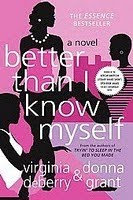
Writing credits: :Uptown (Simon & Schuster 2010), Tryin' to Sleep in the Bed You Made (St. Martin’s Press 1997), Far From the Tree (St. Martin’s Press 2001), Better Than I Know Myself (St. Martin’s Press 2004), Gotta Keep on Tryin’ (Simon & Schuster 2008), What Doesn't Kill You (Simon & Schuster 2009), & Exposures (as Marie Joyce-Warner/Popular Library 1990)


How frequently do you update your site? Not often enough!

Is your site designed for reader interaction? No, unfortunately it isn’t.

Posts of note, something in particular you want readers to check out: Virginia’s Open Letter to Oprah from last November

How does your partnership work? Do you both come up with the initial ideas, does one of you prefer to edit?

We both participate in all phases of writing. We brainstorm ideas, develop characters jointly and we both write and edit. People have often said the writing must be twice as fast since there are two of us. In reality, it probably takes twice as long, but the process of collaborating has been amazing.


Let's say I've just walked into a bookstore and I'm not sure which one of your books I should start with, which one would you recommend I read first and why?

That’s a really difficult question because we love all of our “children” equally. But let’s put it this way, Tryin’ to Sleep in the Bed You Made is the most popular—800,000 copies sold. Far From the Tree & What Doesn’t Kill You are our personal favs, but Better Than I Know Myself should also be on that list. If you read Tryin’ you should read Gotta Keep on Tryin’ and we think there’s an important message in Uptown. And if you want to know how we began—find a copy of Exposures—now available on Kindle & Nook!

What's next for DeBerry & Grant?

We’re not sure. We did 3 books in a little over 3 years and that meant 3 book tours and loads of other promotional events and activities so we’re a bit drained at the moment. We have a few ideas we’re fleshing out, but there won’t be a new novel from us in 2011—maybe by 2012.


Top 5 reads you’re looking forward to reading in 2011?

Since this is a brainstorming time, at the moment we are reading more source material—newspapers, magazines and walking around with our ears open to the stories there are to tell and the characters to tell them with.

100 words or less how would you describe your work?

We call our books, “Life Stories.” We look for the joy, sadness, heartache and triumph—the drama—in all of our lives. We write about the loves, losses, betrayals, and feuds we have all gone through in our families, with our friends, with our children, in our neighborhoods, and how we got over, around and through them. What happens when your loved one has “habits” that put the family in jeopardy? What do you find out about yourself and your friends when you lose your job and your way of life has to change? Those kinds of situations make great jumping off points for stories that we hope keep you turning the pages and wondering what happens next as well as thinking about what you would do in a character’s shoes.

100 words on less please share your thoughts on children and reading

Both of us have early childhood memories that involve reading. Virginia looked forward to weekly Friday afternoon library visits with her family where she was excited to choose her books for the week. Donna remembers sitting on the subway next to her Mom, each of them reading until they reached their stop. Making reading “cool” for children, starts a habit that allows young people to see worlds beyond the one they know. Strong reading skills allow them to excel in any area they choose. If you love to read, share that love with a child—introduce them to books, buy them a book, turn them on and encourage them to explore.


I've only read two of Virginia DeBerry & Donna Grant's books but I'm impressed at how long these two ladies have been published and I've very much enjoyed both of the books by them I have read. I liked Better Than I Know Myself but I really really liked Tryin' to Sleep in the Bed You Made. Now I just need to read Gotta Keep on Tryin' (along with the rest of their books!). Life Stories is a great, accurate description of their work and maybe they will write for kids and teens one day. I know they could help make reading cool ;)

Saturday, February 5, 2011

The Latte Rebellion

The Latte Rebellion by Sarah Jamila Stevenson 2011
Flux

Incredible Quote "'Because you're brown and they can't tell what you are.' Miranda picked at her cheese sandwich. 'You know, this is why the Latte Rebellion is a good thing. It'll open people's eyes. I mean, it's not like we just automatically identify with whichever group we look the most like.'
'Yeah.' I [Asha] nodded. 'Not to mention, ethnicity isn't anybody's whole anyway.'" pg. 158

Asha and Carey would love to have a best friend post-graduation trip to London. In order to raise the money, they decide to sell t-shirts that praise being mixed-race (or bicultural, what have you), they dub it the 'Latte Rebellion.' The girls expected to make some money, but they didn't expect people to actually get excited about their cause and turn it into a nationwide student social movement. Asha is both apprehensive and excited about this, but the Latte Rebellion is starting to mess with Asha's life. Her grades start slipping and she and Carey are fighting more and more. Before she can say 'latte', the peaceful Latte Rebellion turns violent and charges of terrorism are being thrown around. Does Asha believe in the Latte Rebellion enough to disprove the charges and fight to keep the group alive?

I don't usually mind slow starts in contemporary novels and this one was no exception. I liked getting the backstory and feeling completely immersed in Asha's world, I was satisfied with the little everyday details. I would warn you though that it takes awhile for the actual rebellion to start but stick with the book. I was a bit peeved at how some characters emerged for a chapter and then faded away, only to be called again a few chapters later. Thad and Bridget were both brought into the story but then they just disappear, Asha doesn't give them another thought. The biggest problem to me were the awkward transitions. Just when a chapter was starting to get really good, the story would stick to the present where Asha was in the middle of a school board hearing on her possible expulsion (her school viewed the Latte Rebellion as a terrorist group). Then just when the hearing started to get interesting, the story would change to the past events leading up to the hearing. Sometimes it seemed like the hearing was rushed, for example, I almost missed the decision the school board made because it was rushed over.

The most fascinating point to me was that Asha (half-Indian, a quarter Mexican and a quarter Irish) and Carey (half Chinese, half European) resent being forced to pick a side or idenitfy with what they are the most. I admit I'm guilty of thinking that way. I'm bicultural but I've definitely thought at times that if you if have more than three different cultural backgrounds, you can list them all but if you join a club, join them all or pick the one you identify most with. I get ticked when people do the whole '10% Irish, 10% Scottish, 15% Swedish, 2 % Cherokee' etc. Just pick your top two! However this book showed me that it's not that simple. I shared Asha, Carey and Thad's frustration at the lack of understanding/options for multicultural people. Just today I was registering for the SAT and I could only pick one race or chose to be 'other.' I ended up selecting Black but I was peeved that there wasn't a way for me to pick Black AND Latina. Real-life moment right there. I love that Asha starts The Latte Rebellion for purely selfish reasons. She wants to travel and needs the money so why not open a business that would appeal to certain people? That's what entrepreneurs do all the time and I thought it made the book even more fun. Asha starts off self-absorbed and a bit clueless but that makes the end result even better. I also really liked that the book showed why the term 'latte' is so appropriate for multicultural/multiracial people and that the school thought of the group as a terrorist movement. As if. Gotta love school bureaucracy.

*Please be warned the next paragraph will contain some lame coffee puns/jokes*

The Latte Rebellion is filled to the brim with coffee for thought ranging from how multicultural people are viewed in the world (should we have to choose what culture we identify the most with, how do we do that?), prejudice (Asha is called a 'towel head'. Wow), race and the college process (and it was nice to read a book about a senior who is stressing out about college because the process sounds SCARY people) and friendships drifting apart. We aren't meant to be best friends with the same people all our lives. It's nice if that happens but it's a rarity. I loved Miranda (fight the power!) and even though I didn't see much of him, I was a big fan of Thad. But then again, I'm a complete sucker for a guy who has a sense of humor and yet still wants to save the world (and manage to make enough to get by). The rough transitions and disappearing characters made this book a bit hard to swallow but there is a great balance between hilarity and seriousness that brings out the sweet flavor. The parents have a role and they aren't a complete caricature of overbearing-must-get-good-grades kind of parents. I sipped a vanilla latte while reading this book. It was my first latte and while I'm not a fan, I've been told to try chai lattes and a gingerbread latte. So we shall see if I become a latte fan. I applaud the author for keeping up the latte metaphor throughout the whole book, it could be a bit silly at times but who doesn't like a little silliness? A stirring novel. Oh and I love the cover, the symbol of the Latte Rebellion in the coffee (which is a coffee cup with steam rising to to from the shape of a hammer and sickle) along with the coffee rings, napkins and a cartoon drawing are perfect for the cover.

Disclosure: Booouuugghhhttt

PS Doret and I want T-shirts that say "Ask not what Brown can do for you. Ask what you can do for Brown." (this slogan could also apply to Brown University which makes it rock even more) <3
PPSS I'm buying a mug. You can also buy a shirt. $1 of each purchase goes to Reading is Fundamental. Social justice for the win. You're welcome

Tuesday, December 14, 2010

When the Stars Go Blue

When the Stars Go Blue by Caridad Ferrer 2010 (ARC)
Thomas Dunne Books/St. Martin's Griffin Press


When the Stars Go Blue is a modern retelling of Carmen. Listen to the song that inspired the title here (utterly haunting/enchanting). Soledad is dance and dance is Soledad, it is her everything. It's the summer after graduation and she had planned on teaching at her ballet teacher's dance studio and then getting an apartment in NYC in order to audition for dance companies. However her plans change when her classmate Jonathan Crandall asks her to consider auditioning for the part of Carmen. The audition is for the drum and bugle corps he is a part of. The opportunity is a once in a lifetime and introduces Soledad to the competitive world of the drum and bugle corps, the thrill of dancing in front of a huge, live audience, and the wonder of falling in love for the first time. While she travels across the U.S. with the corps, she meets Taz, a Spanish soccer player with a silver streak in his hair. Taz is clearly into Soledad, but it doesn't matter, because she's in love with Jonathan. And you can't be in love with two people at once, right? But everything changes after one dramatic incident that could ruin more than one future.

"People always asked why I danced. Why I'd devoted so much of my life to something that seemed to offer so little in return. But good as I was with words, in this they kind of deserted me. Every once in a while, I wished I could talk about it. How dancing created this huge, chaotic jumble of emotions and adrenaline rushing through my bloodstream-the freedom and power that came from the ability to command my body so completely." If you have ever felt passionately about something, no doubt, you can relate to what Soledad is saying. This quote is on the 2nd page and it was then that I knew Soledad and I would get along just fine. Soledad is one of the most driven protagonists in YA that I've ever come across. In this novel, the similarities between the original Carmen (I've never seen the opera so I'm basing this off summaries I've found and the musical Carmen Jones, which I adore) and this retelling are harder to spot. One of them is in how ambitious Carmen was and how ambitious Soledad is. Plus they both live in the moment, a quality that Jonathan envies of Soledad. Furthermore Jonathan and Soledad have tempers, much like Don Jose and Carmen. There is a love triangle but there is no clear winner, not until the grand finale. Taz is probably the only guy with long hair I will ever see as utterly sexy (that silver streak!), and it doesn't hurt that he's a soccer player ;) There are no one-dimensional characters. Each character is very carefully fleshed out, the flaws becoming more evident while the plot thickens. There is an intense air throughout the whole novel since Carmen is a tragedy and you know that eventually there will be a dramatic conclusion.

The writing is indescribable. It is expressive and elegant and it has obvious that the author knows both the story of Carmen and the world of which she speaks (drum and bugle corps, dance). The passion for the subject matter leaps off the page, after all only a dancer could really name the indescribable feeling that dancing provides. The romance is steamy, not because it's particularly explicit but because there is so much longing between Soledad, Jonathan and Taz. "Felt as if we had a whole conversation in the glance we exchanged in the silence following his words. But it was a teasing sort of exchange, the words in a language I wasn't quite comprehending. That I didn't really want to understand yet. But in a way, I did. At least, I wanted to try." (pg. 208). The author clearly illustrates the confusion Soledad feels over the behavior of both Taz and Jonathan, the confusion of being in love and wanting someone so badly, you don't know what to do with yourself.

When the Stars Go Blue is a dazzling read set in a world that will be new to many readers (including myself). I've never been to a college football game or seen a drum and bugle corps perform, but now I really want to see one live! I can't say that it looks easy being in the color guard, playing an instrument, etc. but I now know from this book that it's not, it takes a ton of blood, sweat and tears (well I already knew that about playing an instrument and dancing but still). The fervor that Soledad feels for dance, that Taz feels for soccer and that Jonathan feels for playing the horn is a palpable feeling that anyone who has dedicated themselves to a craft of some sort can relate to. The romance will have any romantic swooning and the climax will have you gasp out loud (especially when witnessing the painful rebound Soledad must make, it's a struggle to say the least). Caridad Ferrer is definitely one of my favorite authors and I will read whatever she writes next, no questions (after all I swore I would never develop a crush on a literary character with long hair or for that matter, any guy with long hair. Until Taz came along). At one point Jonathan tells Soledad to "Own it.", own the role of Carmen. Caridad Ferrer owns this retelling of Carmen and just like her main character, she triumphantly makes it her own.

Original review

Read our interview with the author

Friday, November 12, 2010

Pull

Pull by B.A. Binns 2010 (ARC)
WestSide Books

David Albacore has moved from his small-town California home to Chicago. He had to move once his father murdered his mother and went to jail, forcing David and his two younger sisters to move in with their unwilling Aunt Edie. Aunt Edie lives in a tiny apartment and is barely making ends meet on her own, David works every day after school to make sure his family is provided for. He's an extremely talented basketball player and so David has to make a decision. Go for a basketball scholarship or quit school and work in construction full time. It was his mother's dream for him to go to college, but he's sure that she wouldn't want the family to be split up either (which would happen once David moved away for college since he would no longer be able to take care of them). In addition to juggling work and family, David has a growing attraction to Yolanda Dare, the girlfriend of the school's "king" and major player. David doesn't believe he can have it all, so he's going to need to pick and choose.

In all honesty, I was skeptical about this book, based on the cover alone. Yet another book you can't judge based on its cover. I really really liked it. It was beyond refreshing to have a guy male character who is not a "lovable nerd" or a "playa with a soft interior". David seems to fit in the middle of these two extremes. He's not a playa, nor is he particularly good at school and he's surprisingly not hopeless when it comes to girls (it most likely helps that his mother was a good example and that he has two sisters). I was afraid that David would try and play the "noble hero" throughout the novel. He does try it, but he soon realizes that he does resent his sisters. Because of his sisters he can't keep his paycheck for himself or take The Dare (as Yolanda is known) out on fancy dates along with a host of other things. The noble thing about David is that he acknowledges his resentment, but fights to keep it under control. Much like David, Pull is a frank story that does not hesitate to talk about sex, swear or even gay relationships (I was grinning from ear to ear when I read a certain scene between Carl and Neill. They were underdeveloped minor characters sure, but they were gay and it was NO BIG DEAL. Yes!).

Not gonna lie, at first it was a bit jarring at how much David thought about sex. But eventually I shrugged it off because I have no doubt that it's realistic and it's really not that important. And in the story it's not discussed graphically anyway. You know how they say that a guy is worth keeping around based on how he treats his mother and sisters? David is awesome in that respect. Not perfect, but the way he treats his sisters (especially his freshman sister Barney) is so tender. I shared his pain at not being able to reach his youngest sister, Linda and at his frustration over Barney's obliviousness towards a certain character. As you can tell, I have a bit of a crush on David ;) Asides from David's personality, I was impressed at how each of David's siblings portrayed a different style of grieving. David does not know how to help his sisters and they don't know how to help him. It's a long and painful process, filled with denial, anger and immense sadness. It's also about guilt and debt, how much do we owe our loved ones, living and deceased? There's no easy answer.

Pull is a straightforward read that places a refreshing emphasis on sibling/family relationships over romantic ones. I did have a really hard time understanding Aunt Edie, the explanation for her actions seemed to convenient and implausible, there was not enough evidence to back up her actions. I wanted more character development of David's acquaintances (he doesn't allow them to get close enough to be friends) and his youngest sister Linda (how did she handle school??). It covers a lot, but none of the issues drown the book. From domestic violence to bullying to the ultimate decision about college, no issue is rushed, it flows naturally in the story. The marriage class was incredibly transparent (do those classes exist in high school?) but it was cool to see issues of family and marriage discussed in a high school setting. There is no moralizing in this narrative. David makes a hard decision and it's not one that everyone will make, but I completely understood why he made it. That's what makes this story so notable. I'm sure writing this story was no cakewalk (oh look a reference to an awesome quote, see below) but the whole novel reads like a testimony to one. Excellent.

Disclosure: Received for review from publisher. Thank you WestSide!

Fav quote: "People think cakewalk means easy. But real cakewalks were difficult as hell according to my grandmother. They required endurance, balance and training, and only the best lasted until the end." David pg. 30-31


Tuesday, September 14, 2010

Upstate

Upstate by Kalisha Buckhannon 2005
St. Martin's Press

Seventeen year old Antonio is in jail for killing his father. He leaves behind a mother, two younger brothers and a devoted girlfriend, Natasha (who is sixteen). The story takes place in Harlem, New York, 1990s. Over the years Antonio and Natasha write to each other. Antonio is trying to maintain his sanity while in jail and plan his future once he's out of jail. Natasha is busy living her own life, she wants to go to a good college, away from home.

These letters felt very raw. They weren't flowery or ridiculously romantic. They are about romantic longing, but so much more. They talk about books, Harlem, their home lives, life in jail. Before jail, Antonio spent a lot of his time trying to be tough and not share details of his private life with Natasha. In the letters, he finally breaks down. I thought this was a bit too convenient, but I let it slide because I wanted to learn more about Antonio's life. Natasha wasn't as interesting to me. I felt that she was almost stereotypical, but that could be more of a result of how many YA books I've read with similar main characters. She was very determined and wanted to go to college and be a lawyer, and she wasn't going to let her economic background get in her way. Which is wonderful, but I felt that I had heard it all before. Antonio's background seemed all too familiar at first, but it got deeper and more unique. Besides being about the two main characters, we also learn A LOT about both of their families, which I really liked. The parents are a presence (for better or worse) and even the siblings have stories that are told.

Antonio's first letter starts with him asking if Natasha believes he kills his father. I was pleased at the fact that Natasha asks him if he did it. She doesn't blindly take his word for it. I understand wanting to see the best in someone you love, but I liked that Natasha was trying to be realistic and honest. One of the strongest parts of this novel is the language. The author writes very powerfully, you feel as if you are reading very private letters (which is against the law since it's not your mail! haha) and maybe you are intruding. At the same time, you can't put the book down because you need to know if Antonio killed his father and you need to know if Antonio and Natasha will stay together. The last letter is written in 1999 and while the letters are getting few and far between, it's evident that Antonio and Natasha still love each other. The question is if they have room in their lives for each other. SPOILER: Highlight to read: I was a bit ticked that Antonio didn't kill his father. Just once I would like to read a story where the main character killed someone on purpose. Not because I would enjoy it, but it would be very interesting to read about motive, etc.* End of Spoiler

Upstate is a sweet story about a not-so-sweet topic. The love story is original, emotional and very genuine. The circumstances the two main characters were born into suck and it's infuriating that they have to go through what they have to go through. They must grow up way sooner than many children. I can't say how authentic this book is in portraying prison life, I'm on the fence about that because I feel that it was a little too safe but at the same time, I've never been to prison so I wouldn't know. The author does an excellent job of creating characters that grab you and you will not forget about them right away. Perhaps one of the simplest but best parts of this book is the fact that it's about two African American teenagers who are deeply in love with each other. We don't see that very often in books or on TV (but we do in real life!) so this was a nice change. I highly recommend this book. Surprisingly not a tearjerker, but still a very moving story.

Disclosure: My mom bought it for my sister and I (it's interesting because my sister is a hopeless romantic and she didn't love this book like I thought she would. Have any romantics read the book? If so, what did you think?

Throwback Thursday is hosted by Take Me Away Reading

PS I wonder if the book had been set in the present day if Natasha and Antonio would have been Facebook friends? Hmmmm. I think so.

Review originally first ran at Reading in Color

Friday, August 13, 2010

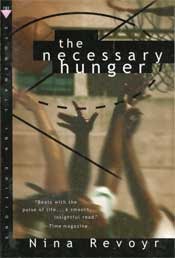
The Necessary Hunger

The Necessary Hunger by Nina Revoyr 1997
Simon & Schuster

Nancy Takhiro is a high school basketball star and she is in love with Raina Webber, her biggest competitor. Raina has a girlfriend and Nancy can't work up the courage to tell her how she feels. When Nancy's father falls in love with Raina's mother, the girls soon find themselves living together. They become good friends who are fiercely competitive with each other (they play on opposing teams). Together they will face the crazy world of college recruitment. Nancy isn't ready to leave the world of high school and L.A., Raina is ready to go.
The future is unforeseeable but their senior year is here and it's going to be one long journey.

"And there were certain topics we never touched upon-our missing parents, what my father might know about me, my utter lack of love life-because we couldn't have talked about anything real without talking about what existed, and didn't exist, between us. But the irony of our holiday crisis, the unforeseen result, was that our friendship, having survived it, was actually stronger. Because of the pain we'd experienced and the knowledge we'd gained, there was a fullness to our relationship that hadn't existed before. We appreciated it now, we meant more to each other." (pg.259) This quote is rather lengthy but it sums up the feelings of both girls for a large part of the book. The Necessary Hunger doesn't really seem to have a plot. It's mostly about Nancy trying to work up the courage to tell Raina how she feels and this takes an incredibly long time (368 pages). The book is a decent length, but I had a hard time concentrating in some places and it probably could have been pared down a little. I could only take so much of Nancy talking about her passionate feelings for Raina and then not acting on them. I also got tired of watching Nancy watch Raina and Toni (Raina's girlfriend) hang out and get in arguments. The end is extremely dissatisfying and yet, realistic of young, first love.

The best part of the novel is the snippets about the lives of Nancy's teammates. I LOVED all the basketball mentions in the novel. It's set in the 1980s before the WNBA was created, so the girls are wondering what's next for them after college. Some want to play pro overseas, others don't. Some of them make costly mistakes, some aren't good enough basketball players to get scholarships, others didn't apply themselves enough in school to get academic scholarships. Most of the girls are facing junior college. Nancy and Raina are one of the lucky ones from their neighborhood. At times, I wondered if people really treat high school basketball stars the way these girls get treated. Random people stop them on the street, especially young kids in order to praise them. We have a decent basketball team and the stars of the team are quite popular, but I doubt a junior high kid is going to stop the star girl or guy player. But that could just be me. Chicago is a big city and there's lots of star players so it's hard to know them all, but then again L.A. is a big city. Anyway, the author writes great descriptions of basketball games from the atmosphere of the crowd, the peeling paint of the gym, to the adrenaline of the players. It's an intense experience and while I don't play basketball anymore, it brought back some good (and painful) memories. The predictable ultimate basketball showdown occurs between Raina and Nancy, but you might be surprised by who wins.

Next to the intense basketball scenes and the glimpses into the lives of mostly African American and Latina basketball players, the prejudices of the Black community is discussed. There is no grand coming out in this novel, Nancy and her father have never discussed her sexual orientation. Raina and her mother have talked about it and her mother accepts her. It's as simple and yet complicated as that. Nancy and the reader can't help wondering if her father knows that she's a lesbian. I was surprised by how many girls on Nancy's team were lesbians but not all their teammates knew everyone's sexual orientation (which leads to some hilarious conversations). The reactions of all the parents isn't really discussed so I'm not sure what the ratio of accepting to disbelieving parents is, but there is a good mix. Nancy and Raina must also deal with people who have a problem with their multicultural family. Claudia's (Raina's mother) friends are mostly supportive of her marriage to a Japanese American man, but she has one friend who has a real problem with the situation. It's very interesting to read about and it shows that even if you're discriminated against, you too can still discriminate against others (without even thinking about the irony). Of course there is also racism from the Japanese American community toward Claudia and racism from the white community.

The Necessary Hunger is a descriptive book with graceful writing about a wide variety of topics. it takes you on a trip to a part of L.A. that you may not see on vacation. You meet girls who really have to struggle and they don't always triumph. You witness how odd it is that those who are discriminated against think it's OK to discriminate against others. I thought Nancy's mother had an intriguing story that I wanted to learn more about (she left Nancy and Nancy's father and basically renounced her Japanese heritage) but that would have made the book even longer. The story does drag a bit, but have some patience. Almost everything about race, class, sexual orientation and basketball is covered in this book. It's a great read and I highly recommend it.

Disclosure: From the library

PS The book was written when Michal Jordan was king (really he still is) but since it's set in the '80s, he's not really anything special just yet. There's one line that made me laugh and it went along the lines of "she wore baggy long shorts in the style of that young player Michael Jordan." (not an exact quote because I no longer have the book). I just love it, 'that young player MJ' :)

Sunday, August 8, 2010

The most frightening part of helping is getting involved.
~Dianne Ridley Roberts


Have you read Ari's most recent post? Are you a letter writer, protester, parent who speaks up at school board meetings or city council meetings? What motivates you to get involved? Have you been silent and wish you weren't? Have you been active and gotten off course or burned out? When do you feel compelled to speak up?


I'll share a few thoughts but I want to hear from you. Do read and please respond to Ari's call to action.

Friday, August 6, 2010

Letter to Borders

This letter was originally posted at my blog, Reading in Color

To Whom It May Concern,

I am a regular customer at Borders. As a teenager I don’t have as much money as I would like to spend on books, but I’m there at least once a month and I always buy something because I love books. My experience at Borders has been mostly positive. The sales people are very friendly and the overall atmosphere is very welcoming. My only negative experience is the lack of diversity on the bookshelves. Specifically, I would like to address the lack of diversity in the Young Adult section.

I recently noticed that Borders had expanded its YA section. This excited me because I knew it meant Borders would be able to offer more books. Unfortunately, the books offered were not what I was looking for. I’m looking for books written about people who look like me or differ from the white norm that I see on TV and in magazines. I’m tired of wandering the bookshelves of the YA section and only seeing a handful of titles with brown faces on the cover. I started my blog, Reading in Color, in order to find more titles by and about People of Color (PoC) as well as to promote them. I knew that I couldn’t possibly be the only teenager of color looking for books that were about teenagers like me and not about white people.

Borders has provided me with some great books; Bleeding Violet by Dia Reeves, It Chicks by Tia Williams, Hotlanta by Denene Millner and Mitzi Miller and many others. These are all books that I really enjoyed (Bleeding Violet is now one of my favorite books). However, Borders lack of diversity in its books also forced me to look for certain books elsewhere, namely; Secret Keeper by Mitali Perkins, Shine, Coconut Moon by Neesha Meminger, We Were Here by Matt De La Pena and Silver Phoenix by Cindy Pon. To be fair, I was able to order a copy of Silver Phoenix while I was searching for it in Borders, but I was immensely disappointed that it wasn’t on the shelf.Admittedly, Borders does a decent job of showcasing titles by and about African Americans, but other minorities are barely represented. As a half Black, half Latina teenager, this saddens me. It’s hard enough for me to find a large number of books with a Black main character. It’s harder still to find a book with a Latina main character. Why? Before I started blogging, I assumed the books simply weren’t being written, thus Borders obviously couldn’t stock them. I’ve since learned otherwise. Through my blog, I’ve received countless recommendations of titles of books by/about Latinos, Asians and Native Americans. The books are being written. Yet if I was to rely solely on Borders, I would never know this. I would continue to only see books with white faces on the cover, being written by white authors. Without my blog and Internet book browsing, I might have never discovered the enticing world of Xia (Silver Phoenix), how hard life is for Sikhs post 9/11 (Shine, Coconut Moon), met the most interesting teenage criminals who are so much more than criminals (We Were Here) or learned about what life was like in India in the 1970s (Secret Keeper). These books have all taught me something, some lessons bigger than others, but all important in their own way. In addition to teaching me something, they have entertained me immensely and some have even brought me to tears. These are all books I couldn’t find at Borders and it pains me to think of all the people who might be missing out on such wonderful stories.

I presume that since you work at Borders, you love books. Let me remind you of why people love books; books transport us to new places and experiences and (this is especially true for teenagers) they show us that we are not alone. Books can also promote tolerance. Why would you deny the joy of opening up a new book and discovering a new world to any child? Why are you permitting a generation of children to grow up knowing very little about cultures that are not white or American? Let me be clear, there are certain experiences in life that are universal (parenting struggles, peer pressure, falling in love) and it doesn’t really matter what the cultural background of the main character is. There are also certain experiences in life that not everyone will have to go through (racism and prejudice being the most obvious, although at some point, most people will experience prejudice of some kind). However what message are you sending by only selling stories about white teens? Borders may not realize this, but the reason many children of color do not read is because they feel that the books being written by white people, about white people, are not for them. They do not believe they can relate. Or worse yet, they begin to accept the subtle message sent by rows upon rows of books with white faces on the cover; YOU ARE WORTHLESS, NOT WORTH WRITING ABOUT OR SHOWING ON A COVER, YOU ARE ALONE. In short: YOU ARE INFERIOR. I’m sure I’m not the only one when I say that I don’t want to spend my money at a store that doesn’t value or respect me or my needs.

Case in point is Silver Phoenix. I was horrified when I discovered that the beautiful cover of Silver Phoenix was being changed. I’m aware that covers are sometimes changed for the paperback editions, but in Silver Phoenix, the change is drastic. It goes from having a Chinese girl on the cover, to having a racially ambiguous girl on the cover. The most obvious way of determining if the girl on the cover is Asian (by looking at the eyes) is covered up. Borders may take the position that it’s the publisher’s fault, not Borders. That would be convenient but wrong. The publishers are wrong for removing the Asian main character from the cover and replacing it with a girl who is racially ambiguous at best, whitewashing at worst. BUT the publishers (Greenwillow Books) are sticking with the author, they want to see her book reach a wider audience. In a way, they were forced to make this awful cover change because of Borders. You refused to even stock Silver Phoenix, based on the cover alone. Borders prevented thousands of readers from reading a book about someone who is different from them, and yet the same. Borders prevented Asian readers from seeing a strong and determined Asian girl on the cover of a book. As pointed out by blogger Ah Yuan at Gal Novelty, you wouldn’t refuse to sell a book based on the cover alone if there was a white girl on it. Borders wouldn’t blame the low sales on the white model on the cover of the book, but if a book with a PoC on the cover doesn’t sell, it’s because of the brown model on the cover.

I realize that Borders is a business, therefore it’s all about the money. Did you know that studies have shown that Latinos are the biggest minority consumers? If this is the case, why are Latinos not being aggressively pursued by large chain bookstores? If Borders invested a little more money in buying books that are by/about Latinos, they could tap into a huge market. It’s not enough to have a tiny section entitled ‘Hispanic Studies’, we need more bilingual books for young children and books with Latino/a teenage main characters. It’s not Latino buying power that is expanding, all minority consumer power is growing. I understand not always wanting to take a chance on debut authors and I can even understand why you would only display certain books in certain stores. But Borders doesn’t even have that. As a start, try featuring more books for people of all ages (but especially middle school and teenage readers) by/about African Americans, Latinos, Asians and Native Americans in stores where there is a large ethnic majority of that particular culture. Mind you, that’s only a start. The end goal is to have multicultural bookshelves. Why is it that the only book I can find in the YA section with a Native American main character is The Absolutely True Diary of a Part Time Indian by Sherman Alexie? It’s a fabulous book, but there are more books about Native American teenagers out there than just that ONE book. If you need suggestions, do a little research. Check out blogs like Color Online, Multiculturalism Rocks!, theHappyNappyBookseller, Gal Novelty, Voracious YAppetite , Asia In the Heart, World On the Mind and the blogrolls at these blogs for suggestions of more titles. Don’t buy into the myth that minorities don’t read and won’t spend money on books. Maybe, just maybe, we “don’t read” because we are tired of being told that we don’t matter. Maybe, just maybe, once we see more brown faces on bookshelves and realize that we are respected customers, we will want to spend our money on books.

You can ignore this as the rant of a young and perhaps in your opinion, misinformed teenager. That is your prerogative but bear this in mind, I have given this a lot of thought and talked to many teenagers of color as well as blogged about it. I have found an overwhelming number share my opinion and would love to spend more or in some cases, some money at Borders on books that are written by people of color, for people of color, specifically teenagers of color.

Postscript to blog readers: This is the actual letter I'm sending to Borders. To learn more about writing your own letter, check out my post here please also leave links to your own letter in the comments at that post.

Monday, July 19, 2010

Harlem Summer

Harlem Summer by Walter Dean Myers 2007
Scholastic

Incredible Quote "Mark, you are a young black man. Sometimes, living here in Harlem, we walk on the sunny side of the street and sometimes we walk on the shady side. I know that because I've been black a whole lot longer than you. Anything you've seen-I've lived. But I also know that you got to be careful on both sides of the street." Daddy pg. 130

It's summer in Harlem in the year 1925. It's hot and exciting. Mark Purvis is sixteen and looking forward to his summer, as long as he doesn't have to work at his uncle's funeral parlor. Mark ends up getting a job working for The Crisis where he meets the "New Negro". He could care less about being a "New Negro", he doesn't even know what that means. He does know that he wants to play his saxophone with Fats Waller. Before Fats hears him play, he offers Mark a chance to earn some quick cash. Except it goes horribly wrong and now gangsters are after Mark and his friends. They want their money or they want Mark and co. dead. It's sure to be an amazing summer.

By now I think most of you know that the Harlem Renaissance is my favorite time period in American history so I was really excited to read this novel. I didn't really have any expectations of the story, I just wanted to get a better idea of what Harlem was like during the 1920s and on that front this book did not disappoint. I could feel the heat rising off the sidewalk and imagine all the nightclubs and aspiring musicians lining up to perform in the clubs. One of the most fascinating things about this book (for me anyway) was the characterization of DuBois. Many of you may know that there was a huge rift between W.E.B. DuBois and Booker T. Washington. Basically Washington wanted Black Americans to focus on being teachers, farmers, etc. He didn't really have a problem with segregation either. DuBois wanted Black Americans to enter politics, business and higher fields of education. He abhorred segregation. Both Washington and DuBois believed in education, they just wanted to sue the power of education differently. Anyway, I'm firmly on DuBois' side but this book portrays him in a mostly unflattering light. Everyone was terrified of him and he's seen as demanding and cold. I thought it was very interesting but I still love him for his ideas and starting The Crisis (one of the main Black newspapers of the time).

The story is funny, Mark tends to exaggerate and he doesn't always realize how grave a situation he's in. I did find it annoying how his luck always seemed to be good. Everything worked out for him, but the book could have been really sad if that wasn't the case. However I didn't mind it too much since I'm not in the mood for sad reads right now. Each chapter has a engaging title that makes you want to keep reading to figure out what it means. My personal favorite was "I Am Taken To Jail Like A Common Thug, Given The Third Degree, But Am Saved By My Reputation As An International Gangster, Bad Man, And The New Breed of Criminal." (pg. 134) The characters aren't as well developed as I would have liked. It very much seems to be written for young readers as an introduction to Harlem during the '20s, Mark meets some of the most famous people of the time. He also visits famous places, reads famous newspaper, etc. I just wish we learned more about the characters, instead they are simply commented upon as they pass by.

Harlem Summer is a lively story about a little known period of American history, the Harlem Renaissance. The fact that it reads like an introduction to the Harlem Renaissance both helps and hurts it. Older readers may roll their eyes at Mark's convenient connections to everyone famous in Harlem, but it's a great way to whet readers appetite for more. I wish the novel was longer so I could have learned more about Queenie (a Black female gangsta), Countee Cullen, Dubois, etc. I also wanted to know more about mark's family, his father is hilarious but his brother Matt remains a shadowy figure. I did like that Mark's mother and father both played a prominent (often amusing) role in his life. Prepare to visit Harlem and meet a character who has the best luck and gets in the wackiest scrapes.

Disclosure: My family bought it with their own money

Tuesday, June 15, 2010

Good Fortune

Good Fortune by Noni Carter 2010
Simon & Schuster


Good Fortune traces the journey of Ayanna Bahati, who is captured and taken from her African village and sold into slavery in America. She is renamed Sarah but she still has flashbacks of her life in Africa and the traumatic events of coming to America (she was seven at the time). Sarah is determined to escape to freedom especially when her "master's" son (Jeffrey) begins to pressure her and he looks like he will make her his mistress. Sarah would rather die than suffer that fate so she begins to plan on running away.

This is a stunning debut from a very talented young author (she's 18 and attends Harvard University). I was more than a little apprehensive about picking up this book because I haven't been in the mood to read yet another slave narrative. They are depressing and speak to a history that is incredibly hard to be proud of. While this novel is somewhat predictable and redundant in its facts about the horror of slavery, it has a very strong message to it concerning education. I think that in the author's goal to have the book be used as a teaching tool for children, her message overpowers the book in some parts. It puts a human face on the struggles of slaves; Sarah goes through so much and she is so determined to get an education. It made me think long and hard about how many of my fellow African American students (and it's not just us, but I'm focusing on us today) dismiss the educational opportunities they have, we waste them by not reaching to our full potential, we mess around in school (I'm guilty of doing that sometimes too!). I can honestly say this novel made me feel bad for complaining all the time about having to go to school, while I didn't stop completely I do try to complain less.


Something that really bothered me about this novel was that the language seemed to be too-flowery (does that make sense?) It was very formal and it was hard to believe that an uneducated slave would speak in such precise words. However, the author does have a great way with words, she describes scenes that leap off the pages. "Then, one night, as snow fell steadily, heaven must have decided to turn all the elements of nature against me. Down came icy rocks, hurled my way as if the skies were taunting me for the slowness of my pace. I dropped down and tried to shield myself, but they came crashing upon my back and shoulders. I fought to get up again, to seek shelter. My throat burned while the rest of me shook with cold. With the surrounding land mocking me as I stumbled over its bumpy surfaces and my own feet, I searched for refuge from heaven's assault." (pg. 186-187) At times Good Fortune seemed tedious, I think that some pages could have been cut out (it's 470 pages!) because many pages simply have to do with planning and waiting, planning escapes, waiting for the right time. I'm not going to go into much detail about what this novel covers about slavery because it covers much of the hardships; the beatings, the rape (it's not at all graphic though, merely hinted at), the death, the danger of escape, etc.

However, this novel is unique because it has a love story. The love story between Sarah and John helps lighten the horrific situation of slavery, they are young and in love and it's adorable. They face hardship, in large part because Jeffrey (the slave owner's son) wants to keep them apart and he holds the power. Their love is based on hope and trust and they wait. And wait. It's a bittersweet ending. Sarah herself carries the novel. She is incredibly naive, but she has a strong and persistent voice, she will become educated and she will one day marry John.


Good Fortune
avoids the trap of being yet another depressing slave story due to the author's magical way with words, the determined main character and surrounding characters (her adopted brother, Daniel, her Aunt Mary, her friend Florence) and the tender love story. I think that at times the author tries too hard to get her message about the importance of education into the reader's head, but it's an important message that needs to be reiterated. I wish that the author had either eliminated Sarah's memories of Africa or more fully explained them because seeing them only though Sarah's hazy flashbacks and nightmares provides confusion for the reader. I will definitely be looking for future work by Noni Carter, her debut was incredibly well researched and showcases her talent with words. Do not let your fear of reading about slavery keep you from missing out on this story.


Disclosure: Received from Nathalie to give away as a prize in the POC Reading Challenge. Thank you so much Nathalie!

Tuesday, May 25, 2010

Tortilla Sun

Tortilla Sun
Jennifer Cervantes
ARC

Tortilla Sun tells the story of twelve-year-old Isadora (Izzy) Roybal and what happens to her one summer. Izzy finds an old baseball belonging to her father with the words "because...magic". Izzy is on a mission to figure out the two missing words in the phrase. She never met her father, who died before she was born, and she hopes that filling in the phrase will help her to learn more about her father and to connect with him. Izzy's mother doesn't talk about her father, but when she sends Izzy to New Mexico to stay with her Nana, Izzy learns about her family, magic, friendship and how to make tortillas.

This is another one of those books where you need to eat while you read. Preferably, Mexican food. You should also eat tortillas when writing your review of Tortilla Sun. OK ok, I'll stop talking about food (now I'm hungry). Anyway, Tortilla Sun really is a cute, magically delicious read. Izzy is a kind main character and you will be anxious for her to discover the truth about her father, including how she died. While I read the book I grew frustrated at Izzy's mom for keeping secrets from Izzy and refusing to tell her how she died, however by the end of the book I understood why she kept it a secret. Besides being kind, Izzy is a good athlete and tough. She's got a good arm and she can run very fast. While she doesn't play on any teams she does play sports for fun and I enjoyed reading about a girl athlete in a middle grade book :) Mateo was sweet as well. My only complaint was that he wasn't really necessary. I liked him, but he could have easily been a girl friend of Izzy's, but then again, twelve is the age when you start to figure how "being in like" and having crushes. The cutest character though is Maggie and her cat, Frida. Maggie is six and an orphan, she loves with her grandmother and is utterly precocious. Her cat Frida is having an identity crisis and thinks she's a dog. Finally, Nana is the piece de resistance (I will continue to make food metaphors throughout this review because I can *evil cackle*). She's the typical Mexican grandmother; small, wise and loving. She also likes to tweak known sayings "But I am just pink and joy that you are here for the entire summer."
"You mean tickled pink?"[Izzy asks]
"No. [....] Those cliches are just for unoriginal people. I use words that feel right, not sound right." (pg. 43). The other characters are lovely as well, they add humor (especially Mateo and his mother, Mrs. Castillo), sadness, magic and even more heart to the story.

I admit, at first I wasn't so sure how I would like magic being inserted in Tortilla Sun. But it works. The magic has more to do with the works of curanderas and legends being passed down along with listening to ancestors. I grew to really enjoy the magic scenes, especially as the mystery of Socorro (a curandera with white streaks in her hair who can see a tortilla in the moon) unravels. I also really wanted to know the missing words and I began guessing along with Izzy and the clues are all there as to the missing words, but I somehow managed to overlook them. Izzy is also an aspiring writer and I think the advice she received on writing is quite useful, we both struggle with finishing a story and I just may take the advice Izzy receives about writing down an idea and powering through to the end.

Tortilla Sun is a savory story that brims with family, friends, fun, magic, tortillas and baseball, this combination makes for a very satisfying read. With a genuine group of characters, the beautiful setting of a New Mexican village and lots of food, this book left me eager to read more by Jennifer Cervantes. She is a very talented debut author who manages to cleverly weave together a few different storylines and the result is heartwarming.

Disclosure: Received from publisher. Thank you!

Wednesday, February 24, 2010

Secret Keeper: A Letter

Secret Keeper by Mitali Perkins
Rating: 5/5
reviewer: Ari

IQ "After all, during the first thirteen years of my life, nobody defined me first as a girl-not even myself. That did give me a strange kind of freedom. I remember thinking I could do anything, be anything, go anywhere...Perhaps I should be grateful that I was able to become a person before I had to become a woman. Not every girl gets that chance. Still, it makes me sad, but I don't quite know why." Asha pg. 104-105

This review is going to be in letter form to the author. I sort of stole this idea from A Striped Armchair, hope you don't mind, Eva!

First here's some background on the book. Asha, Reet and her mother must go live with their father's brother and his family while their father travels to America to get a job. Times are hard in India. The country is going through political turmoil during the time of Prime Minister Indira Gandhi and there also economic issues as well, making it nearly impossible for Asha's father to get a job. Asha is the "ugly" one in the family as she's skinny and even worse, dark-skinned. Her older sister, Reet is the light, beautiful one who receives many marriage proposals. Before Asha's father left, he told her to take care of her mother and sister and Asha takes this responsibility very seriously. However, months are going by with no letter from their father asking for them to move to America and their finances are draining away, they are becoming a hindrance to Asha's uncle and his family.

Dear Ms. Perkins,
I am writing to express my great love for Secret Keeper. You made 1970s India come alive for me, even though Asha, her older sister Reet and her mother rarely left the house of Asha's uncle in Calcutta, I was still able to get a clear picture of the social, political and economical situations of India during this time.

There's something I need to get off my chest:The Ending! How could you do that to me??!!!!!!!!!! The ending was excellent, don't get me wrong, I appreciated the lack of cliffhangers and having most of my questions answered. However, this is one book that I didn't want to have a realistic ending, I wanted a happy ending. I want to demand it's re-written to satisfy me, lol.

Other than that, I loved everything. I even loved the ending, albeit begrudgingly and I did tear up. I understand why Nathalie would want to have dinner with Asha, she's amazing. Asha is the younger sister but she acts the way an older sister should and the way a boy would (her mother never had any sons). Asha is brave, determined and is going places. She loves school, especially reading and she dreams of being a psychiatrist (I'm not a fan of psychiatrists, but I would definitely hire Asha to be mine!). She has impulsive moments, but for the most part she hatches out a plan and thinks it all the way through before implementing it.

The other characters were wonderful as well. The budding romance (if you can even call it that) between Asha and her next door neighbor, Jay Sen was wonderful to read about. Jay is so sweet and he helps Asha to realize how beautiful she really is. I must admit Reet annoyed me at times because as the older sister she should have stepped up more than she did. All the characters had many layers that you skillfully peeled away to expose their true selves. Even the seemingly awful Aunt had her moments. I got to know Asha's family as she too became reacquainted with them. I thought it was interesting how Asha and her sister refer to their mother retreating into depression as being taken prisoner by the Jailor. It's quite a true anaolgy and I sympathized with Asha while she struggled to free her mother from the clutches of the Jailor.

More than anything this book opened up my eyes to how good women of my generation have it. I don't think girls my age (high school and younger) understand how bad women were treated in the past. We had so very few rights and it was even worse to be a woman of color. Granted, this story does not take place in America so the situation could have been better in America than in India. The older sister must get married before the younger, women are not allowed to walk around after they have their period and once your husband dies, you must wear a white saree and give up eating meat. It wasn't fair, women had very little freedom and could hardly achieve anything. This book also brings up questions concerning family relationships, how much we should do for our families and how often should we place them before ourselves. I think this is a common thing among women not just back then but today as well. Women don't always put themselves first and sometimes they need to.

Thank you for opening my eyes to another culture, time and place in a story that is absolutely enthralling. My only regret is that I waited so long to read Secret Keeper, I was missing out. I fully intend on reading the rest of your books.

Sincerely,
Ari

PS The one thing I couldn't visualize was the game of cricket. It essentially sounds like baseball so that's the image I went with :)

Tuesday, January 12, 2010

Sorceress by Celia Rees

Sorceress
Celia Rees
Candlewick
2002
Reviewer: Ari
Rating: 4/5

IQ "On their own they [wampum beads] fall and scatter. Put them together, though, and you've got something else. Together they make up something big. Together they preserve the words. This is how I figure it: you, me, Mary, the people in her life, the folk Alison has found out about, Alison herself-we're like the beads on this belt. Look at us apart and you can't tell a lot. But put us together and then you can read the whole story." Aunt M pg. 310

Sorceress is the sequel to Witch Child by Celia Rees and I recommend that you read Witch Child first to really understand what's going on, I may review it later on (after I get through my mountainous tbr pile). Agnes Herne, also known as Karonhisake (Searching Sky) attends college in Boston. She reads a book about Mary Newbury (the main character of Witch Child, an orphaned girl who comes to America and lives with the Puritans. She is forced to flee her home when people begin to suspect she's a witch. Mary does not deny it) and believes she may be related to her, since it is thought that Mary lived with a Native American tribe for much of her life. Agnes is of Mohawk descent and her Aunt M has told her stories about an unnamed young woman who sounds a lot like Mary Newbury and Aunt M has a box containing personal artifacts that may have belonged to Mary.

I don't want to spoil the book too much for those who haven't read Witch Child yet. I really enjoyed Sorceress. Agnes is essentially 'possessed' by Mary Newbury. She sees events through Mary's eyes. Mary lives in the time leading up to King Phillip's War and after the war. King Philip was the English name for a powerful Wampanoag chief who was the leader of the Native Americans fighting against the English (read here for more information). Since I love history, I really liked reading a more personal perspective on King Philip's War. It was an appealing read, especially when I learned that not all Native Americans wanted to fight the English, even though the English were stealing their land. I also really enjoyed reading about the powers Mary and Agnes have. I don't know anything about shamans and I thought it added an intriguing element to the story.

I would have liked to see more character development of Agnes. I understand that this was Mary's story, but if that's the case I don't really think Agnes should be mentioned. Her part was interesting, but I didn't get to know her at all. All I know is that she's shy, a Mohawk and has medicine power. Same thing with all the other characters; Sim, Aunt M, Alison. The book is relatively a long read and it's not all that quick, there were some parts that weren't boring, but a bit slow to unravel. So adding more details about the characters would have lengthened the book a bit, but I think it's necessary, since I think the characters all have interesting stories. The ending was satisfying and I liked how it's written in a historical format called Background Notes, that includes interviews and diary accounts.

I didn't find any reviews that named Sorceress as a books that is disrespectful to Mohawk/native American culture. I think it did a pretty good job, especially because Aunt M rallies against white people who put precious Native American artifacts (like wampum belts) in museums and don't take care of them. The book provided good insight into why some Native Americans don't want their history and belongings being displayed in museums. It's clear Celia Rees did her research, even though she lives in England, she mentions in her Acknoweldgements that she visited America a few times and talked to Mohawks and historians of Iroquois tribes (the larger umbrella Mohawk falls under, there are six Iroquois nations). A good historical fiction read with an element of supernatural/fantasy. I especially recommend this book to fans of Witch Child, it's a good sequel. 8th grade and up.
____________________________________________
Ari says she's sarcastic, caring, slightly crazy teenager. She loves to read, listen to music, dance and have fun. She's been reading seriously since second grade. Proud to be black. Ari is one of Color Online's CORA Girls. They rock. Check out her blog, Reading In Color.

Tuesday, December 29, 2009

Does My Head Look Big In This: Choice

Does My Head Look Big In This?
Randa Abdel-Fattah
2005
reviewer: Ari

Rating: 5/5

IQ "Because it's pretty hard to walk around with people staring at your "towel-head" and not feel kind of pleased with yourself-if you manage to get through the stares and comments with your head held high. That's when this warm feeling buzzes through you and you smile to yourself, knowing God's watching you, knowing that He knows you're trying to be strong to please Him. Like you're both in on a private joke and something special and warm and extraordinary is happening and nobody else in the world knows about it because it's your own experience, your own personal friendship with your Creator. I guess when I'm not wearing the hijab I feel like I'm missing out. I feel cheated out of that special bond." pg.7-8

Does My Head Look Big in This? is about Amal an Australian-Palestinian girl who decides to wear the hijab full-time. The hijab is a Muslim head-scarf and is only not worn around close family members. Amal's parents are worried that she isn't ready for the ignorance and prejudice she will face both at school and out in the world. The principal of her private high school doesn't understand her decision at all nor do her classmates.

What a fantastic book. I read this book as my first book in the read-a-thon, early in the morning. I was afraid I would wake up my entire family because of how hard I was laughing. Amal is hysterical. She has a very dry, tongue-in-cheek sense of humor. She calls people out on their BS and I love her for it. She's definitely one of my new favorite heroines. I really admired Amal for making such a big decision when the consequences were so great.

Honestly, before reading this book, whenever I saw a Muslim girl wearing a hijab, I would have just assumed her parents were forcing her and she must be miserable. I think a majority of the Western world feels the same way, seeing the hijab as a form of oppression. After reading this book, I realized the error in my thinking. Yes, some Muslim parents do force their daughters to wear the hijab, but often times the girls themselves want to wear it, as an expression of their faith. It's no different from a Christian wearing a cross or crucifix, or a Jewish person wearing a Star of David. And yet it's frowned upon by Western society to see young women wearing a hijab. I'm so thankful for America (other countries, like Australia) where people can practice freedom of religion. Also, I admit to doing a double-take when I see a woman wearing a hijab. Not out of hatred or racism, more so because I'm curious. Why do they wear it? Now I know and I'm so glad that I do. Next time I pass a woman wearing a hijab, I'll smile like always, and treat her as I would anyone else.

Does My Head Look Big in This?, also does a good job if explaining aspects of Islamic culture. The hijab, the food, religious holidays (like Eid and Ramadan) and the beliefs. I figured Muslims can't have sex before marriage, but I didn't know they couldn't have any physical contact with a member of the opposite sex. This proves to be quite a problem between Amal and her crush, Adam. It also provides a good glimpse into Australian culture. I've never read any books set in Australia so I really enjoyed reading the expressions Australians use.

The prejudice made my blood boil. It was interesting reading this book, since it's set in Australia. I know that (sadly) the prejudice Amal faced would be the same regardless of the country she's in, whereever Muslims are the minority. People called her "towel-head", "scarf girl" and still viewed her and other Muslims as terrorists. These examples of ignorance make me so upset. Amal is so witty, always ready with a comeback. For example, when the school president (Lana) asks her to give a speech on the topic of Islam and terrorism, she responds that she will, only if the student president gives a speech on the Ku Klux Klan or IRA, since they claim they are Christians. Touche. She makes her point and Lana is even a bit ashamed.

All the characters are extremely well-developed and three dimensional. Amal's best friends are hilarious and super loyal. Leila and Yasmeen are Amal's two Muslim best friends and reading the way they interact is such fun. They make fun of their more traditional parents and joke about Muslim stereotypes. They are no different from any other girls and I think many people make the mistake of thinking that Muslims are way different from them, more serious and religious. This book really reiterates the point that, as humans we are all the same. Also, Leila wears the hijab, but Yasmeen doesn't and I liked reading about why they chose to wear/not to wear it. The girls friendship is also a sad one, because you grow frustrated with their parents, especially Leila's. Leila is brilliant and wants to go to college, but all her mother cares about is marrying her off and her father doesn't say much. This was an interesting relationship because in many cultures, boys and marriage are last, they should not be the focus. Education first. Amal also has two good friends from her private prep school, Simone and Eileen. They are both a riot. Simone struggles with her body (sees herself as fat) and it's great to see her grow. Eileen is Japanese and she's very determined, but she's also pushed very hard by her parents. The budding romance between Amal and Adam is realistic and refreshing and I didn't see the end result coming.

I loved Does My Head Look Big in This? The book had it all; faith, self-esteem, romance and humor. I highly recommend this book and I honestly think this book (along with a few others) provides a strong reason as to why YA literature should be included in the classroom. Students need to read more books like this (that are funny and poignant), to help them remove their prejudices and respect our differences.

This cover is the UK/Australian cover. Which do you like better? I like this one better because it's nice to see a female poc on a cover and I like how Amal's two best friends from school are in the background. I also like how it's a picture of Amal wrapping her hijab and you get to see the full headscarf whereas on the US cover you don't get a full view of the hijab.
Wow this was a pretty long review!
________________________________________________
Ari says she's sarcastic, caring, slightly crazy teenager. She loves to read, listen to music, dance and have fun. She's been reading seriously since second grade. Proud to be black. Ari is one of Color Online's CORA girls. They rock. You'll hear more about them. Stay tuned. In the meantime, check out Ari's blog, Reading In Color.