Tuesday, November 30, 2010

The Beautiful Things That Heaven Bears

The Beautiful Things That Heaven Bears by Dinaw Mengestu

Dinaw Mengestu's 2007 debut novel, The Beautiful Things That Heaven Bears gives a thoughtful yet, melancholic look at the isolated life of an Ethiopian immigrant running a fledgling neighborhood grocery in D.C.


Sepha Stephanos fled Ethiopia nearly twenty years prior to escape the Ethiopian revolution. He struggles with his ceaseless desire to return to his home country and his indifferent existence in America. His rundown store also serves as meeting place for him and two fellow African immigrants who pass the time naming coups and dictators of the various African nations. Things appear to be on an upswing as his neighborhood is in the beginnings of gentrification. The first home to be renovated, which he describes as "a beautiful, tragic wreck of a building," is purchased by Judith, a white woman who's an academic and has a biracial 11 year old daughter. Sepha and Judith engage in this awkward flirtation while he forms a bond with her daughter as they read Dostoevsky in his store. Even his budding friendship with Judith's daughter falls into a formulaic routine. Sepha's observations of the lunchtime crowd in and around his neighborhood make their daily routine appear as monotonous as his.

His fellow immigrant friends have similarly vacant existences. One is stuck waiting tables as they all once did in the same hotel all those years later and the other has "made it" as a well paid engineer but even he cannot let go of his past and works constantly to ignore his present. None of them are really present in their current lives in America. Mengestu often uses the word "beautiful" to describe things that are not necessarily so as Sepha does to appease his friend about a newly acquired used Saab which is anything but beautiful. To the friend, it was his; he earned the money to buy it and that made it beautiful. As the title suggests, which comes from a line in Dante's Inferno, Sepha will eventually emerge from his own hell and discover the beautiful things that heaven bears. While it has spots that lull, there are also spots that are moving and spots that are heartbreaking. Mengestu's novel is very quiet and subtle in its approach and I actually enjoyed that. This was a strong debut from a skillful writer. I'm sure that he's a voice for my generation.


Original review here

Sunday, November 28, 2010

New Books=New Crayons


New Crayons is hosted by us! All you have to do in order to participate is get a book by/about a poc (bonus if it's by a female author of color), write a post that tells us you got it and link to it in the comments. Easy peasy.

I think I've used just about every variation of new Crayons I can (New New Crayons, New Books=New Crayons, New Crayons!, etc.) Anyone have any suggestions?


Doret

When the Stars Go Blue by Caridad Ferrer

A dancer driven to succeed.

A musical prodigy attempting to escape his past.

The summer they share.

And the moment it all goes wrong.

Dance is Soledad Reyes’s life. About to graduate from Miami’s Biscayne High School for the Performing Arts, she plans on spending her last summer at home teaching in a dance studio, saving money, and eventually auditioning for dance companies. That is, until fate intervenes in the form of fellow student Jonathan Crandall who has what sounds like an outrageous proposition: Forget teaching. Why not spend the summer performing in the intense environment of the competitive drum and bugle corps? The corps is going to be performing Carmen, and the opportunity to portray the character of the sultry gypsy proves too tempting for Soledad to pass up, as well as the opportunity to spend more time with Jonathan, who intrigues her in a way no boy ever has before.

But in an uncanny echo of the story they perform every evening, an unexpected competitor for Soledad's affections appears: Taz, a member of an all-star Spanish soccer team. One explosive encounter later Soledad finds not only her relationship with Jonathan threatened, but her entire future as a professional dancer.


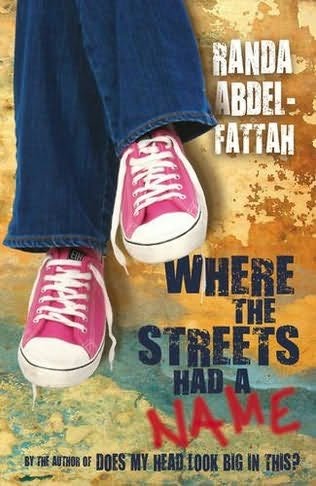
Where the Streets Had A Name by Randa Abdel-Fattah

Thirteen year old Hayaat is on a mission. She believes a handful of soil from her grandmother's ancestral home in Jerusalem will save her beloved Sitti Zeynab's life. The only problem is that Hayaat and her family live behind the impenetrable wall that divides the West Bank, and they're on the wrong side of check points, curfews, and the travel permit system. Plus, Hayaat's best friend Samy always manages to attract trouble. But luck is on the pair's side as they undertake the journey to Jerusalem from the Palestinian Territories when Hayaat and Samy have a curfew-free day to travel.

But while their journey may only be a few kilometers long, it could take a lifetime to complete....

Ari


Wanting Mor by Rukshana Khan

Jameela lives with her mother and father in Afghanistan. Despite the fact that there is no school in their poor, war-torn village, and though Jameela lives with a birth defect that has left her with a cleft lip, she feels relatively secure, sustained by her unwavering faith and the strength of her beloved mother, Mor. But when Mor suddenly dies, Jameela’s father impulsively decides to seek a new life in Kabul. Jameela, a devout Muslim, is appalled as her father succumbs to drink and drugs and then suddenly remarries, a situation that turns Jameela into a virtual slave to her demanding stepmother. When the stepmother discovers that Jameela is trying to learn to read, she urges her father to abandon the child in Kabul’s busy marketplace. Throughout it all, it is the memory of Mor that anchors her and in the end gives Jameela the strength to face her father and stepmother when fate brings them into her life again.

The First Part Last by Angela Johnson

This little thing with the perfect face and hands doing nothing but counting on me. And me wanting nothing else but to run crying into my own mom's room and have her do the whole thing.

It's not going to happen....

Bobby is your classic urban teenaged boy -- impulsive, eager, restless. On his sixteenth birthday he gets some news from his girlfriend, Nia, that changes his life forever. She's pregnant. Bobby's going to be a father. Suddenly things like school and house parties and hanging with friends no longer seem important as they're replaced by visits to Nia's obstetrician and a social worker who says that the only way for Nia and Bobby to lead a normal life is to put their baby up for adoption.

With powerful language and keen insight, Johnson looks at the male side of teen pregnancy as she delves into one young man's struggle to figure out what "the right thing" is and then to do it. No matter what the cost.

We hope you all had a relaxing and happy holiday weekend (if you celebrate the holiday that is)!

Friday, November 26, 2010

Links We Are Thankful For

Color Me Brown links are a series of weekly links in which we share links that pertain to literature and/or race. These are links to posts that we are grateful for (in truth we are grateful to all links about literature or dedicated to improving race relations but it would take too long to list them all).


Please show your appreciation by leaving comments and retweeting these posts :)

Denene Millner recommends book for children as part of National Buy a Book By A Black Author and Give it to Somebody Not Black Month

But when I got pregnant with my first baby, I promised that this didn’t have to be her reality—that my child didn’t have to spend the most impressionable part of her life missing and longing for herself in the pages of the best gifts I could ever give her: literature. And before she made her big debut on this sweet Earth, she had a shelf full of books, many of them books that featured characters that looked like her: Ezra Jack Keats’ “The Snowy Day,” “Goggles,” “and Whistle For Willie”; Vera B. Williams’ “More, More, More Said the Baby”; Faith Ringold’s “Tar Beach,” Nikki Giovanni’s “The Sun Is So Quiet,” Donald Crews’ “Big Mama,” Andrea Davis Pinkney’s “Duke Ellington: The Piano Prince and His Orchestra.” Admittedly, the pickings were slim. But I found them.
Barbara Caridad Ferrer (interviewed at Color Online here) talks about YA and romance
The way I see it is, if adult romance is about true love and the happy ever after, then YA is about first love and hopeful beginnings. It’s about setting the expectations—and the sometimes almost impenetrable barriers—for future relationships. In other words, those elements that create the basis for really great romance heroes and heroines.

I mean, as a romance reader I know I often find myself wondering about what damaged these characters I love so—that makes them so skittish about entering into a relationship with someone who’s so obviously perfect for them. And yes, we’ll often get at least some sort of explanation within the backstory (mores so if they’re reunion stories), but I inevitably find myself wanting more.

Asking questions. What was wrong with that first love? Why didn’t it work before? Was it not the right time for that relationship? Not the right place? Were there outside forces pulling them apart? What kind of mistakes were made? What were they thinking? In other words, what really happened?

A review of Tantalize by Cynthia Leitich Smith at 365 Days of Reading

Somewhat lacking in genuine romantic elements despite its title, Tantalize offers a fun concept with a splash of paranormal. Although there were dark elements to the story, the upbeat narration and fast-paced writing style kept Tantalize from being a downer. The murder-mystery elements were great, and I liked that even though the killer’s identity was pretty obvious, there was a surprise twist that I never expected

A review of The Trouble With Half a Moon by Danette Vigilante at A Few More Pages

I really didn't expect The Trouble With Half a Moon to grab a hold of my heart so tightly. I don't read a lot of contemporary urban fiction, but this one seemed to call out to me. An urban setting may seem alien to someone like me, who grew up in a rural area, but the topics of grief, loss, and healing are universal. The Trouble with Half a Moon focuses on a 13-year-old girl named Dellie, who blames herself for her brother's death and wrestles with those emotions on a daily basis. Her brother's death is ever-present in both her emotions and in her parents' actions. Her mother's fear of losing another child keeps Dellie inside her apartment much of the time. But Dellie longs to have a more typical teen existence, to spend time with her friends and neighbors. Her best friend is fighting with her, and the boy Dellie likes seems interested in spending time together, but she has to watch the outside world from her window.

Share your links with us in the comments!

Thursday, November 25, 2010

We Are Beyond Grateful

The Color Online staff would like to thank each and every one of you who read this blog. Maybe you read it every day, once a week, every two weeks, once a month, etc. Regardless we appreciate you. We appreciate the comments you leave us, the recommendations and the links that you share. We appreciate that so many of you are willing to listen and work towards solutions in promoting diversity dialogues (and action) not just in literature, but in other aspects of our daily lives. We are grateful to all those who have donated books to be put in the prize bucket.

We love and appreciate you all. Please remember those who may feel that they have no one to spend this day with, those who are homeless, the sick. If you can, donate your time to helping to feed others, to read to others. While shopping on Black Friday, buy an extra present to donate (or write a check and personally deliver it).

Have a fabulous Thanksgiving!

Tuesday, November 23, 2010

Interview with Jewell Parker Rhodes

Jewell Parker Rhodes is an awarding winning fiction author best known for her Marie Laveau trilogy, which is set in New Orleans. I had high expectations for Ninth Ward and I was not disappointed. Its one of my favorite middle grade novels of the year. My review. The author was kind enough to agree to an interview.


Hello Jewell Parker Rhodes, Please tell us a little about Ninth Ward?

Ninth Ward is a coming of age story. Using perseverance and inner strength, my characters become heroic. In the face of tragedy, they are able to triumph through faith, friendship, and
love.

This is your middle grade debut. When I heard about it I was so excited, it felt right. When I think of novel's set in New Orleans, you are one of the first authors that comes to mind.

How did this project come about?

All my life, I’ve wanted to write for young readers. I never doubted that it was going to be a challenge to write a good book for children. So, for decades, I’ve been practicing my craft and searching for the right story to tell. In 2008, when Hurricane Ike threatened New Orleans, I thought, “oh, no, not again,” and I went to sleep. I must’ve been dreaming, feeling anxious for Louisiana’s children, for when I woke, Lanesha’s voice was inside my head.

Ninth Ward was worth the wait. Lanesha’s voice was perfect. Many adult authors who crossover into children's literature, have a difficult time creating realistic children's voices. Smart, strong, level headed Lanesha, came across as the 12 yr old she was suppose to be.

How did you approach crafting Lanesha's voice?

Lanesha’s voice was a gift. When I woke, the first few lines were full-blown. It was if Lanesha was guiding me to tell her story. More than any character that I’ve ever written, Lanesha is her own unique self. I never had a problem with her voice, it was just there, inside my head. All I had to do was listen.

Lanesha picked the right person to tell her story. I loved the opening lines "They say I was born with a caul, a skin netting covering my face like a glove. My mother died birthing me. I would've died too, if Mama Ya-Ya hadn't sliced the bloody membrane from my face."

Since Lanesha can see ghost from birth and there's a reason for this ability, it doesn't seem so strange or improbable. The gift of sight is very fitting for a novel set in New Orleans.

Many of your novels feature a little magical element. What came first your love of New Orleans or
magical realism?

Literary people love the term “magical realism.” My grandmother would’ve said, “It isn’t magic, it’s just real.” I think, particularly in the south, folklore is alive and deeply connected to our relationships and family history. So, there’s always an acceptance of the “magical” as a reality. So, as a little girl my grandmother raised me to believe that everything in the world has a spiritual essence to be respected and that the world is filled with symbols that can be interpreted. As a writer, I’m a magical realist; as, Jewell, I’m writing about life as grandmother taught me.

Lanesha and Mama Ya Ya relationship was simply wow. You really make the reader feel their connection. Can you tell us a little about it?

Mama Ya Ya is based upon my grandmother, Ernestine, who raised me. But Mama Ya Ya is older and has the opportunity to share all her love and knowledge with Lanesha. (My grand-mother died unexpectedly when I was in college.) Mama Ya Ya is representative of how elders (and I include teachers and librarians, too!) can be so important raising a child. Lanesha and Mama Ya Ya might not have much in terms of material wealth, but they are rich in love. They create a family even, though legally they aren’t recognized as relatives.

This is a very visual read, especially after the hurricane hits. I could clearly see Lanesha using an ax so they could escape onto the roof. While I was reading this scene, I pictured Strickland's illustrations for A Place Where Hurricanes Happen.
That visual was much easier on me then remembering the real thing. When you were writing Ninth Ward did you ever feel the need to disconnect yourself from memories of Hurricane Katrina? Was that even possible?


I do not think I could’ve written Ninth Ward immediately following Hurricane Katrina. It took three years for me to process the devastation, then another year of writing about Lanesha. But I always knew that Louisianans would endure with love, faith, and fortitude. It will be the Lanesha’s of the world—our young people—who will shape a better future.

The fifth year anniversary of Hurricane Katrina has recently past. How do you think New Orleans is recovering? And what about the Ninth Ward?

New Orleans’s spirit is electric. But I am dismayed at how long it takes to demolish decrepit buildings and how long it takes to rebuild. When I last walked the Ninth Ward, I was thrilled to see the new energy efficient and flood-safe housing. “More, more, more, please” and “faster, faster, faster.”

I love Ninth Ward’s cover. Customers are responding very well to the cover art and the overall design of the book.

Who is the artist behind the cover? And who is responsible for the books design?

Shino Arihara, a Los Angeles based artist, created the cover art. She captured beautifully the spiritual peace and loveliness that can still exist in a world ravaged by storm. I love how Lanesha looks straight ahead, unafraid of the future, and using a magnolia, a flower symbolizing dignity and beauty, as her umbrella.

Alison Impey, Senior Designer at Little Brown Books for Young Readers, designed the jacket art and the visual look of the overall book and its' pages. It's Alison's vision and attention to aesthetic detail that makes Ninth Ward so stunning. I think Alison understood the book perfectly and she helped me, too, in her splendid visuals, to understand the calming power of the tale.

Please send along my thanks to Shino Arihara and Alison Impey for such beautiful work. The cover is the customer’s first impression of a book. As a bookseller it makes my job easier when it's not only good but memorable.

Do you plan on writing any more children's books?

I have written a draft of a YA book and I’m just starting a new middle grade book. If I could write just one book that touches a child’s heart and mind, just when they need it most, I would be ecstatic. Growing up, books were vital to my life. Though I didn’t experience a hurricane, I experienced other kinds of emotional storms. Reading always helped me believe in my own possibilities, other imaginative and concrete horizons, and that there were good people in the world ready to help a child grow.

I am so happy to hear the answer is yes. Ninth Ward was such a beautiful book. Though this is a story about a tragic event, Lanesha, Mama Ya Ya, and Ta Shon are at its core. That's one of the many reasons why I loved it. There's so much beauty, possibly, strength and love to take away from it.

Ninth Ward's only been out since August but is already 2010 Parents Choice Gold Medal Winner. Congratulations, I hope its the first of many wins.

Thank you so much for letting me do this interview. I feel very honored.

Thank you for sharing a little of your time with me, and for writing such a wonderful story. The honor is all mine.

This originally ran on my personal blog in September.

Monday, November 22, 2010

The Warmth of Other Suns (A PW Best Book of 2010)

The Warmth of Other Suns by Isabel Wilkerson
I don't read much non fiction. Since I review it even less, I am going to do this a little differently today, linking to reviews and interviews.

When this book came out in September, many customers were looking for it on the day before it was released, because it was featured in the NYT. Henry Louis Gates interviews Wilkerson. Wilkerson for The Root and NBA Legend Bill Russell interviewed on C-Span's Last Word Selected by Publisher's as a Best Book of 2010

I took the time to include so many links because I absolutely loved The Warmth of Other Suns. It's the story of African American leaving the South during Jim Crow in hopes of better way of life in other parts of the United States. Wikerson tells the story of three people. Ida Mae Brandon Gladney from Chickasaw County, MS. She and her family left in 1937. George Swanson Starling from Wildwood, FL. He left in 1945. Dr. Robert Joseph Pershing Foster from Monroe, LA. He left in 1953.

I love that Wilkerson choose three very different people leaving at various periods during the migration. I found The Warmth of Other Suns to be very engrossing from the very beginning. It was simply very well done, so many levels. Due check out some of the provided links.

In 1994 Wilkerson was the first Black woman to win the Pulitzer Prize in Journalism. The Warmth of Other Suns is her first book. An excerpt

Thursday, November 18, 2010

Colorful Brown Links

Color Me Brown is a weekly feature here at Color Online in which we highlight links that caught our eye about literature and/or race (preferably both). Sometimes, the links will be pop culture race based, sometimes purely literary based.


We can't be everywhere at once, so please leave a link to your own reviews/interviews/discussion posts/etc (or links to other posts you've found).


Two of my favorite bloggers (and writers!) Shveta Thakrar and Cindy Pon discuss writing across cultural lines at Writer Unboxed Here's a (rather lengthy) peek


Some of the beliefs or creatures our readers may wish to research and/or incorporate into their fiction are still part of living traditions and religions for other worlds. Can you give advice about balancing respect for another culture while possibly needing to adapt their stories for a particular manuscript?

ST: I’d say first and foremost, do your research. Start by familiarizing yourself with the traditions in question. For example, if a culture or group prefers their mythology not be used outside their traditions, really consider if it’s necessary to your story. (Of course, this won’t always be the case, but you can never go wrong being respectful.) Remember that none of this exists in a vacuum. If you then draw upon the folklore or mythology, remember you are borrowing, and act accordingly.

Sometimes you’ll have to adapt things to fit your story, and that’s fine; just make sure you know the source material, and then tread carefully. Think about what you want to change and why. Don’t take lazy shortcuts and portray all dark-skinned peoples/beings as evil, etc.; instead, create nuanced, complex worlds and characters that honor the original.

The main thing is to write with respect and remember that we’re all people, and all our stories matter. I can’t stress that enough.

CP: I think with using elements that are current religions and traditions, one needs to especially be careful about how they are portraying and interpreting the story. But the fact of the matter is, no matter how much research you do and how respectfully you handle a topic, character, etc, you will probably offend someone. And this isn’t just in regards to the topics at hand (which one can see as being more sensitive) but happens for all authors in general, no matter what we write.

My advice from my own lessons learned with my debut publication is to write and send into the world what you can stand by. Know in your heart that this is the best you did in all ways for your novel — that you can believe in it and back it. Because once it’s out there, you can’t control the reader’s reaction to your story. They will often interpret it in ways you never intended — and that’s why reading is so personal for everyone.

Barbara Binns (author of Pull, which was reviewed here) reviews All the Broken Pieces by Ann Burg

This book brought back the Viet Nam era in a way no other book I have ever read did for me. The wounded vets help Matt understand that his mother had to have loved him to give him away. His adopted father deals with guilt over his medical school deferment. And a schoolmate who hates Matt because "my brother died over there because of you," helps Matt overcome his own guilt over the accident that crippled the brother he had to leave behind.

This is more than a book for middle school and more than just a boy book.

Y.S. Lee talks about something that I think most of us have gotten frustrated over, being called 'exotic'

There’s a word that pops up with annoying frequency in conversations about people of colour. But despite its popularity, it never fails to surprise me: there I am, reading or chatting away, when – SQUERK! – it pokes me in the eye.

The dreaded word? “Exotic”.

I admit, it doesn’t seem that bad. It’s neither poisonous nor inherently racist. It’s slightly comic, because of the silly euphemism “exotic dancer”. And often, it’s meant as a compliment. But most of the time, its subtler meaning is anything but positive.

Heather raves about The Arrival by Shaun Tan, a wordless picture book that can be enjoyed by all.

Sad, and beautiful and it stays with you. The illustrations are so detailed and intricate, every confusion and trial he has to face is painfully drawn and you ache for him and feel joy with him as he navigates this new and foreign world.

Shaun Tan masterfully captures all of this by placing us in a world far removed from our own, complete with flying ships, towering (and beautifully elaborate) geometrical structures, and a language as foreign as anything you've ever seen. Without any words, we are placed in the same position as he is, and that confusion and that ache intensifies even more because you can feel you are him.

And the illustrations. This is a book to be read slowly

Children's author James Preller has put a call out for photos of fathers reading.

I’ve reached the conclusion that one of the most powerful, positive factors to encourage and inspire boys to read is, very simply, to see their fathers read. Look, there’s dad sitting down with a book. Any book. Fathers don’t just chop down trees, fix door jambs, and watch football. We read, too. It’s a valid male activity, like burping. Think of the power of that simple image. There’s Dad with a book in his lap

Preller put the call out Oct. 18. Recently, Preller told me (Doret) that photos are slowly coming in but there is little to no diversity. I love when diversity is sought out from jump. So please if you have any photos of fathers reading send them on, and spread the word. When fathersread.com is finally launched boys and girls of all nationalities will see men who look like them reading.

On October 29, a kickstarter campaign was launched to get author Tayari Jones novel, Leaving Atlanta made into a movie.

Friday, I had a wonderful conference call with Aletha Spann and Karon Om Vereen, the independent film makers behind the project. They have been working on this project more than five years and it has been inspiring to see the level of dedication they bring to the project. They have made great strides, but there is still a ways to go.

Of course the big-picture (pun intended) goal is to make a feature-length film, but for this fundraiser, we are seeking to raise enough money to shoot a trailer to show to investors. There is a teaser video up on the kickstarter so you can get a feel for the project.

The trailer is great. Sometime in the near future it will be up at Color Online. Anyone interested in making a pledge has until Dec 18th.

Wednesday, November 17, 2010

Women Writers of Color : Danielle Evans

Full Name : Danielle Evans

Date of Birth : 11/8/83

Location: DC

Website/Blog: Danielle Evans

Genre: Fiction

Most Recently Published Work : Before You Suffocate Your Own Fool Self

How frequently do you update your site?

Weekly

Is Your site designed for interaction?

There is a comment feature, and sometimes, such as with the MFA program posts, I will specifically solicit comments and discussion.

Can you tell us a little about Before You Suffocate Your Own Fool Self?

It's a collection of eight short stories. The stories aren't explicitly linked, and so there are distinct protagonists and plots. The book has, of course, many of the obsessions of most contemporary realist fiction: relationships with family, friends, and lovers, and how they define, create, and constrain character.

There's also a recurring focus on sex and sexuality and how women, particularly young women, navigate that terrain with an awareness of both their own agency and the ways in which their options are limited, and a focus on different ways that people experience race and racism in a contemporary context, and perhaps a recurring question of what it means to "grow up," in a world where adult lives don't look any one particular way.

Before You Suffocate Your Own Fool Self is mouthful but I loved this collection, and happily always say the full title. Where does it come from?

The title comes from The Bridge Poem by Kate Rushin. I'd read the poem when I was in college, and it meant a lot to me as a young writer. There's a wonderful stanza where the speaker describes her life as a series of endless translations. I think of writing often as an act of translation-- translating a character's experience into the reader's experience, and I also think the idea of translation is central to a number of my protagonists, who have to move between distinct worlds, and do a lot of behavioral and linguistic codeswitching.

The particular line I chose as the title I like because it has layers of meaning. In the poem itself, it’s directed by the speaker to someone else, and the implication is that the someone else is one of the people who has been using the speaker to define him or herself, or expecting the speaker to explain herself all the time. So, there’s an element of the title that’s confrontational, saying something to the effect of try to understand my experience before you drown in your own, which seems fitting in a collection that is somewhat concerned with characters who don’t often get heard when they tell their own stories in their own words.

Removed from the poem itself, the title also speaks to many of the book's characters, who have often gotten themselves into their own messes, or are at a moment where they need to make a choice about who they’re going to be.

This collection works great for teens as well. Have you ever considered writing a YA novel?

I don't so much think of audience when I write, so I don't know that I would ever set out to write a YA novel, because I don't know that I could write at all with a particular kind of reader in mind, or that I could change my writing to tailor it to a particular audience. One of the things that was important to me in writing the two stories with teen protagonists was to demonstrate how smart the teen characters are, and how aware they are of the choices available to them.

Even where the characters end up in over their heads, or dealing with consequences beyond what they'd anticipated, there's always an internal logic in place, which seemed to mesh with my sense of teenagers as often very smart people in a very confusing world that often refuses to treat them as intelligent. So, although my novel is a bit more structurally complicated than the short story collection, I don't think there's anything about it, or for that matter about most adult books, that would keep teen readers from being able to follow it.There's also a lot of YA literature that adults enjoy, and a lot of YA literature tackling complicated, difficult issues, so I guess part of why I don't think I'd set out to write a YA novel is that I don't know what that categorical distinction would entail and I'm not particularly interested in creating a binary there.

I believe good fiction can easily reflect societies issues without overshadowing the story and you've done just that. Issues of class, gender and race are raised, though the stories are all so well layered they are simply a part of the whole.

As a Black female writer do you find yourself answering more questions about the race and gender in your work (like this one) as opposed to strength and quality of your writing?

Yes. There are a lot of readers and reviewers and interviewers who really understand the book, and understand that it's about both race and a lot of individual people's personal experiences, and I'm always happy to have that conversation because that is part of the book's focus-- what does it mean to try to be your own person when you're marked in these ways that make you vulnerable in certain contexts, both literally vulnerable and psychologically vulnerable to other people's assumptions and expectations? But I find that in some cases race is the only thing that people want to talk about, and it can be frustrating, because I don't have the kind of concrete answers people want there-- if I did, I would have written a non-fiction treatise, not a book of fiction about people with messy lives.

I think it's funny sometimes because I get asked a lot of questions that are sociological in nature, and I'm not a sociologist, I'm not necessarily equipped with any particular data. I think there's also a tendency for some racial issues to become "trendy," so, for example, I get a lot of questions about how biracial Americans are doing, and there's been a focus on that aspect of the book, even though only one of the eight stories features a biracial character, and in addition to not being a sociologist, I'm not even biracial-- my mother is. It's not just that I don't have the answers people are looking for, it's also that, as a person who has studied African-American literature, and now teaches it, I find it frustrating how often books that are really smart and beautiful on the sentence level, or really tightly plotted and structured, get reduced to pure history or sociology, because they are some students' only exposure to African-American life or history.

It's not that those historical or sociological elements aren't important, but it takes something away from the author as an author, as a person with an imagination and an aesthetic vision, to treat African-American literature as if it's just reporting. (It also, of course, takes something away from actual reporters and historians and sociologists and anthropologists to act like any person with brownish skin is a qualified source of broad data on a social-group. )

So, one the one hand, I think yes, I wrote a book with a focus on characters of color, and those things are part of the fiction insofar as they are part of the characters' lives, but I also thought about sentences, and structure, and the ways in which these characters think and desire and speak and fall in love, and sometimes race is expectantly or unexpectedly central to that, and sometimes it's not.

Having said all of that, I find infinitely more frustrating than the conversations that focus only on the racial elements of the book, the conversations that sort of dismiss the idea of race. I mean, we shouldn't have to say, "This book is about black characters, but that shouldn't make it irrelevant or threatening to white readers, because it's not really about race," and it seems we're not quite past that yet, which in some ways underscores the difficulty the characters in the book are encountering. They are people, and they are people of color, and those aren't two separate issues or conversations.

In my review, I said your transitions to move the stories along were clinic good. Hopefully your students are paying attention. I know I am. If you can, please tell us a little about your upcoming novel, The Empire Has No Clothes.

Thank you. The Empire Has No Clothes is a novel about a woman who takes a job at a charter school and is tasked with creating a progressive history textbook, which becomes increasingly difficult, especially when she realizes that her family is involved in a controversial fictional historical event, and has to choose between her political loyalties and her family loyalties. There is also a troublesome younger sister, a senate campaign, some old family secrets, and a lot of sex and drugs.

I say this because otherwise it sounds like I'm writing some combination of history book, political policy paper, and literary novel, and apparently no one reads any of those things any more. But structurally, the novel is a mix of these different forms and voices, so it's been fun to play with things like fake history book excerpts, or transcriptions of imaginary political commercials, along with the greater variation of voices that the novel form offers.


I want to thank Lydia Hirt from Riverhead Books (Penguin) for passing along the questions to Danielle Evans and making this great Women Writers of Color feature possible.

Monday, November 15, 2010

The Last Days of Ptolemy Grey

The Last Days of Ptolemy Grey by Walter Mosley
91 yr old, Ptolemy Grey suffers from dementia and lives alone in a small apartment. Reggie, the one family member who was looking after him hasn't been around in weeks. Soon 17 yr old Robyn, a family friend comes into Ptolemy's life. She helps bring order to his cluttered apartment. Ptolemy spends much of his time in his memories. The here and now is choppy at best.

With Robyn's around Ptolemy finds, he wants to seek help for his dementia. Ptolemy agrees to be a guinea pig for a doctor who is testing an experimental drug. The drug gives Ptolemy the mind he once had but he also knows it will kill him. In the time he has, Ptolemy wants to get his affairs in order.

Ptolemy Grey was very much real to me. I touched by and felt his fear and loneliness. As well as his desire to remember again. What I found most interesting was Ptomely's mind wandering into his memories. The disconnect from the now was very believable. Mosley takes the time to develop Robyn as well. The two offer each other something no one else can. This could've been a sad story, but somehow its not. What it is, is was well crafted and beautiful. I coudn't stop reading.

Sunday, November 14, 2010

New Crayons =)


New Crayons is a meme hosted/created by us in which we ask bloggers to share what new multicultural titles they got this week.

First, have you heard about the Carl Brandon Society's Octavia Butler Scholarship?

The Carl Brandon Society announces a prize drawing to support The Octavia E. Butler Memorial Scholarship Fund.

The Carl Brandon Society, an organization dedicated to racial and ethnic diversity in speculative fiction, will hold a prize drawing of five eReaders to benefit the Butler Scholarship, a fund that sends two emerging writers of color to the Clarion writers workshops annually.

In keeping with the Society’s support of literature from and about people of color, the prizes include five eReaders: two Barnes & Noble Nooks, two Kobo Readers, and one Alex eReader from Spring Design. Each eReader will come pre-loaded with books, short stories and essays by writers of color from the speculative fiction field. Writers include: N. K. Jemisin, Nisi Shawl, Alaya Dawn Johnson, Terence Taylor, Ted Chiang, Shweta Narayan, Chesya Burke, Moondancer Drake, Saladin Ahmed, Rochita Loenen-Ruiz and more.


The drawing’s tickets will cost one dollar US ($1) and can be purchased at http://carlbrandon.org/drawing.html. Entrants may purchase an unlimited number of tickets, which will be available from November 5, 2010 through November 22nd, 2010. Sales will close at 11:59PM EDT on November 22nd. Winners will be drawn randomly from a digital “hat” and announced online.

Books for Doret

From My Mother's House of Beauty by Susan Stephanie Henry

From her childhood in Englishtown on the Caribbean coast of Honduras to her life in the Seventh Ward, Henry writes of transitions and shifting identities. Susan investigates her many worlds: family homes, beauty salons, public schools and fashion runways. Part memoir, part ethnography, House of Beauty explores what it means to be a black Honduran woman living in New Orleans.


Sugar Changed the World: A Story of Magic, Spice, Slavery, Freedom and Science by Marc Aronson & Marina Budhos

When this award-winning husband-and-wife team discovered that they each had sugar in their family history, they were inspired to trace the globe-spanning story of the sweet substance and to seek out the voices of those who led bitter sugar lives. The trail ran like a bright band from religious ceremonies in India to Europe’s Middle Ages, then on to Columbus, who brought the first cane cuttings to the Americas. Sugar was the substance that drove the bloody slave trade and caused the loss of countless lives but it also planted the seeds of revolution that led to freedom in the American colonies, Haiti, and France. With songs, oral histories, maps, and over 80 archival illustrations, here is the story of how one product allows us to see the grand currents of world history in new ways. Time line, source notes, bibliography, index.


Truth With a Capital T by Bethany Hegedus

Lots of families have secrets. Little-Known Fact: My family has an antebellum house with a locked wing—and I’ve got a secret of my own.

I thought getting kicked out of the Gifted & Talented program—or not being “pegged,” as Mama said—­was the worst thing that could happen to me. W-r-o-n-g, wrong.
I arrived in Tweedle, Georgia, to spend the summer with Granny and Gramps, only to find no sign of them. When they finally showed up, Cousin Isaac was there too, with his trumpet in hand, and I found myself having to pretend to be thrilled about watching my musical family rehearse for the town's Anniversary Spectacular. It was h-a-r-d, hard. Meanwhile, I, Maebelle T.-for-No-Talent Earl, set out to win a blue ribbon with an old family recipe.


But what was harder and even more wrong than any of that was breaking into the locked wing of my grandparents’ house, trying to learn the Truth with a capital T about Josiah T. Eberlee, my long-gone-but-not-forgotten relation. To succeed, I couldn't be a solo act. I’d need my new friends, a basset hound named Cotton, the strength of my entire family, and a little help from a secret code.

Ari Got

Operation Redwood by S. Terrel French

Clandestine e-mail exchanges, secret trips, fake press releases, and a tree-house standoff are among the clever stunts and pranks the kid heroes pull off in this exciting ecological adventure.

"Sibley Carter is a moron and a world-class jerk!" When Julian Carter-Li intercepts an angry e-mail message meant for his high-powered uncle, it sets him on the course to stop an environmental crime!

His uncle's company plans to cut down some of the oldest and last California redwood trees, and its up to Julian, and a ragtag group of friends, to figure out a way to stop them. This action-packed debut novel shows the power of determined individuals, no matter what their age, to stand up to environmental wrongdoing.
How about you? Share your link in the comments.

Friday, November 12, 2010

Pull

Pull by B.A. Binns 2010 (ARC)
WestSide Books

David Albacore has moved from his small-town California home to Chicago. He had to move once his father murdered his mother and went to jail, forcing David and his two younger sisters to move in with their unwilling Aunt Edie. Aunt Edie lives in a tiny apartment and is barely making ends meet on her own, David works every day after school to make sure his family is provided for. He's an extremely talented basketball player and so David has to make a decision. Go for a basketball scholarship or quit school and work in construction full time. It was his mother's dream for him to go to college, but he's sure that she wouldn't want the family to be split up either (which would happen once David moved away for college since he would no longer be able to take care of them). In addition to juggling work and family, David has a growing attraction to Yolanda Dare, the girlfriend of the school's "king" and major player. David doesn't believe he can have it all, so he's going to need to pick and choose.

In all honesty, I was skeptical about this book, based on the cover alone. Yet another book you can't judge based on its cover. I really really liked it. It was beyond refreshing to have a guy male character who is not a "lovable nerd" or a "playa with a soft interior". David seems to fit in the middle of these two extremes. He's not a playa, nor is he particularly good at school and he's surprisingly not hopeless when it comes to girls (it most likely helps that his mother was a good example and that he has two sisters). I was afraid that David would try and play the "noble hero" throughout the novel. He does try it, but he soon realizes that he does resent his sisters. Because of his sisters he can't keep his paycheck for himself or take The Dare (as Yolanda is known) out on fancy dates along with a host of other things. The noble thing about David is that he acknowledges his resentment, but fights to keep it under control. Much like David, Pull is a frank story that does not hesitate to talk about sex, swear or even gay relationships (I was grinning from ear to ear when I read a certain scene between Carl and Neill. They were underdeveloped minor characters sure, but they were gay and it was NO BIG DEAL. Yes!).

Not gonna lie, at first it was a bit jarring at how much David thought about sex. But eventually I shrugged it off because I have no doubt that it's realistic and it's really not that important. And in the story it's not discussed graphically anyway. You know how they say that a guy is worth keeping around based on how he treats his mother and sisters? David is awesome in that respect. Not perfect, but the way he treats his sisters (especially his freshman sister Barney) is so tender. I shared his pain at not being able to reach his youngest sister, Linda and at his frustration over Barney's obliviousness towards a certain character. As you can tell, I have a bit of a crush on David ;) Asides from David's personality, I was impressed at how each of David's siblings portrayed a different style of grieving. David does not know how to help his sisters and they don't know how to help him. It's a long and painful process, filled with denial, anger and immense sadness. It's also about guilt and debt, how much do we owe our loved ones, living and deceased? There's no easy answer.

Pull is a straightforward read that places a refreshing emphasis on sibling/family relationships over romantic ones. I did have a really hard time understanding Aunt Edie, the explanation for her actions seemed to convenient and implausible, there was not enough evidence to back up her actions. I wanted more character development of David's acquaintances (he doesn't allow them to get close enough to be friends) and his youngest sister Linda (how did she handle school??). It covers a lot, but none of the issues drown the book. From domestic violence to bullying to the ultimate decision about college, no issue is rushed, it flows naturally in the story. The marriage class was incredibly transparent (do those classes exist in high school?) but it was cool to see issues of family and marriage discussed in a high school setting. There is no moralizing in this narrative. David makes a hard decision and it's not one that everyone will make, but I completely understood why he made it. That's what makes this story so notable. I'm sure writing this story was no cakewalk (oh look a reference to an awesome quote, see below) but the whole novel reads like a testimony to one. Excellent.

Disclosure: Received for review from publisher. Thank you WestSide!

Fav quote: "People think cakewalk means easy. But real cakewalks were difficult as hell according to my grandmother. They required endurance, balance and training, and only the best lasted until the end." David pg. 30-31


Wednesday, November 10, 2010

Women Writers of Color: Cynthia Leitich Smith


Full name: Cynthia Leitich Smith

Location: Austin, Texas

Website/blog: http://www.cynthialeitichsmith.com/


http://cynthialeitichsmith.blogspot.com/


http://cynleitichsmith.livejournal.com/

Genre: variety

WiP or most recently published work:


Eternal (Candlewick, 2009, Feb. 2010)(YA Gothic fantasy)


Holler Loudly, illustrated by Barry Gott (Dutton, Nov. 11, 2010)(tall tale picture book)


Blessed (Candlewick, Jan. 25, 2011)


Jingle Dancer, illustrated by Cornelius Van Wright and Ying-Hwa Hu (Morrow/HarperCollins, 2000)

Rain Is Not My Indian Name (HarperCollins, 2001)

Indian Shoes (HarperCollins, 2002)

Santa Knows, co-authored by Greg Leitich Smith, illustrated by Steve Bjorkman (Dutton, 2006)

Tantalize (Candlewick, 2007, 2008)

Eternal (Candlewick, 2009, 2010)


Plus several short stories, most recently:

"A Real Live Blond Cherokee and His Equally Annoyed Soul Mate," from Moccasin Thunder: American Indian Stories for Today, edited by Lori M. Carlson (HarperCollins, 2005)

"The Wrath of Dawn," from Geektastic: Stories from the Nerd Herd, edited by Holly Black and Cecil Castellucci (Little, Brown, 2009)


"Haunted Love," from Immortal: Love Stories with Bite, edited by P.C. Cast (BenBella, 2009)


"Cat Calls," from Sideshow: Ten Original Tales of Freaks, Illusionists and Other Matters Odd and Magical, edited by Deborah Noyes (Candlewick, 2009)

How frequently do you update your site?

My main author site at http://www.cynthialeitichsmith.com/ is updated monthly.

My blog is updated most days, typically Monday through Friday.

Is your site designed for reader interaction?

I offer an email link at the main site and the option to comment at Cynsations at LiveJournal. In both cases, I do reply.

Here at Color Online, we tend to get frustrated at the lack of diversity in children's literature. When it comes to the number of books published by Native Americans in children's literature, the numbers are depressingly low. Why do you think that is? Is more encouragement needed to see writing as a career path or does publishing need to open up? A bit of both?

If you're drawing on the CCBC statistics: http://www.education.wisc.edu/ccbc/books/pcstats.asp, the number of Native authors and illustrators publishing is even lower than it looks.

You see, the distinguished Abenaki children's-YA author Joseph Bruchac frequently publishes multiple titles in a year. That's great news in terms of raising the number of quality books, but the upshot is that in a year where, say, five books are listed, it's possible that two are more are both by Joe. So, we're talking painfully small numbers of Native voices overall.

"Why?" is a big question. It goes to larger issues in the Native Nations and mainstream society. It takes money to support oneself while writing, and it takes connections that may not be available to a writer living on a reservation or, for that matter, any community that's outside of the upper middle class or higher in terms of socio-economic resources.

For a long time-and still sometimes today-depictions of Native characters in youth literature have been inaccurate, drawing on stereotypes. That signals to writers in the community that this isn't necessarily a field that will welcome their voices.

Furthermore, Native folks are underrepresented to non-existent, not only among children's-YA book creators, but also in every category-agents, editors, art directors, marketing pros, distributors, booksellers, teachers, librarians, and everyone in between.

We're short on champions, which makes are friends-people like you who care and are willing to make some noise-all the more important.

As far as publishers are concerned, it's largely about numbers. If my Native fiction made the NYT bestseller list and so did Joe's and Tim Tingle's, then publishers would be looking hard for Native voices.

(Granted, Sherman Alexie and Louise Erdrich have enjoyed commercial success with their children's work-and well deserved, too-but they came in as adult-market bestsellers, which gave them a quasi-celebrity status. Furthermore, the indie bookstores that built their generation of authors of color for adults don't have the numbers or resources that they used to).

As far as Native writers are concerned, yes, they should be encouraged, but also they need to know that they're not in it alone, that they're welcomed by readers who can't wait to dive into their stories.

For more information on Native American Themes in MG/YA go here

What's harder for you to write; picture books, middle grade fiction or young adult fiction? Is there a genre you prefer? If so, why?

They're totally different beasties.

To me, a picture book is like a puzzle. I can pick it up and put it down and riddle it out. A novel is more like an all-encompassing, brain melt.


At the moment, I'm enjoying writing funny picture books and Gothic fantasy for teenagers.

I'm pleased that my Gothics feature diverse casts and protagonists of color and that they've been so enthusiastically embraced by YA readers. It tells me that some of the pending diversity issues and challenges are more about us grown-ups. It makes me hopeful for the future.

Top 5 reads you're looking forward to reading in 2010?

Because I often read ARCs, I'm onto 2011 books now. But my favorites of 2010 include:

The Agency: A Spy in the House by Y.S. Lee

The Agency: The Body in the Tower by Y.S. Lee

Alien Invasion and Other Inconveniences by Brian Yansky

Truth with a Capital T by Bethany Hegedus

One Crazy Summer by Rita Williams-Garcia

100 words or less how would you describe your work?

I write funny stories, daily-life stories, heart-felt stories, and larger-than-life stories, often set in the mid-to-southwest. I write stories of family and community and feathers and fangs. Of the working class and royalty, heroes and villains, big mouths and furred folks-all of whom are stretching to grasp whatever it is they need and want most.

100 words on less please share your thoughts on : Women of color writers

I would encourage women of color writers to define themselves and shrug off the expectations of the market. If you want to write stories inspired by your community or the child in you, go for it. If you want to strap on wings and lead YA lit up to heaven, then feel free to do that too. Write every-kids and make people a little uncomfortable, but never forget to honor the hero in you.


Thank you so much for taking the time to be with us today Cynthia! I wholeheartedly recommend Eternal and Tantalize. And I've heard nothing but rave reviews over Jingle Dancer, including one from a member of our staff). And I agree with The Agency series by Y.S. Lee being top reads of 2010! Cynthia's blog, Cynsations is one of the best resouces for anyone interested in literature, whether reading it or writing it or working in the publishing industry. Furthermore, Cynthia is one of the few Native American authors writing for children and for that, the world of children's literature has been immensely enriched. Can't wait to see what she comes up with next!

Sunday, November 7, 2010

New Crayons + Join the Read in Color Holiday Book Exchange


New Crayons is a meme hosted by us in which we share what new books we got for this week. We only mention the multicultural books (hence the crayons part). Before we get on to the new crayons, I have a bit of a shameless self-promotion.

The winter holidays are fast approaching and that means it's time for the Read in Color Holiday Book Exchange! I'm offering a free book to whoever can design a button (free of charge) for this holiday book swap. What differentiates this from other holiday book swaps is that you can only request/send books by/about people of color. For more information go here

*ahem* I'm done now. Back to your regularly scheduled programming :)

Doret received


The Warmth of Other Suns: The Epic Story of America's Great Migration by Isabel Wilkerson

In this epic, beautifully written masterwork, Pulitzer Prize–winning author Isabel Wilkerson chronicles one of the great untold stories of American history: the decades-long migration of black citizens who fled the South for northern and western cities, in search of a better life. From 1915 to 1970, this exodus of almost six million people changed the face of America. Wilkerson compares this epic migration to the migrations of other peoples in history. She interviewed more than a thousand people, and gained access to new data and official records, to write this definitive and vividly dramatic account of how these American journeys unfolded, altering our cities, our country, and ourselves.

With stunning historical detail, Wilkerson tells this story through the lives of three unique individuals: Ida Mae Gladney, who in 1937 left sharecropping and prejudice in Mississippi for Chicago, where she achieved quiet blue-collar success and, in old age, voted for Barack Obama when he ran for an Illinois Senate seat; sharp and quick-tempered George Starling, who in 1945 fled Florida for Harlem, where he endangered his job fighting for civil rights, saw his family fall, and finally found peace in God; and Robert Foster, who left Louisiana in 1953 to pursue a medical career, the personal physician to Ray Charles as part of a glitteringly successful medical career, which allowed him to purchase a grand home where he often threw exuberant parties.

Wilkerson brilliantly captures their first treacherous and exhausting cross-country trips by car and train and their new lives in colonies that grew into ghettos, as well as how they changed these cities with southern food, faith, and culture and improved them with discipline, drive, and hard work.


Ari received


AWAKE is book 2 of a YA fantasy trilogy told from the perspective of an African American teen girl, Adisa Summers. Adisa and Micah's saga continues as the teen couple race against time to save Micah. However conflict interferes with their efforts as well as other forces in the super world. When Adisa tries to secretly meet the parents who abandoned her, an explosive confrontation with Micah drives the couple apart and threatens to destroy them both. Adisa must conquer her fears and take a stand now that she's finally Awake.


Milagros: Girl from Away by Meg Medina


Milagros de le Torre hasn’t had an easy life: ever since her father sailed away with pirates she’s been teased at school and there’s the constant struggle for her family to make ends meet. Still, Milagros loves her small island in the Caribbean, and she finds comfort in those who recognize her special gifts. But everything changes when marauders destroy Milagros’s island and with it, most of the inhabitants. Milagros manages to escape in a rowboat where she drifts out to sea with no direction, save for the mysterious manta rays that guide her to land. In stunning prose, Meg Medina creates a fantastical world in which a young girl uncovers the true meaning of family, the significance of identity, and, most important, the power of a mother’s love.

Summaries from amazon.com

Link to your own New Crayons post in the comments!

Thursday, November 4, 2010

The Colorful Week

Share your own color me brown links. These can be links having to do with any issue regarding race and/or literature. Reviews, interviews, guest posts, podcasts, etc.


Zetta shared the press release about the Carl Brandon Society's fundraiser. Raffle tickets cost $1

The Carl Brandon Society, an organization dedicated to racial and
ethnic diversity in speculative fiction, will hold a prize drawing of
five eReaders to benefit the Butler Scholarship, a fund that sends two
emerging writers of color to the Clarion writers workshops annually.

In keeping with the Society’s support of literature from and about
people of color, the prizes include five eReaders: two Barnes & Noble
Nooks, two Kobo Readers, and one Alex eReader from Spring Design. Each
eReader will come pre-loaded with books, short stories and essays by
writers of color from the speculative fiction field. Writers include:
N. K. Jemisin, Nisi Shawl, Alaya Dawn Johnson, Terence Taylor, Ted
Chiang, Shweta Narayan, Chesya Burke, Moondancer Drake, Saladin Ahmed,
Rochita Loenen-Ruiz and more.


This is a about a weke old but the Allen County Public Library in Fort Wayne, Indiana has compiled a shortlist of Mock-Coretta Scott King Book Awards. I encourage everyone to check out the list and add their own suggestions in the comments.

Another older post (found courtesy of White Readers Meet Black Authors), Five Young Black Writers You Should Be Reading Now

"African-American Fiction." Wouldn't it make more sense for these titles to be divided by genre? Classics among classics, erotic fiction with erotic fiction, and "street lit" -- well, it should have a section all its own. Still, despite the preponderance of so-called urban fiction crowding the shelves at your local Borders, there is a vital canon of contemporary African-American literature, with writers like ZZ Packer, Colson Whitehead and Victor LaValle all releasing heralded titles in recent years.

Coming up behind those darlings of the literary establishment is a new wave of young, gifted and black writers getting rave reviews, publishing deals and even a few national tours. Nick Burd, Danielle Evans, Branden Jacobs-Jenkins, Ernessa Carter and Gary Jackson are five writers who have all written accomplished debuts, penning stories and plays and poetry that are both literary and provocative. All have distinctive voices and write on myriad themes.


Doret interviewed MG/YA author Lisa Yee

4. Its obivous a lot of care went into all the of the characters. Santat's illustrations are great. The facial expressions are always spot on perfect (even the gnome and the fish on the cover)

Its not easy finding middle grade novels (fantasy not included) with male protagonist for ages 8 up. With the artwork, short chapters and stories less then 180 pages, this series is geared toward children beginning to read longer novels.

Did you know this middle grade void existed? Did you consciously set out to help fill it?


I had no idea there was a void in this category until after I had written the first book! I just wanted to write something that my son would have loved to read when he was in the fourth grade--and actually the series was his idea.

He said to me, "Why don't you write a book with not a lot of commotion, like that Cleary woman." Of course he meant the great Beverly Cleary. So I set about to write something about the ups and downs of elementary school, with no vampires, epic battles, or weapons.

The Ninja Librarian reviews YA-set-in-the-'70s Finding My Place by Traci L. Jones

This is the story of a girl who has to switch schools because of her parents' jobs. The kicker is that she's a black girl who is moving into a predominately white neighborhood during a time when people were just starting to accept each other. This is a quick little book that just gives you a taste of what life might have been like.

Being the new girl in school is one thing, but realizing that everyone (even the teachers) may be against your from the get go? That's an insane thought, but it was a reality at one point. And it amazes me to think about the close-mindedness of that time. I get a little upset sometimes when I realize how people used to treat each other just because of their skin color. But then I have to remember how far this country has come - I live in the most diverse county in the country and I can't image my days without all the people working together.

Get to linking!

Tuesday, November 2, 2010

The Broken Kingdoms - N.K. Jemisin

The Broken Kingdoms by N.K. Jemisin
This is the second book in The Inheritance Trilogy. I loved The Hundred Thousand Kingdoms, book one. My expectations were very high and I was not disappointed. Loved It.

Set 10 years after the confrontation in the first book. Powerful magic was released creating a World Tree (as seen on the cover) in the city of Shadow. Oree Shoth is a blind artist, who makes her living selling art to tourist. She has the ability to see a little magic and godlings. Someone is killing godlings in Shadow. Oree finds one of the first victims in an alley. Godlings are a part of Oree's everyday life. Like the first book it very interesting to see mortals and gods interact. There's all the good stuff love, sex, hate betrayal, deceit , fear and forgiveness

Broken Kingdoms is more of a companion as opposed to a continuation. So you can read this one first but trust me you will want The Hundred Thousand Kingdoms as well. All of the major characters in the first book do make appearances.

The beautiful thing about this trilogy, the author pulls you into the world she's created. The story arc's are amazing. The second half was unbelievably good. I found myself rereading passages. Oree Shoth is one of my favorite protagonist of 2010.

Even if fantasy is not a genre you normally read The Inheritance Trilogy will give you some serious reader joy. Trust me and give it a try. Book one is out in the small paperback size for only $7.99. If you've already read it, go buy The Broken Kingdoms and enjoy.