Sunday, February 27, 2011

New Crayons (Oscar Night!)


Welcome to Color Online! New Crayons is our weekly meme in which we talk about what new multicultural books we got for the week. It can be audiobooks, manga, graphic novels, YA, picture books, etc. Anything that is a book. Maybe you got this book from the library or swapped for it or won it or bought it (!). Please share a link to your post in the comments.

And if you watched the Oscars what'd you think? I haven't seen any of the Best Picture nominees but The Social Network and Inception are in my Netflix queue.


Doret

Dark Goddess by Sarwat Chadda

New enemies, new romance, and new horrors,

Billi's back, and it seems like the Unholy just can't take a hint.

Still reeling from the death of her best friend, Kay, Billi's thrust back into action when the Templars are called to investigate werewolf activity. And these werewolves are like nothing Bilil's seen before.

They call themselves the Polenitsy - Man Killers. The ancient warrior women of Eastern Europe, supposedly wiped out centuries ago. But now they're out of hiding and on the hunt for a Spring Child -- an Oracle powerful enough to blow the volcano at Yellowstone -- precipitating a Fimbulwinter that will wipe out humankind for good.

The Templars follow the stolen Spring Child to Russia, and the only people there who can help are the Bogatyrs, a group of knights who may have gone to the dark side. To reclaim the Spring Child and save the world, Billi needs to earn the trust of Ivan Romanov, an arrogant young Bogatyr whose suspicious of people in general, and of Billi in particular.

Dark Goddess is a page-turning, action-packed sequel that spans continents, from England to the Russian underworld and back. This is an adventure of folklore and myth become darkly real. Of the world running out of time. And of Billi SanGreal, the only one who can save
it.


What Can't Wait by Ashley Hope Perez

Another day finished, gracias a Dios." Seventeen-year-old Marisa's mother has been saying this for as long as Marisa can remember. Her parents came to Houston from Mexico. They work hard, and they expect Marisa to help her familia. An ordinary life--marrying a neighborhood guy, working, having babies--ought to be good enough for her. Marisa hears something else from her calc teacher. She should study harder, ace the AP test, and get into engineering school in Austin. Some days, it all seems possible. On others, she's not even sure what she wants. When her life at home becomes unbearable, Marisa seeks comfort elsewhere--and suddenly neither her best friend nor boyfriend can get through to her. Caught between the expectations of two different worlds, Marisa isn't sure what she wants--other than a life where she doesn't end each day thanking God it's over. But some things just can't wait...

Vasilly

I Hotel by Karen Tei Yamashita

Dazzling and ambitious, this hip, multi-voiced fusion of prose, playwriting, graphic art, and philosophy spins an epic tale of America’s struggle for civil rights as it played out in San Francisco’s Chinatown. Divided into ten novellas, one for each year, I Hotel begins in 1968, when Martin Luther King and Bobby Kennedy were assassinated, students took to the streets, the Vietnam War raged, and cities burned.

As Karen Yamashita’s motley cast of students, laborers, artists, revolutionaries, and provocateurs make their way through the history of the day, they become caught in a riptide of politics and passion, clashing ideologies and personal turmoil. And by the time the survivors unite to save the International Hotel—epicenter of the Yellow Power Movement—their stories have come to define the very heart of the American experience.


Sula by Toni Morrison

Two girls who grow up to become women. Two friends who become something worse than enemies. In this brilliantly imagined novel, Toni Morrison tells the story of Nel Wright and Sula Peace, who meet as children in the small town of Medallion, Ohio. Their devotion is fierce enough to withstand bullies and the burden of a dreadful secret. It endures even after Nel has grown up to be a pillar of the black community and Sula has become a pariah. But their friendship ends in an unforgivable betrayal—or does it end? Terrifying, comic, ribald and tragic, Sula is a work that overflows with life.


So what lovely bookish goodies did you get?

Saturday, February 26, 2011

Try to Win a Book; Though You Probably Won't

I've always loved reading mysteries. Earlier this year, I really wanted to read a mystery by an author of color. So I walked through the section, several times in hopes of finding something. Nada.

I've been working at a bookstore for nearly 10 years, and I am very familiar with a lot of mystery authors, even the ones I don't read. Of the male authors of color published through traditional means within the US, most are imports. I like reading novels by authors from other countries but what about some home grown talent. Walter Mosley and Stephen Carter are the only two best selling authors of color I can think of in the last few years. Has there ever been a best selling female author of color mystery author? Maybe Valerie Wilson Wesley.

Since 2009, I've only read four mysteries written by female authors of color.

There's are always discussions about the lack of author of colors writing science fiction/fantasy. But never about the lack of diversity amongst mystery authors. Why is that?

I am going to throw down a challenge gauntlet, the first person to answer correctly will win any book of their choice by a female author of color up to a $25 value.

The Challenge - name 10 female authors of color that have written mysteries published within the U.S. through traditional* means since 2009

I know this is very hard, so to be nice I will also accept authors who have mysteries scheduled to come out this year.

Though I am pretty sure, I won't have to pay out I am not that cocky, so this is open to U.S. residents only, until March 2.

*authors can not be self published. For those that took the time to read the small print. I will give two hints. One author 's title was recently featured here and another was reviewed here

Friday, February 25, 2011

Color Me Brown

Yet another week of rockstar links. Please read, retweet, repost, comment, etc.


A review of I Am J by Cris Beam over at Lucy Was Robbed


I was a little scared of this book. I knew that Beam had it in her to realistically portray the transgender experience, so my expectations were super high. I also knew that a book like this has the potential to be filled with well-meaning stereotypes in order to present the most inclusive picture: of trans folk, of Puerto Rican New Yorkers, of the dream of being a "real boy," and more. I loved this book. J really rang true to me as a character and as a transguy, and his experiences, though not universal (thankfully not everyone has to move out or change schools in order to transition, though some undoubtedly do), were realistic. I Am J was everything I hoped it would be.

But I did have a couple of problems. I found it hard to believe that J, who has been looking around on the internet for information and support since he was eleven, hadn't heard about T (testosterone injections) or a (chest) binder until he was seventeen. I'm willing to let that go as it allows the reader to learn about these things at the same time that J does.

YA Highway: Writing Race in YA. Wow, just wow. Excellent, candid post.

5) I Don't See Color At All!

Yes, you do. There is no such thing as color blind. If you see me, of course you notice that I am a marvelous shade of caramel! I see you and think she is a lovely porcelain! That is completely normal and in no way makes you a racist. It's what you do and think about the difference in skin color that tells the tale.

6) Writers Of Color, I See What You Did There! (White Writers, Don't Be Scared!)

For writers of color, writing whites as EVIL must end. This is equally harmful and wrong. Yes, white characters can be bad. But not every last one you write! Not every white character has to be a racist devil from hell. This is especially true for writing Southern whites. I am a native Southerner and went to school with quite a few. We had a good old time together! I could have done without the country music but they accepted my rap, so rock on, Garth Brooks! No, you cannot write about other minorities in a foolish and disrespectful manner, either. Asians are not a monolithic culture and Latinos are not all from Mexico. Not all Blacks can dance and like rap. We are just as guilty of racial tropes and stereotyping. It is equally wrong for us to do this. We can't be down on white writers for doing it and not look to our own house.

White writers, there is such a thing as being too PC. You try to be diverse and are so scared of offending someone that you wind up writing a character who puts me to sleep. You can write a black character as EVIL! You can make the black girl bitchy if you like. We won't lynch you, okay? Not everyone who is black is hair trigger sensitive, you know.


Review of Wait for Me by An Na at Books and the Universe

I certainly wanted for her to be happy, and resolve everything with Johnathon, but I felt like I was wanting that as an observer; almost alienated from her.
Which isn't to say I didn't dislike the writing. It seems pretty cleverly crafted; Mina writes in the first person past, and Suna in the third person present. Both of them seem like the perfect ways to tell their stories in relation to the character.

The plot, however, I wasn't so keen on. I think that was mostly because it's such a short book; I don't think there was really enough time for the plot to develop realistically or clearly; the Mina/Johnathon thing, for instance. I was entirely confused as to what was going on there, or what was really going on behind it. They used to be in love, but now they're not? Yet Johnathon is still helping her keep up her perfect facade? But there's more to that, surely... The mind boggles. And, similarly, the Mina/Ysrael relationship seemed pretty rushed. It seemed like they'd just met when they were already kissing. It was, I suppose, like the story was entirely in fast-forward mode, but I couldn't slow things down and really identify with the characters
.

Our very own staff member, Nathalie has a guest post for Writers Aganist Racisim

Racism. When you are a girl, or a woman, it’s hard not to also include gender discrimination, difficult not to avoid dealing with the implications behind the label “weaker sex.”

How did racism impact me? My neighbor, 14, grabbed me by the neck and threw me against the wall, whispering things that I won’t write here. I punched and bit. I was 10.

When I moved to France, classmates innocently asked if I wore skirts made of straw in Cameroon and if I walked around half-naked like they had seen on T.V. And other questions of the same caliber.

In an area known for its far-right movement in France, a White kid, in a swimming pool, stared at me for a few seconds like he’d just seen an E.T. and called me “Niger.” Then he fled.

Etc…


Interview with Laura Atkins, children's literature specialist

Jacqueline Woodson (in an interview with Rhapsody in Books) recently talked about aspiring authors who submit unpolished manuscripts. How important is the revision process, and does “polishing” diminish a manuscript’s originality? I think of editors who want “universal” stories and so dismiss or distort ethnically-specific narratives.

This is an interesting question. I think the revision process is crucial, and it does not necessarily require losing ethnic and cultural specificity or nuance. Part of this depends on whether you are just trying to write the best book you can, or if your main goal is to get published by a mainstream publisher.

We both know there are problems within the publishing industry, and a tendency to privilege more comfortable and so-called “universal” stories. But there are talented diverse authors being published on both sides of the pond. I would always encourage aspiring authors to revise their stories, but they should do this based on their own aims and goals. I see my job as helping people to tell the best story they want to tell, not to change it to something more universal or commercial (unless they ask me to). Perhaps the best advice would be to revise, to make the story work as well as you can, and then to try to find agents or publishers who seem open to the type of story you are trying to tell – in terms of voice, style, narrative form, etc. But I’m not going to lie. Getting published is enormously difficult, and even more so these days if you aren’t submitting a book that is perceived as having large commercial appeal. Which leads to your next question about self-publishing…

Interview with Karen Lord, author of Redemption in Indigo and The Best of All Possible Worlds

Could you tell us how you worked with the source material/folklore to come up with the fey mythos in your novel?

The West African folktale which inspired chapters two, three and four of Redemption in Indigo, has no talking animals, no invisible spirits, and no magic Stick: only a straightforward tale of a woman who leaves her husband. All the fantasy elements in the novel are fresh additions, drawn from pure imagination and a variety of traditions. I call them fantasy elements, but I believe some fantasy is only science viewed through a glass darkly, unexplainable only at present, and awaiting the mathematician, physicist or psychiatrist capable of making the necessary paradigm shift to discover new rules and realities.

But before we delve deeper into that concept, let's examine these entities I call djombi – what are they exactly? They are a blend of names and concepts, mainly based on the West Indian jumbie with a slight nod to the Middle Eastern djinn. And what are jumbies? People give them various names and descriptions. They seem human until they shed their skin at night, and they can steal the voice of the living to impersonate them. They may be undead who once lived, or undying who were never born. They could be capricious but harmless, like a poltergeist, or downright dangerous. A rolling calf with flaming eyes or a steel donkey rattling through the village, a child with its feet facing backwards (dwenn) luring children into the forest, a beautiful woman with one cloven hoof (djablès) walking down a country road on a moonlit night, a malevolent imp trapped in a bottle (baccoo) wreaking havoc when released – all these are jumbies.*

They could be any sound, or light, or movement, or sudden dread that could not be explained – and more. Whether misperception, hallucination, or actuality, their shapes, their names, and their modus operandi embodied the hidden fears and secret anxieties of those who encountered them.

Wednesday, February 23, 2011

WWOC: Victoria Bond & Tanya Simon


Full name: Victoria Bond

Birth date: September 11, 1979

Location: Los Angeles, CA

Website/blog: zoraandme.com

Genre: YA/Historical Fiction

WiP or most recently published work: Zora and Me

Writing credits: Zora and Me (2010)

How frequently do you update your site?
As often as we have news, but just this minute I think I have to start
an events page, as we have quite a few appearances coming up over the
next few months.

Is your site designed for reader interaction?

Yes. We have a few interactive elements on the site inspired by
Zora’s childhood, like instructions for making a corn husk doll, which
Zora herself did as a child, and planting an herb garden. The point
of these elements is to try to have our readers recreate little pieces
of Zora’s childhood in the 21st century.

Did you originally set out to write Zora and Me as a mystery? If not,
what did it start out as?

Yes, it absolutely started as a mystery. When Tanya pitched the idea
to me, and I’m not sure who said it first, we immediately came to the
dynamic and narrative construction of the Holmes stories as a model
and a guide. Doyle, of course, uses Watson as the narrator for
Holmes’ adventures. In that way, Holmes is a character in Watson’s
stories, which is just fascinating given the status of Holmes as a
larger than life character.

It's not often that we see books written about phenomenal writers (or
really any important figure in history) solely when they are children.
Why did you decide to write only about Zora Neale Hurston's childhood?

Tanya can speak more to the origin of her idea, but on my end, after
Tanya pitched to me, I was fascinated and excited by not only writing
about Zora but the community she grew up in. In my writing life I
never doubted I would work on historical subjects. The thing I never
imagined is that I would have the opportunity to write about a place
as unique and special as Eatonville. The first incorporated all black
town in the nation Eatonville is a context where race in America could
be discussed in a way that I frankly think is new to children’s
literature.

Top 5 reads you’re looking forward to reading in 2011?

All classics. For some writing I’m trying to wrap my head around,
though not autobiographical in nature like Zora and Me, I can’t wait
to rip into all of the novels by the Bronte sisters.

100 words or less how would you describe your work?

As a portrait of a young black girl as artist couched in a passing
mystery that’s really about friendship.

100 words or less on children and reading:

I grew up with my grandparents who were both readers. My grandmother
read romance novels exclusively whereas my grandfather was a collector
of reference materials ranging from dictionaries to almanacs to sports
encyclopedias. Both of them took great joy in books, and I followed
their example. For one, I wanted to know what they were up to, to
connect with them on equal footing in a way, so I became interested in
what books captivated them. Second, I wanted to carve out my own
reading niche and have my own interests, be my own person. What I
realize now is how much books in the lives of children allow them not
only to connect to others, but to cue into themselves.


Full name: T. R. Simon

Birth date: October 31, 1966

Location: Washington, DC

Website/blog: zoraandme.com

Genre: YA/Historical Fiction

WiP or most recently published work: Zora and Me

Writing credits: Zora and Me

How frequently do you update your site?

Vicky is the web maven-- thank God! I’m terrible at figuring things
out on the computer.

Did you originally set out to write Zora and Me as a mystery? If not,
what did it start out as?

Yes, the idea always revolved around the mystery of a murder in quiet,
little Eatonville. In my mind’s eye I saw Zora sleuthing and
detecting, setting the stage for her later life as an anthropologist—a
cultural excavator.

It's not often that we see books written about phenomenal writers (or
really any important figure in history) solely when they are children.
Why did you decide to write only about Zora Neale Hurston's childhood?

I wanted there to be a book for young children in which a young black
girl was in love with the natural world. As a child I spent a great
deal of time outdoors, here in the States and in third world
countries. So the idea of nature, of pushing the boundaries of your
backyard—of having a backyard-- was very important to me. Children
need nature. They need that connection to life’s rhythms to ground and
focus them. I really worry about kids being so bound to technology
these days. There is nothing as important for 10 year olds as
building a tree house or chasing frogs. The natural world is the
greatest teacher we have. Zora, in particular, grew up in a completely
unspoiled natural world. She loved the land and growing things on it;
that love carried her through her adulthood and buoyed her in hard
times. I wanted to share that important lesson with kids today.

Top 5 reads you’re looking forward to reading in 2011?

I never plan what I’m going to read. I always wait to see what falls
in my lap, what someone recommends, what I’m given. However, I am
looking forward to M.T. Anderson’s Feed. Octavian Nothing was a
significant work for both Vicky and me.

100 words or less how would you describe your work?

How childhood friendship and love sparked a lifetime of storytelling
for one of the most important women writers in America.

100 words or less on children and reading:

Reading saved my life as child. Everything I believed possible came
from the books I read. For me, the only poverty with the power to
kill is intellectual poverty. As long as there are books; there is
sustenance, there is hope.

Just so y'know, these two ladies won the
2011 John Steptoe New Talent Award. It's a travesty that I still haven't read this book, I love that it's a mystery solved by Zora Neale Hurston! I think she would really be tickled by that fact...They both have excellent taste in books, I've read the first book in the Octavian Nothing series and it was amazing! Clearly these are two authors to watch very closely.

Monday, February 21, 2011

One Amazing Thing - Chitra Banerjee Divakaruni

One Amazing Thing by Chitra Banerjee Divakaruni
Uma was stopping by the Indian visa and passport office to get her visa updated so she could visit her parents. When an earthquake hits, Uma and eight other people are trapped in the basement office.

The nine people have nothing in common, yet they find themselves in a situations with little choices. After hours goes by with no rescue in sight everyone agrees to pass the time by sharing one amazing story from their life.

I didn't put this book down until I finished it. A little over 200 pages, Divakaruni created three dimensional characters, each with their own regrets, secrets and hopes. Everyone story is what it was instructed to be. One Amazing Thing is deceptively complex. There's a smoothness to Divakaruni writing that should not be taken for granted. This would make a great book club selection.

Saturday, February 19, 2011

Conductor - Alondra de la Parra (A Musical Break)

Today, a customer called looking for a classical CD called Mi Alma Mexicana / My Mexican Soul by Alondra de la Parra. I was intrigued when I discovered the conductor was female, since there aren' t that many female conductors. De la Parra founded her own Orchestra
Conductor Alondra de la Parra has gained widespread attention for her spellbinding and vibrant performances making her one of the most compelling conductors of her generation. She has been heralded by Placido Domingo as "an extraordinary conductor" and by press as "uncommonly gifted … her blood and bone and breath are music. She is all music, from top to bottom and from inside out." Ms. de la Parra holds the distinction of being the first woman from Mexico to conduct in New York City, and holds the title of Cultural Ambassador for Mexican Tourism.

Enjoy the music and have a great weekend.

Friday, February 18, 2011

Color Me Brown Part 2

Yup it's an extra dose of Color Me Brown this week! There were so many great posts popping up all over the place.

Monday's links (seriously check them all out and show some love)

Summer Edwards is one of the most amazing bloggers, her blog is dedicated to reviewing children's books by the Caribbean authors and/or set in the Caribbean or featuring Caribbean Americans. She has a post on Historical Fiction Caribbean YA/MG books.

There are so many lost worlds out there. The lost world of women's experiences for example. And definitely the lost worlds of Caribbean people's experiences, the stories of everyday people who lived and loved and fought in our islands centuries ago. What was it like to be a slave girl living in Haiti during the time of the Haitian revolution? What was it like to be a Taino girl coming of age in Puerto Rico during the 1518 smallpox outbreak? What was it like to be an upper-class school teacher in colonial Trinidad? Don't you want to know? Don't you want to imagine? I do!

Although I wish I could provide a longer list, there are a few books that fit the bill in terms of historical YA Caribbean fiction, i.e., historical stories written for teens that are set in and draw upon the Caribbean past. I'm sure I will discover more as I dig through the ether. Two things to note about the list below: 1) The protagonists in the books are largely girls/young women and 2) The authors are largely non-Caribbean people. Interesting no? Please leave me a comment if you know of any historical YA (or children's for that matter) books written by a Caribbean author or featuring a male protagonist.


Neesha Meminger is taking the blogsphere by storm. Over at the YA YA YAs, she talks about the need for An Equal Place at the Table

When I was a teen, all the books I read for fun featured white protagonists. When I think of some of my favourite books in the YA romance genre now, books like those of Sarah Dessen, Megan McCafferty, and Meg Cabot–I doubt that any of the authors were expected to create artful, powerful narratives about social issues. These books are allowed to be pure entertainment because there is a vast plethora of novels showing the full gamut of the white, heterosexual, able-bodied, middle/upper-middle class teen experience. In terms of racial representation, there are white characters in horror, fantasy, romance, historical, and whatever other genres exist on bookshelves, while teens of colour are offered a limited array of options.

South Asian teens rarely see themselves depicted in mainstream media, if at all. They are not all immigrants (though some are), they are not always-all-the-time focused on being “other” (though some are). And they don’t always see themselves as outsiders–especially now, when there are second and third generation teens who are as versed in mainstream American/western pop-culture as they are in their home culture.


Jill has an interview with the indomitable Jacqueline Woodson. Seriously if you don't know who Jacqueline Woodson read the interview and fall in love with her way with words. If you already love Jacqueline Woodson, you will fall further in love.

RIB: Describe the ideal reader you would like to reach.

JW: My favorite reader is one that revisits books and gets something new out of them each time. I love slow readers. And readers who think about what I’ve written, think about how it’s written – and copy me!

RIB: As author Neesha Meminger recently wrote, “there is a vast plethora of novels showing the full gamut of the white, heterosexual, able-bodied, middle/upper-middle class teen experience. In terms of racial representation, there are white characters in horror, fantasy, romance, historical, and whatever other genres exist on bookshelves, while teens of colour are offered a limited array of options.” Given that whiteness and heterosexuality are apparently considered “the norm” for marketing purposes, what is your opinion of publishing opportunities for authors of color? Do you see much commitment to diversity?

JW: I actually don’t think of whiteness and heterosexuality as ‘the norm’. Maybe there are people who still do but none of them are close friends of mine. I think the endeavor toward diversity is everywhere – but ‘commitment’ – I don’t know. Because it is a commitment and while I think a lot of people have their hearts in the right place, the work is hard and long and some people give up. I was in the big bookstore here in Park Slope today – (just looking, not buying) and I was surprised to see this tiny Black History Month table –(with books like The Souls Of Black Folks – ‘hello, we’ve written other books since then!!” and a few newer ones on it. Then I went to the teen section and none of the books turned out were by people of color. It was quite a bummer – We can give this situation a thousand reasons, a thousand excuses, but the truth is – something is ‘not’ happening and it would be great to work toward changing that.


A Tale of Two Noras. Angie Smibert, the author of Memento Nora asks Bettina Restrepo, author of Illegal about a 'spit-worthy memory'

I got my first cell phone in 1994. It was a monstrously heavy thing. I travel a lot for business, mostly by car, and I had been in a few precarious positions really desperate for a phone (like on a lonely highway have way between Laredo and San Antonio with a flat tire and no idea how to change it.)

That evening when I showed my ill-fitted boyfriend my new acquisition, he complained bitterly. “Why didn’t you get me one so we could talk to each other.”

Review of The Shadow Speaker by Nnedi Okorafor-Mbachu

Ejii is pretty awesome. She has a lot of passion she tries to keep clamped down within herself, but which keeps bursting free from her. She doesn't want to be weird, she doesn't want her half-status as the child of divorce (boo!), the firstborn (yay!) daughter (boo!) of the former chief (yay!) who was executed for treason (boo!), while she is also a shadow speaker (yay! boo! can't make up our minds!). I've been fourteen, I can sympathize with her desire to keep her head down and stay out of trouble even as her emotions feel out of control. But when destiny knocks, she answers the call. She sets out on her adventure despite not wanting to go, despite knowing what it costs her to leave.

The other pivotal figure in this story is Sarauniya Jaa, the Red Queen. How much did I love Jaa? A warrior queen with a magic sword, ruling her tribe's land with the help of her two husbands. The legends say she was a daydreaming university student before the Change, when the tribe kidnapped her and declared her their queen, and she learned to embrace her destiny. But none of the characters in this story are one-sided; Jaa has her dark side. Ejii is conflicted about Jaa; this is the woman who murdered her father, who in turn may have needed murdering
.

Have a great weekend!

Wednesday, February 16, 2011

Women Writers of Color: Monice Mitchell Simms

Full name: Monice Mitchell Simms

Birth date: Oct. 23, 1971

Location: Los Angeles, CA

Website/blog: www.addresshouseofcorrections.
wordpress.com

Genre: Historical Fiction/Literature

WiP or most recently published work: “Address: House of Corrections”


Writing credits: Films, “Carmin’s Choice,” and “Rain.”

How frequently do you update your site? Once a week.

Is your site designed for reader interaction? Yes.

Post of note, something in particular you want readers to check out:

Here’s a link to a recent blog post I penned recently. - http://wp.me/pJRT6-k6. I hope it inspires you. (See below)

“It always seems impossible until it’s done.” – Nelson Mandela


O.K., first let me offer some perspective.

I didn’t feed five thousand hungry souls with two fish or leap off of a ten-story building ala the cheerleader from Heroes and mend my broken bones. But I did do one better.

I built (am building) an author’s brand from scratch and pulled off a successful book tour for my debut novel, Address: House of Corrections. With no money.

Granted, some folks might not call it a miracle. But now that I’m on the other end of my first ever national book tour, I know fo sho that not only was I guided by the hand of God aka the Universe, but I was also blessed with enough sense to walk face first into the howling, whipping winds.

By putting one foot in front of the other.

Another word for faith? Yes. But for some reason when I start throwing around words like miracle and faith, folks think I’m about to launch into a long-winded diatribe about some unexplainable event that happened to me.

No. For me, and I believe for everyone, faith is an action word. And like footprints in the sand, faith leaves a trail.

In the coming days, stay tuned as I share the steps I took (am taking) to build my author’s brand from the ground up and produce a successful six-city national book tour on a shoestring budget. Hope this helps!

Top 5 reads you’re looking forward to reading in 2011?

I usually don’t specifically read historical or literal fiction, when I’m writing, because I don’t want to be influenced by other writer’s works, but I always bend the rules for ANYTHING by Walter Mosley and I love re-reading Octavia Butler’s work.

100 words or less how would you describe your work?

Poetically pulsating, cinematically captivating, vividly visceral, nostalgically newsworthy and hauntingly honest.

100 words on less, share your thoughts on one of the following topics: Writing life

I write, because not breathing is not an option.”
~ Monice Mitchell Simms

Since I first opened my eyes to darkness, I’ve been weaving stories.

The blessing, I’m humbled to say, is that this gift to write has never left me.

It has challenged, confused and elated me.

Magically, the stories reveal their form to me and obediently, I scribble them down.

What happens after? I can no more control then the blood flowing through my veins.

All I pray is that someway, somehow my words find a home.

A home where – like all God’s children – they are loved.

How has your background in film and television affected your experience as a novelist?

Tremendously. Because I’ve been working so many years as a screenwriter/filmmaker, I write very visually. I’ve been told by those who have read my novel, that it reads like a screenplay and you can see, smell, taste, hear and feel everything. I take that as a huge compliment.

What fictional character do find you most identify with and why?

From my novel, it would have to be Merry. My grandmother, unfortunately, passed when she was only 60-years-old, and I didn’t get a chance to talk to her about her life as a child and teen. So, I used myself pretty much as the template of who she was and how she would react under certain conditions. As a result, Merry is a combination of my grandmother and myself.

Can we expect a film adaptation of Address: House of Corrections?

Absolutely! And stay tuned for the audio mini series coming to an ipod near you this spring!  

Tuesday, February 15, 2011

Address House of Corrections - Monice Mitchell Simms

Address: House of Corrections
Monice Mitchell Simms (2010)

Monice Mitchell Simms is a storyteller. I don't mean that to sound light or insignificant. In this near epic tale of a bright young girl from Jim Crow era Locust Grove, Georgia to her tumultuous teen years in the Motor City, Simms demonstrates such dexterity in her debut novel. Merry's tale opens with her life in the South living with her grandmother and her "selfish" younger brother. After, Merry makes an unthinkable sacrifice to save him, the looming consequences leave her grandmother no choice but to send her "up North" to the mother who abandoned her children. In Detroit, her life seems to be heading towards triumph as she's a successful student and bourgeoning pianist and singer. However, her demons get the best of her and she begins to console her not quite teenaged self with alcohol. Merry quickly finds herself on a downward spiral as a teen mom, dealing with addictions, and a hole in her soul she can't seem to fill. Right up to the bittersweet end, Merry never seems to lose her fight even though she fouls up quite a bit along her journey to self. Don't think that this is a typical, or stereotypical, tale of Black youth gone rogue. There are nuances to this novel not quite expected and while flawed, Merry remains endearing throughout. Every character, from the closeted gay male to the stifled preacher's daughter gone bad to the alluring bad boy, is well thought and fleshed out.


Simms has written such a page turner that it's girth surprisingly never hits any lulls or feels overworked. This debut is also the promising beginning of a trilogy of which I highly anticipate the sequel, The Mailman's Daughter. If you like great, meaty stories, do get your hands on a copy of Address: House of Corrections.


Monday, February 14, 2011

Color Me Brown Valentine Links

Ok so none of these links have much to do with Valentine's Day. However I love all these links and I wanted to share the love with all of you and hopefully you will pass it on by sharing these links with others and leave comments.


Christopher Grant is featured in the New York Daily News talking about how the subway & his debut, Teenie are connected.


"Being on the subway helps me get my creative juices flowing - seeing people interact with each other," said Grant, 33. "The conversations are like gold."

Raised by a single mom in an East Flatbush home where three of his aunts also briefly lived, Grant said, "If anybody could write that story and capture the voice of the opposite sex, I thought I could pull it off."

While most adults try to tune out the often rowdy afterschool crowd on the subway, Grant listened in.

"You'll see all these people annoyed because they're loud, but it's like classical music to me," Grant said. "I would hear the interactions and certain words, and I would channel that."

One scene in the book - where a subway spat between two girls ends in a vengeful reveal - is a tale straight from the train.

Sarwat Chadda, a YA author has a fabulous new trilogy to announce; the Ash Mistry trilogy. And it's Indian fantasy. Yes please!

I grew up reading myths about Greek heroes, about Vikings, Normans and Saracens, stories of Sinbad and King Arthur, and I’ve loved them all. But where were my heroes? My parents immigrated to England from the Indian Subcontinent and growing up in the 1970’s I had no heroes that I could call mine except Mowgli. The only Indian in children’s literature and he was over a hundred years old. Even Kim, Kipling’s other great child hero, is actually Irish.
I wanted heroes like me, but not labelled as ‘ethnic’. Ash is a bagger and tagger; he fights demons and is a plain and simple action hero. He’s not worried about having an arranged marriage or being in a Bollywood movie.


I was in my twenties before I came across the vast mythology of India and it blew me away. How could this stuff not be better known? Why weren’t kids reading about Rama, Arjuna, about demon-slaying Kali and flute-playing Krishna? The mythology of India is immense and current. It’s being celebrated today and yet we know so little. Why isn’t it as mainstream as any of the Greek or Norse legends?


Oh Kirkus. They decided to jump on board and say that It's Time for more YA for people of color. Better late than never, yes?

Similarly, it is easy for me to find those more literary teen offerings that describe a spectrum of social and familial challenges—some familiar, some not—and feature characters with lives that both resemble and differ from my own. More often than not, it is among these novels that I find the stories that speak to the experiences of people of color, whites living in poverty and characters of multiple ethnicities.

These characters don’t typically make their way out of the problem novel and into the popular-fiction world where I do most of my reading. I’m not sure if this is a problem I can blame on publishers or readers of YA literature.

Where are the people of color in popular YA literature? Where are the paperback originals and popular novels for teens who take diverse communities, situations and characters of color for granted?

A review of Butterfly Swords by Jeannie Lin over at OCD, Vampires and Rants, oh my! It sounds like a great read, I want :)

While Butterfly Swords is marketed as a romance, it has a strong plotline full of politics, swordfights, and family dynamics that give the book a wider audience than the standard romance. The worldbuilding is beautiful, with the sort of details that enrich the world and make it memorable without bogging the story down. The attention to the swordplay and fighting scenes makes them a particularly important element of the story, and Lin reveals a lot about their characters simply by the way they fight. In some cases, the swordfights show more than a conversation could.

It takes talent to take what could be typical romance characters and breathe life into them so they not only feel real, but unique and endearing. Ai Li is a sheltered, upper-class maiden with a tendancy for stubbornness; she's also a warrior who's trained with swords all her life and is more concerned with the honour of her marriage than the fact that she's never met the groom. Ryam is a hardened and bitter fighter with a sketchy past; he's also a wanderer with nothing to his name but his skills and his father's sword.

Our very own Doret had a guest post at Diversity in YA (which is quite possibly the coolest author tour in the history of the world)

The only way this is going to change if people actively seek out Black YA authors. Should you not read a book with a Black protagonist because the author is White? No, that’s absurd. Should you try a little harder to find and read books written by Black authors? Absolutely.

Does the race of the author really matter if the characters are Black? YES. There’s nothing wrong about noticing race or gender, or anything else that sets us apart. It’s what you do after noticing that matters, but please know who you are reading. Don’t read blindly.

Seeking out and reading authors different from ourselves is a very good thing. It makes our differences seem that much smaller, bringing us closer together.


I have a few more treats in store for you later this week because the past few weeks have produced some AWESOME links. Share your own links in the comments.

Sunday, February 13, 2011

Sharing our New Crayons


A weekly meme detailing what each member of the Color Online staff bought/got at the library/swapped book-wise.

Next to WWOC this is probably our most consistent meme :)

Definitely come back tomorrow because we have some fantastic links to share with you.


Terri

Breathing Room by Patricia Elam

In her dazzling debut novel, award-winning author Patricia Elam takes us into the lives of two completely different women whose friendship has helped them weather just about everything. But now they're at a crossroads where understanding may not be enough -- a place where they must risk it all to rediscover what they cherish most.
Photographer Norma Simmons-Greer has a loving husband, a lively young son, and an upper-middle-class lifestyle. Probation officer Moxie Dilliard is as dedicated to her ideals as she is to her talented teenage daughter, Zadi. Best friends after meeting in college, Norma and Moxie are each other's reality check and reassurance.
But suddenly the bond between them begins to unravel in unexpected ways. Anguished over the loss of her second child and her husband's recent withdrawal, Norma takes refuge in a complex love affair that puts her at odds with Moxie -- and with herself. Haunted by her beloved mother's inspiring yet disturbing emotional legacy, Moxie struggles to understand her friend, while her own refusal to compromise threatens to shatter her relationship with Zadi. And a devastating crisis will challenge both women to face the hardest of truths.

Vasilly


Reading is My Window: Books and the Art of Reading in Womens Prisons by Megan Sweeney

Drawing on extensive interviews with ninety-four women prisoners, Megan Sweeney examines how incarcerated women use available reading materials to come to terms with their pasts, negotiate their present experiences, and reach toward different futures.


The Girl in the Garden by Kamala Nair

The redemptive journey of a young woman unsure of her engagement, who revisits in memory the events of one scorching childhood summer when her beautiful yet troubled mother spirits her away from her home to an Indian village untouched by time, where she discovers in the jungle behind her ancestral house a spellbinding garden that harbors a terrifying secret.


Ari

Daughter of Xanadu by Dori Jones Yang

Athletic and strong willed, Princess Emmajin's determined to do what no woman has done before: become a warrior in the army of her grandfather, the Great Khan Khubilai. In the Mongol world the only way to achieve respect is to show bravery and win glory on the battlefield. The last thing she wants is the distraction of the foreigner Marco Polo, who challenges her beliefs in the gardens of Xanadu. Marco has no skills in the "manly arts" of the Mongols: horse racing, archery, and wrestling. Still, he charms the Khan with his wit and story-telling. Emmajin sees a different Marco as they travel across 13th-century China, hunting 'dragons' and fighting elephant-back warriors. Now she faces a different battle as she struggles with her attraction towards Marco and her incredible goal of winning fame as a soldier.

-Won from Rebecca & Random House, thank you!

Wednesday, February 9, 2011

WWOC: Virginia Deberry & Donna Grant


Full name: Virginia DeBerry

Birth date: July 6

Location: (Birth: Wadesboro, NC) Now: Central New Jersey


Full name: Donna Grant

Birth date: October 14

Location: (Birth: Brooklyn, NY) Now: Brooklyn, NY

Website/blog: http://deberryandgrant.com http://twomindsfull.blogspot.com (joint) http://open.salon.com/blog/vdeberry (personal)

Genre: Contemporary Women’s Fiction


WiP or most recently published work: Uptown

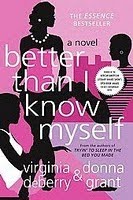
Writing credits: :Uptown (Simon & Schuster 2010), Tryin' to Sleep in the Bed You Made (St. Martin’s Press 1997), Far From the Tree (St. Martin’s Press 2001), Better Than I Know Myself (St. Martin’s Press 2004), Gotta Keep on Tryin’ (Simon & Schuster 2008), What Doesn't Kill You (Simon & Schuster 2009), & Exposures (as Marie Joyce-Warner/Popular Library 1990)


How frequently do you update your site? Not often enough!

Is your site designed for reader interaction? No, unfortunately it isn’t.

Posts of note, something in particular you want readers to check out: Virginia’s Open Letter to Oprah from last November

How does your partnership work? Do you both come up with the initial ideas, does one of you prefer to edit?

We both participate in all phases of writing. We brainstorm ideas, develop characters jointly and we both write and edit. People have often said the writing must be twice as fast since there are two of us. In reality, it probably takes twice as long, but the process of collaborating has been amazing.


Let's say I've just walked into a bookstore and I'm not sure which one of your books I should start with, which one would you recommend I read first and why?

That’s a really difficult question because we love all of our “children” equally. But let’s put it this way, Tryin’ to Sleep in the Bed You Made is the most popular—800,000 copies sold. Far From the Tree & What Doesn’t Kill You are our personal favs, but Better Than I Know Myself should also be on that list. If you read Tryin’ you should read Gotta Keep on Tryin’ and we think there’s an important message in Uptown. And if you want to know how we began—find a copy of Exposures—now available on Kindle & Nook!

What's next for DeBerry & Grant?

We’re not sure. We did 3 books in a little over 3 years and that meant 3 book tours and loads of other promotional events and activities so we’re a bit drained at the moment. We have a few ideas we’re fleshing out, but there won’t be a new novel from us in 2011—maybe by 2012.


Top 5 reads you’re looking forward to reading in 2011?

Since this is a brainstorming time, at the moment we are reading more source material—newspapers, magazines and walking around with our ears open to the stories there are to tell and the characters to tell them with.

100 words or less how would you describe your work?

We call our books, “Life Stories.” We look for the joy, sadness, heartache and triumph—the drama—in all of our lives. We write about the loves, losses, betrayals, and feuds we have all gone through in our families, with our friends, with our children, in our neighborhoods, and how we got over, around and through them. What happens when your loved one has “habits” that put the family in jeopardy? What do you find out about yourself and your friends when you lose your job and your way of life has to change? Those kinds of situations make great jumping off points for stories that we hope keep you turning the pages and wondering what happens next as well as thinking about what you would do in a character’s shoes.

100 words on less please share your thoughts on children and reading

Both of us have early childhood memories that involve reading. Virginia looked forward to weekly Friday afternoon library visits with her family where she was excited to choose her books for the week. Donna remembers sitting on the subway next to her Mom, each of them reading until they reached their stop. Making reading “cool” for children, starts a habit that allows young people to see worlds beyond the one they know. Strong reading skills allow them to excel in any area they choose. If you love to read, share that love with a child—introduce them to books, buy them a book, turn them on and encourage them to explore.


I've only read two of Virginia DeBerry & Donna Grant's books but I'm impressed at how long these two ladies have been published and I've very much enjoyed both of the books by them I have read. I liked Better Than I Know Myself but I really really liked Tryin' to Sleep in the Bed You Made. Now I just need to read Gotta Keep on Tryin' (along with the rest of their books!). Life Stories is a great, accurate description of their work and maybe they will write for kids and teens one day. I know they could help make reading cool ;)

Sunday, February 6, 2011

1st 2011 New Crayons (1)


It's our first new crayons of 2011! I'm going to try and keep track of how often we remember to post this meme. Hopefully we will remember each week :)

This is one of my favorite memes because I like hearing about other new books through everyone else's new crayons. Leave a link to your New Crayons post in the comments.


Doret

Big Machine by Victor LaValle

Ricky Rice is a middling hustler with a lingering junk habit, a bum knee, and a haunted mind. A survivor of a suicide cult, he scrapes by as a porter at a bus depot in Utica, New York, until one day a mysterious letter arrives, summoning him to enlist in a band of paranormal investigators comprised of former addicts and petty criminals, all of whom had at some point in their wasted lives heard what may have been the voice of God.

Infused with the wonder of a disquieting dream and laced with Victor LaValle’s fiendish comic sensibility, Big Machine is a mind-rattling mystery about doubt, faith, and the monsters we carry within.

Nathalie


Blessed by Cynthia Leitich Smith

Quincie P. Morris, teen restaurateuse and neophyte vampire, is in the fight of her life -- or undeath. Even as she adjusts to her new appetites, she must clear her best friend and true love, the hybrid werewolf Kieren, of murder charges; thwart the apocalyptic ambitions of Bradley Sanguini, the seductive vampire-chef who "blessed" her; and keep her dead parents’ restaurant up and running. She hires a more homespun chef and adds the preternaturally beautiful Zachary to her wait staff. But with hundreds of new vampires on the rise and Bradley off assuming the powers of Dracula Prime, Zachary soon reveals his true nature -- and a flaming sword -- and they hit the road to staunch the bloodshed before it’s too late. Even if they save the world, will there be time left to salvage Quincie’s soul?

Vasilly


Loose Woman by Sandra Cisneros

Reflecting a multiplicity of moods and images, this spirited collection of poetry celebrates the varied feminine aspects of love, from the erotic to the reflective.

Includes; After Everything
Amorcito Corazon
Arturito The Amazing Baby Olmec Who Is Mine By Way Of Water
Bay Poem From Berkeley
A Few Items To Consider
Full Moon And You're Not Here
The Heart Rounds Up The Usual Suspects
Heart, My Lovely Hobo


I Will Save You by Matt De La Pena

Kidd is running from his past and his future. No mom, no dad, and there’s nothing for him at the group home but therapy. He doesn’t belong at the beach where he works either, unless he finds a reason to stay.

Olivia is blond hair, blue eyes, rich dad. The prettiest girl in Cardiff. She’s hiding something from Kidd—but could they ever be together anyway?

Devon is mean, mysterious, and driven by a death wish. A best friend and worst enemy. He followed Kidd all the way to the beach and he’s not leaving until he teaches him a few lessons about life. And Olivia.


What did you buy/check out/trade this week?

Saturday, February 5, 2011

The Latte Rebellion

The Latte Rebellion by Sarah Jamila Stevenson 2011
Flux

Incredible Quote "'Because you're brown and they can't tell what you are.' Miranda picked at her cheese sandwich. 'You know, this is why the Latte Rebellion is a good thing. It'll open people's eyes. I mean, it's not like we just automatically identify with whichever group we look the most like.'
'Yeah.' I [Asha] nodded. 'Not to mention, ethnicity isn't anybody's whole anyway.'" pg. 158

Asha and Carey would love to have a best friend post-graduation trip to London. In order to raise the money, they decide to sell t-shirts that praise being mixed-race (or bicultural, what have you), they dub it the 'Latte Rebellion.' The girls expected to make some money, but they didn't expect people to actually get excited about their cause and turn it into a nationwide student social movement. Asha is both apprehensive and excited about this, but the Latte Rebellion is starting to mess with Asha's life. Her grades start slipping and she and Carey are fighting more and more. Before she can say 'latte', the peaceful Latte Rebellion turns violent and charges of terrorism are being thrown around. Does Asha believe in the Latte Rebellion enough to disprove the charges and fight to keep the group alive?

I don't usually mind slow starts in contemporary novels and this one was no exception. I liked getting the backstory and feeling completely immersed in Asha's world, I was satisfied with the little everyday details. I would warn you though that it takes awhile for the actual rebellion to start but stick with the book. I was a bit peeved at how some characters emerged for a chapter and then faded away, only to be called again a few chapters later. Thad and Bridget were both brought into the story but then they just disappear, Asha doesn't give them another thought. The biggest problem to me were the awkward transitions. Just when a chapter was starting to get really good, the story would stick to the present where Asha was in the middle of a school board hearing on her possible expulsion (her school viewed the Latte Rebellion as a terrorist group). Then just when the hearing started to get interesting, the story would change to the past events leading up to the hearing. Sometimes it seemed like the hearing was rushed, for example, I almost missed the decision the school board made because it was rushed over.

The most fascinating point to me was that Asha (half-Indian, a quarter Mexican and a quarter Irish) and Carey (half Chinese, half European) resent being forced to pick a side or idenitfy with what they are the most. I admit I'm guilty of thinking that way. I'm bicultural but I've definitely thought at times that if you if have more than three different cultural backgrounds, you can list them all but if you join a club, join them all or pick the one you identify most with. I get ticked when people do the whole '10% Irish, 10% Scottish, 15% Swedish, 2 % Cherokee' etc. Just pick your top two! However this book showed me that it's not that simple. I shared Asha, Carey and Thad's frustration at the lack of understanding/options for multicultural people. Just today I was registering for the SAT and I could only pick one race or chose to be 'other.' I ended up selecting Black but I was peeved that there wasn't a way for me to pick Black AND Latina. Real-life moment right there. I love that Asha starts The Latte Rebellion for purely selfish reasons. She wants to travel and needs the money so why not open a business that would appeal to certain people? That's what entrepreneurs do all the time and I thought it made the book even more fun. Asha starts off self-absorbed and a bit clueless but that makes the end result even better. I also really liked that the book showed why the term 'latte' is so appropriate for multicultural/multiracial people and that the school thought of the group as a terrorist movement. As if. Gotta love school bureaucracy.

*Please be warned the next paragraph will contain some lame coffee puns/jokes*

The Latte Rebellion is filled to the brim with coffee for thought ranging from how multicultural people are viewed in the world (should we have to choose what culture we identify the most with, how do we do that?), prejudice (Asha is called a 'towel head'. Wow), race and the college process (and it was nice to read a book about a senior who is stressing out about college because the process sounds SCARY people) and friendships drifting apart. We aren't meant to be best friends with the same people all our lives. It's nice if that happens but it's a rarity. I loved Miranda (fight the power!) and even though I didn't see much of him, I was a big fan of Thad. But then again, I'm a complete sucker for a guy who has a sense of humor and yet still wants to save the world (and manage to make enough to get by). The rough transitions and disappearing characters made this book a bit hard to swallow but there is a great balance between hilarity and seriousness that brings out the sweet flavor. The parents have a role and they aren't a complete caricature of overbearing-must-get-good-grades kind of parents. I sipped a vanilla latte while reading this book. It was my first latte and while I'm not a fan, I've been told to try chai lattes and a gingerbread latte. So we shall see if I become a latte fan. I applaud the author for keeping up the latte metaphor throughout the whole book, it could be a bit silly at times but who doesn't like a little silliness? A stirring novel. Oh and I love the cover, the symbol of the Latte Rebellion in the coffee (which is a coffee cup with steam rising to to from the shape of a hammer and sickle) along with the coffee rings, napkins and a cartoon drawing are perfect for the cover.

Disclosure: Booouuugghhhttt

PS Doret and I want T-shirts that say "Ask not what Brown can do for you. Ask what you can do for Brown." (this slogan could also apply to Brown University which makes it rock even more) <3
PPSS I'm buying a mug. You can also buy a shirt. $1 of each purchase goes to Reading is Fundamental. Social justice for the win. You're welcome

Thursday, February 3, 2011

Waking Up in the Land of Glitter - Kathy Cano-Murillo

Waking Up in the Land of Glitter - Kathy Cano- Murillo
Star's parents own La Pachanga, a trendy restaurant that showcases local Arizona artists. Everything is going well for Star, promoting the restaurant and their artist until one night of one too many drinks. One reckless act could cost Star everything including Theo.

To make amends with her parents Star agrees to participate in the national craft competition. This is humbling since Star has always looked down on crafting. Ofie Star's best friend loves crafting. No one has the heart to tell Ofie her crafts are awful. Chloe Chavez, aka Crafty Chloe Chavez, is a local news celebrity determined to be a larger then life personality like Rachel Ray or Martha Stewart. Crafty Chloe has a big secret that might keep this from happening.


The three women find themselves working together for the national craft competition on behalf of La Pachanga. Waking Up in the Land of Glitter was some serious fun. I smiled my way through it and laughed a lot. The characters were very likable and well drawn. I loved the men of interest. If you are looking for something, light, fun and funny, I highly recommend Waking Up in the Land of Glitter. It's a must read for anyone who has ever lived in Arizona or loves crafting. Or loves to laugh.

Kathy Cano- Murillo is the founder of CraftyChica.com I am looking forward to reading the authors next novel Miss Scarlet's School of Patternless Sewing which comes out in March

Tuesday, February 1, 2011

Women Writers of Color: Dolen Perkins-Valdez

Full Name - Dolen Perkins-Valdez
Website/Blog - Facebook, Dolen Perkins-Valdez
Genre: Fiction
Most recently published work - Wench
How frequently do you update your sites - Everyday
Are your sites designed for interaction - Yes

Can you tell us a little about Wench?
Wench is a historical novel centered around a resort in 1850s Ohio that became popular among slaveowners and their enslaved mistresses. I discovered Tawawa House while reading a biography of W.E.B. DuBois in 2004. When I got to the section that discussed the period of DuBois' life when he was a professor at Wilberforce University, it mentioned that Wilberforce was originally a resort hotel that must have been the most unusual hotel in America because it was popular among slaveowners and their enslaved mistresses. I was stunned by this historical footnote. At first, I did not know what I would do with it. I did not know if it would be a scholarly article or a short story. Eventually, when the archive failed to answer my questions, I decided to enter the story through the imaginative world of the novel.

One of the things I loved about Wench was the lyrical and visual language.
When did you find the time to refine it, between the research on the Tawawa house and creating Lizzie, Sweet, Reenie, Mawu?
I worked on Wench while working a full-time job and raising a family. I worked whenever I could--early in the morning or late at night. I started writing before I finished the research. I believe the imaginative story should lead the research, not the other way around. I looked for facts as I needed them.

Lizzie is the main character but the other three women are just as developed. Why Lizzie? And were you ever tempted to make Mawu the main character?
Lizzie is the main character because I was primarily interested in exploring the complex psychological dynamic between a slave and her master. Why didn't these slaves try to escape once they reached Ohio? I knew that Ohio was a hotbed of abolitionist activity. My first question was: Was it possible for a slaveowner to have a psychological hold over a slave strong enough to prevent that slave from escaping? The obvious answer to that question is yes. My second question, however, was more challenging. Was it possible for a slave to feel that she was in love with her master? This is the question I try to answer through the character of Lizzie. Mawu's reaction to her master is more straightforward: she despises him.

When three of the women rallied around the fourth after a loss, I got very choked up (yes I cried). At that moment their connection was very real and their differences meaningless.

Wench was a beautiful debut. Though for any novel especially a debut, readers must first be tempted by the cover. You got two great covers. Who is the artist behind the beautiful paperback edition? Which was released on Jan. 25.

I am not sure the name of the paperback cover artist. I really do love both covers. I have been very fortunate to have two amazing covers. I credit my publisher--Amistad/HarperCollins--for being so sensitive to the needs of this story. I am still grateful to them for agreeing to title the book Wench. I am so fortunate to have a publisher who gets it!!

Unfortunately many times novels by Black authors are considered for Black readers only. Female authors suffer from that same closed minded thinking. Thankfully this did not happen to Wench, it was very well received by a wide audience.

Why do you think that's so?

When I'm writing, I try not to think about audience. Thinking about audience while composing can sink a book. I do believe that our American history is very interconnected. Many readers seem to connect with the book because they feel it illustrates something important about our shared history.

If there anything else you'd like to share with Color Online?
I hope that you'll buy the paperback now rather than later, even if you don't plan to read it just yet. Those early sales numbers really count! And thanks for interviewing me.

Dolen, thank you so much. The author was kind enough to take the time to participate in WWOC while on tour.


If you've already read Wench consider buying a paperback edition for a gift or to donate to your local library.