Sunday, March 28, 2010

Sunday Salon: Health Care Reform

Last week the health care bill was passed. The debates brought out ugly remarks and some violent actions. Based on many of the remarks and opposition, I wonder if people really understands what the aim is. Do we what this bill is designed to do?

This week, I want to hear from you. All views welcome. Challenge the message and not the messenger. Our query: Do you think the bill moves us in the right direction? How should the GOP respond to the unacceptable behavior and remarks of some of its rank and file?Even if you opposed the bill, what accounts for the ugliness? If you disagree with the bill in general, what alternatives do you suggest? If you agree but would like to see differences, what are they? Has your family been affected by the absence of national health care? Should we have national health care? Tell us why or why not.

Immediately after the passage, a young woman at work said in disgust that she didn't want her tax dollars paying for Shaniqua and her thirteen babies. I asked her if she knew the bill was to address the working poor, individuals who are working and who can't afford health insurance. I asked her if she knew according to what was shared with us that the average premium would increase by $5oo over a benefit year. That's $42 a month. Less than she pays to get her nails done. This is a woman who for six years didn't have insurance because she waited tables and worked in a dentist office that didn't offer health insurance to employees.

Do most people know that it is the private industry, current health care insurers who will be charged with the task of designing the plans and managing the programs and not the government.

Have most Americans bought into rhetoric or have we read the bill and the proposed amendments?

New Crayons: What's New On Our Shelves

Remember when you were a kid and getting new crayons was a big deal? Getting new books holds the same kind of magic for some of us big kids. Every week on Sunday, I post what's new in our box. I think crayons is a pretty cool metaphor for multicultural lit. Every week we receive a booka t Color Online is a good week.

We received so many books that this week I'm blogging here and at Color Online about the wonderful donations we received. Check these out:


Glorious by Bernice L. McFadden. First on the list is for us big girls. If you don't know Bernice's work, check out Jill's review of Sugar at Rhapsody in Books.
The story progresses from Georgia to railroad tracks to Harlem and high-class apartments in New York. Through waves of powerful emotions, innocent errors and devastating betrayals, it all ends back where it began, in the small town of Waycross, Georgia. Years have passed and it’s now 1961. The world is changing, but hasn’t changed enough. And the reader learns where Easter’s wonderful mind and words have led her. It could be tragic, but instead it’s powerfully hopeful, beautiful and moving. And the quote from Zora Neale Hurston on the final page—“God balances the sheet in time”—rings gloriously true in the reader’s mind. Read Sheila's full review at Books Gather.

Most Loved in All The World by Tonya C. Hegamin. I recently read and loved, M+O 4EVR. Looking forward to this and A Place Where Hurricanes Happen by Renee Watson and illustrated by Shadra Strickland. Shadra illustrated Bird by Zetta Elliott.


She Loved Baseball by Audrey Varnick, illustrated by Don Tate. Don is a quiet guy. Talented but he doesn't like the spotlight. Well today he's in it because it's because of him I had to write two NC posts to cover all the books we received this week. Thanks Don. Doret has a pretty comprehensive lineup on baseball. Do check it out.


Closing out with My Friend Maya Loves to Dance by Cheryl Willis Hudson, ilustrated by Eric Velasquez. Let's talk about longevity. Ms Hudson has enjoyed an impressive career. If you don't know her work, you should. Check out Maya. Personally, I have to order a hard copy of Bright Eyes, Brown Skin for my daughter's 25th birthday. She hasn't forgiven me for donating her first childhood copy. :-)

What did you get this week in the mail, at the book store or from the library? Drop us a link and your name will be entered in a random monthly drawing to win a book from our Prize Bucket.

Color Online Quiz: Literature and Women's Studies

Quiz #95
Answer the question and your name will be entered in a monthly drawing. Post your reply to the comment box. Must include your e-mail to be eligible to win. Winners choose their own book from our Prize Bucket.

Violence against women can end only when the culprits get punished. ~Mukhtaran Bibi

[She]was gang raped in an "honour" revenge issued by tribal council. She was expected to have committed suicide after this, but took the case to court instead. The perpetrators were charged and arrested, and later acquitted. Nonetheless, she started an organization to empower girls and women in Pakistan.

Thanks, Niranjana.

Thursday, March 25, 2010

Color Me Brown Links

Every week you will find Color Me Brown Links. We all have a story. This week's round up is fantastic (well, every week is) and I hope you'll check them out. If you read a review of book you think is slipping under the radar, drop me an email.

The Street of a Thousand Blossoms by Gail Tsukiyama at The Reading Life
Reading a review by Mel rivals reading a well-written novel. If you haven't been by The Reading Life, get ther.
It is the story of the lives of two orphaned brothers living on The Street of a Thousand Blossoms. We see their lives develop from the horrible days of World War II, through the seven years of the occupation of Japan by the Americans up to the beginning of Japan's period of great prosperity.


Bloodchild by Octavia E. Butler at Tia's Book Musings. I read a lot of Butler and my first experience with her work was Kindred. That book left me exhausted and wanting more of Butler. Her collection of short stories gave me more of her brilliance in snapshots. Tia sees her the collection differently and I find value in hearing others' perspectives.
It's an interesting collection of works: three traditional high science fiction stories, one story in the "real world," one story that falls in between, an autobiographical essay, and an essay on writing. I prefer books of short stories that are intended as a cohesive unit, so although some parts of Bloodchild were interesting, I felt less affected by the book as a whole.

The Blood of Flowers by Anita Amirrezvani at Arch Thinking. I like Lorin. I admire her work and her take on world issues. I like that we have things in common and there are other areas that I know nothing or little about that I can discover when I visit her blog.
Set in seventeenth century Persia, it is the story of a young village girl who, with her mother, is forced to move in with her uncle and cruel aunt in the capital, Isfahan, after her father dies.

Sugar by Bernice McFadden at Rhapsody in Books. I trust Jill's reviews. She has a real talent for sharing with readers the best of a book and identifying with evidence when a book doesn't work. She's clear and concise. Jill is the kind of reviewer who makes me consider reading books that I wouldn't have picked up on my own.
There is so much I recognized in this book: grief, fear of love, cruelty, dignity, pettiness, compassion, and all kinds of strength in women who didn’t even know they had it.

Tuesday, March 23, 2010

Paper Butterfly: A Mei Wang Mystery: PI in Contemporary China

Paper Butterfly: A Mei Wang Mystery
Diane Wei Liang
Simon & Schuster
May 2009
reviewer: Doret

This is the second Mei Wang mystery. 31, Mei Wang was a police officers on the raise. After being forced out Mei Wang sets up her own PI business in Beijing.

I love mysteries and I have a thing for private investigators. A female PI, is an added bonus. So, I was drawn to the first Mei Wang book, The Eye of Jade last year. I loved Mei Wang. She's strong and smart and refuses to let others tell her how to run her business. Many people think its scandalous and inapporiate that she has a male assistant from the country. I enjoyed Eye of Jade and there's obvious growth in Paper Butterfly. I love an author who is willing to give more with each book.

Mei Wang is hired by a record company to find a pop star before a big concert. As with Eye of Jade, Liang gives the reader a excellent look at China's political history. Mei Wang search forces her to remember what happened in Tiananmen Square ten years ago. She believes solving this case will help make amends for not taking a stand than.

Liang's writing is very smooth, she easily incorporates facts about China into the story. I loved that this series is set in contemporary China and not during WWII. Liang's is doing an excellent job of developing Mei Liang. Like any good P.I. she has some personal issue to deal with. Creating issues is not hard, the difficulty lies in getting readers to care; Liang does this with ease. I highly recommend the Mei Wang novels for anyone who enjoys PI mysteries or novels set in China.

Doret Interviews Derrick Barnes, author of the Ruby Booker Series

Community, we are featuring our first male author. Mr. Barnes is the author of the wonderful children's book series, Ruby Booker. Powers that be don't think Ruby is bringing in enough sales (maybe if there was serious promotion behind the books more readers would be buying and reading) so for those who don't know Ruby or Barnes, Doret took some time to chat with the author. Show some love, friends.

Hello Derrick. Please tell us a little about yourself?
I always answer this question the same way: I'm a husband, father, and children book author---in that order. My family means everything to me. Everything I do, I do it to make sure that they are taken care of, loved, safe, and prepared, in the case of my sons, to grow up to be strong, game changing, young men.

I wish we were talking about your upcoming YA novel, We Could Be Brothers. Next time. Now its all about Ruby Booker.

Who is Ruby Booker?
Ruby Marigold Booker is my fictional 8 and a half year old daughter. We have three boys and no daughter. Its funny, I always spend the first ten minutes of presentations answering questions on how that occurred. After failing to land a deal about three African American boys (the Booker boys), my agent suggested that I make the little sister the protagonist, and thats what I did. Within months we had landed a four book (plus an additional two) deal with Scholastic in 2007.

Imagine a fusion of the family from Spike Lee's Crooklyn, The Cosby Show, and Pippy Longstocking all rolled into one. That's Ruby and the Booker Boys. It's the life and times of a beautiful, talented, eccentric, and intelligent nine year old African American girl in a Brooklyn-esque city called BellowRock. Ruby navigates herself in a world where her three big brothers (the Booker Boys) are extremely popular. Each book is a hilarious, heartwarming, and positive tale about carving out your own identity and a tangible message of self, family, and community love.

Ruby has a great personality. Vanessa Brantley Newton's wonderful illustrations help showcase it. I can't help but love a girl who rocks a guitar bookbag.
Ruby has three older brothers. Younger siblings will easily relate to Ruby's struggles to not be lost amongst her brothers. Did you write Ruby through the eyes of a younger or older sibling?
I guess I wrote Ruby through the eyes of my nieces, daughters of a few of my very close friends, and really every little Black girl that I've ever known. Sure I subscribed to American Girl Magazine, started watching the girlie shows on Disney, but it really wasn't a stretch for me. The series is more so about the family, But I've been around Black women my whole life. I'm crazy about Black women. Love you all to death. Respect, care for, admire, and every single positive glowing adjective you can think of, is how I feel about Black women.

So as an artist, I just thought that if I don't create the type of characters that are not currently available for our little Black girls, than who will?

I really enjoy the interaction between Ruby and her brothers, as well as her parents. The Booker family plays a large roll in this series. How much time did you spend developing Ruby's family?
I really developed the brothers and the parents before I developed Ruby. I was a kid when the Cosby show was a huge hit on NBC and I remember how it made me feel to watch this educated, loving, strong Black family on Thursday nights and begin to feel as if it was really possible for me---a kid from a poor, single parent household to one day become a dad and a husband. The images that artist create are so powerful. I'm conscience of that, so I wanted to create almost a literary version of that Cosby family, for kids of all races to identify with.

What did you do with the first letter you got from a Ruby Booker fan?
I put it in a frame and put it on the fridge. It was a little girl from Rhode Island.

Who do you think loves the Ruby Booker books more, the kids or their parents?
Definitely the parents. I mean, the kids appreciate the candor and the sense of humor in the dialog, but I think the parents can't believe that finally, there is a family and a main character that exists that wasnt there when they were children.

When you tell people the Ruby Booker series is in trouble what has been the response?
There has been an overwhelmingly push to help out however they can. I created a Ruby fanpage on Facebook and within a twelve day span, we already have close to 600 fans! People have been buying books #3 (The Slumber Party Payback) and #4 (Ruby Flips For Attention) like crazy! I love it. The publisher informed me that the books are doing well in the schools, but need a boost in the stores/online in order for them to release the subsequent books. So far, if things keep going the way they are with the fan support, books #5 and beyond will see the light of day.

What can be done to help the Ruby Booker series?
A few things. Please, ask your readers, and every person that they know to 1) purchase books #3 and #4, either online or in a bookstore. The books may or may not be in the store. Please ask the person at the desk to order them. If you order from Amazon.com, please leave a review. 2) If you have a Facebook account, in the search field, just type in Ruby and the Booker Boys to find the fan page. Join the fan page and suggest it to your friends.

I need to boost the sales of those two books, but also show the publisher that there is definitely a demand for the series.

I need your help!

*Derrick Barnes
Ruby and the Booker Boys Facebook fanpage

Monday, March 22, 2010

Ai: Rest in Peace

October 21, 1947- March 19, 2010

Poet

My poems come from the unconscious – I'm irrevocably tied to the lives of all people, both in and out of time.

Dread (W. W. Norton & Co., 2003); Vice (1999), which won the National Book Award for Poetry; Greed (1993); Fate (1991); Sin (1986), which won an American Book Award from the Before Columbus Foundation; Killing Floor (1979), which was the 1978 Lamont Poetry Award of the Academy of American Poets; and Cruelty (1973).
Best American Poetry
Modern American Poetry

She must know the weight of a man's hand,
the bruises that are like the wounds of Christ. Her blood that is black at the heart
must flow until it is as red and pure as His. And she must be pregnant always
if not with child
then with the knowledge
that she is alive because of you. That you can take her life
more easily than she creates it,
That suffering is her inheritance from you
and through you, from Christ,
who walked on his mother's body
to be the King of Heaven. — “The Mother's Tale,” Sin (1986)

Sunday, March 21, 2010

The Sunday Salon: The Reading Life

Welcome back to Sunday Salon. I'm pretty excited about our current features on Neesha Meminger. Read her profile for our Women Writers of Color series and join the discussion of her book, Shine, Coconut Moon. This week's query relates to much of what Neesha has shared with us this week.

For today's query, I'm asking you one of my favorite questions I pose to writers for Women Writers of Color. Please one of the following topic:
100 words or less please share your thoughts on one of the following topics:
Reading life
Women of color writers
Children and reading
Reading and activism

I'll edit this post with my response later. Looking forward to hearing your views.

Saturday, March 20, 2010

Color Online Quiz: Literature and Women's Studies

Quiz #94
Answer the question and your name will be entered in a monthly drawing. Post your reply to the comment box. Must include your e-mail to be eligible to win. Winners choose their own book from our Prize Bucket.

In a few decades, the relationship between the environment, resources and conflict may seem almost as obvious as the connection we see today between human rights, democracy and peace. ~Wangari Maathai


The first woman in East and Central Africa to earn a doctorate degree. [She]obtained a degree in Biological Sciences from Mount St. Scholastica College in Atchison, Kansas (1964)

Friday, March 19, 2010

Color Online Book Discussion: Shine, Coconut Moon by Neesha Meminger

Welcome to Color Online's second group book read. Today we are pleased to feature, Shine, Coconut Moon by Neesha Meminger. If you didn't already check out her WWOC feature here.

Adromeda at wrung sponge has a great review so for those who don't know the story, here's a brief introduction:

First sentence: "There is a man wearing a turban ringing our doorbell. I walk slowly up the driveway and stop a safe, short distance from him as he rings again."

That opening hooked me right in. The story is set post 9/11 in New Jersey. A major theme of the book is the backlash in American culture against anyone who looks in any way like an Arab or Middle Eastern person who might be a terrorist. The main character is third generation Indian American, raised with little connection to her family's Indian culture.

Now, here are a few questions to get things started.

What was the initial or biggest appeal of this book for you?
What did you know about Indian culture prior to reading this book?

Do you have any personal, social or work-related relationships with South Asians?

3/20 More questions:

Why do you think Sharan's brother and parents didn't try to reunite with her for many years?

When Uncle Sandeep meets the MacFadden family for the first time, there is tension. Why do you think Molly denies this tension at first?

Do you think Sam would have had an identity crisis if she had grown up knowing her relatives? Do you think Sam would have had an identity crisis if the terrorist attacks on 9/11 hadn't occurred?

3/21 Questions

Did you read about or experience incidents like what happened to Uncle Sandeep in your community? What was it like in your community after 9/11?

More later. Refer to the original post for additional questions and please reference the questions with your responses.

Wednesday, March 17, 2010

Women Writers of Color: Neesha Meminger

Full name: Neesha D. Meminger

Birth date: October 17th

Location: Bronx, NY

Website/blog: Neesha Meminger.com and Cynical, Ornery, Sublime, Lush

Genre: YA; Fantasy and Contemporary

WiP or most recently published work:
Most recently published work-Shine, Coconut Moon (McElderry Books, 2009)
WIP--YA Fantasy
I also write other genres under a pen name.

Writing credits:
Much of my writing has been published in journals, newspapers, anthologies, quarterlies, and online magazines. If you do a search for my name you'll see plenty of earlier work pop up :).

How frequently do you update your site?
I would say every couple of months or so...? *Editors note: blog is updated weekly.

Is your site designed for reader interaction?
Readers are always invited to email me with questions, comments, thoughts, and opinions. On my "For Readers" page, I have some fun activities related to SHINE, COCONUT MOON including music, family portraits, and teen responses to interesting questions.

Post of note, something in particular you want readers to check out:
Many of my posts of note deal with race and representation in children's publishing. I am always interested in the ways race, gender, sexuality, and class representation intersect with popular culture and mass media. My undergraduate degree is in film and media, so that might explain it. I also want to point to Amy Bowllan's Writers Against Racism series that *everyone* should check out. But here is a sampling of posts (some on my blog, some not) about issues that matter to me:

My guest post on Justine Larbalestier's blog, Colleen Mondor's What A Girl Wants series on her blog, Chasing Ray. One that is particularly close to my heart is the "Mean Girls" post and The SHINE cover story.

On giving back when one uses another community's representation in their own interests and
Books I've cherished and Who Gets to Represent?

100 words or less how would you describe your work?
My work is (and will always be) about the lives of women of colour. That is what I know and it is what I am passionate about. I think if you write something to a trend, or try too hard to bend yourself to a market, it shows in the final product. So, I try to stick with topics that ignite something within. Topics that mean more to me than just telling a good story. Usually those topics include redefining the boundaries set for us as women and people of colour; social and economic justice; the equitable distribution of resources; basic human rights for all citizens, such as health care and the right to live free of fear and violence; envisioning the world in a new way; seeing new paradigms and new possibilities. Every single thing I write incorporates these sensibilities because they are an extension of who I am.

100 words on less please share your thoughts on writing and activism:
This is a bit of an extension of the previous answer. To me, writing and activism are inextricably linked. My writing--*all* of my creative expression--IS my activism. When I made films, they dealt with the same topics and issues as my writing. When I do anything creative, it is an expression of who I am as a whole. And, because part of who I am includes a passion for social change, that passion inevitably finds its way into my characters, my plotlines, the structure of my stories. I think, in part, this is what writing by any group (from the inside) is. It is the *lived* experience of a struggle for change and equality. Anyone can write a character. Anyone can infuse that character with universal emotions and slap a colour on that character. But adding the layer of struggle, the layer of not just passion, but a desperate need to see a new way of being--THAT is what makes any representation of the "other" layered and complex. And that doesn't mean ONLY depicting characters who are down in the dumps, whose lives exist solely within the context of violence and degradation. Anyone can put that together, too. But again--layering that experience with the hope, the unrelenting urge to soar beyond daily confines, to expand outside of the stifling conditions of racism, poverty, misogyny, and homophobia...THAT is where authentic representation comes in. If an author doesn't breathe her own LIVED experience into a character, that character remains dead on the page.


Thanks, Neesha. Looking forward to our book discussion on Friday.

Sunday, March 14, 2010

Sunday Salon: Reviewing POC Literature: Are Our Standards Equal?

It’s Sunday and that means query time. I want to talk about how critical we are when it comes to our own ethnic/racial/national group. This topic has come up a few times for me when talking about politics or world affairs. I want to ask you specifically about literature so today’s query is:

Do you judge writers of your own ethnicity, race or nationality differently? If you were black, would you give an AA writer a pass for some element you would judge differently if the writer wasn’t black? If your answer is ever yes, in what instance do you alter your standards and in what way? What about POC writers of a different group? Do you judge their work differently than you would your own group or white writers? If you are a white reader, do you feel pressured or uncomfortable holding POC writers to the same standards you do for any other book you’d read? Is there any fear of coming off too critical?

Now being politically correct is nice but is it always honest? Can we have a frank discussion about how we review and how we perceive other readers' reviews of books by POC writers? What question(s) did I miss? I didn’t want this to be too long but the issue is complex so I hope many of you will share your opinions.

I will tell you what I think later. At the moment, the kidlet is anxiously waiting for me to make breakfast.

New Crayons: What's New On Our Shelves

Remember when you were a kid and getting new crayons was a big deal? Getting new books holds the same kind of magic for some of us big kids. Every week on Sunday, I post what's new in our box. I think crayons is a pretty cool metaphor for multicultural lit. Every week we receive a book is a good week.

This week we have all children titles, all donations:

Scarlette Beane by Karen Wallace, illustrated by Jon Berkeley
When Scarlette is five she is given her own garden. After planting her seeds her fingers glow in the night. The next day her vegetables are so big the neighbors have to come with construction vehicles to harvest the crop, and everyone has to eat outside... See full reveiw at Maya Reads.


Cycle of Rice, Cycle of Life by Jan Reynolds
is a primer for teaching ecology and sustainability to elementary school children. But it is also an engaging photo documentary of Bali, the land and the social and spiritual interdependency of rice and the Balinese people. My 5-year-old thoroughly enjoyed our exploration of this book together. Jan Reynolds thoughtfully connects science and social studies with visual imagery that explains a rather complex system in a way children as young as five can understand. See full review at Bees Knees Reads.

Flower Girl Butterflies by Elizabeth Fitzgerald Howard, illustrated by Christiane Kromer
When I read this story to my four-year-old great-niece, Carolina, she asked so many questions about being a flower girl. Sarah is the little girl whose aunt asks her to be the flower girl in her wedding. You can see Sarah on the cover. Isn't she beautiful? But she is so scared about walking from way, way in back of the church to way, way down to the front. Full review at Amazon by Judy P.

What did you get this week from the library, bookstore or on trade?

Drop us a link to your crayon post and you'll be entered in a random drawing for a free book from our Prize Bucket.

Color Online Quiz: Literature and Women's Studies

Quiz #93
Answer the question and your name will be entered in a monthly drawing. Post your reply to the comment box. Must include your e-mail to be eligible to win. Winners choose their own book from our Prize Bucket.

She was born in Albuquerque, New Mexico. Her ancestry is part Laguna Pueblo Native American, Mexican and European American. Her first novel is one of the most often taught Native titles taught in colleges.

Leslie Marmon Silko. First novel was Ceremony.

Saturday, March 13, 2010

Women Writers of Color: Dorina Lazo Gilmore

Full name: Dorina Kailani Lazo Gilmore

Birth date: 05.01.1977

Hometown: Chicago, Illinois

Current location: Fresno, California

Website/Blog: www.health-full.blogspot.com, www.shens.com

Genre:
Children's picture book

WiP or most recently published work: Cora Cooks Pancit (Shen's Books)

Writing credits:
My most recent children's book is Cora Cooks Pancit (Shen's Books). My poem "City Jazz" was just published in the February 2010 issue of Cricket Magazine. I also have two other picture books, including Children of the San Joaquin Valley and A Stone in the Soup: A Hmong Girl's Journey to the United States (Poppy Lane Publishing). I was the editor and a contributing poet for the anthology, Mosaic Voices: A Spectrum of Central Valley Poets (Poppy Lane Publishing). I am a frequent blogger and freelance writer for various magazines. Before I became a mother, I worked in journalism and was published in The Fresno Bee, The Arizona Republic, The Chicago Tribune and other publications.

How frequently do you update your site?
I update my Health-full blog weekly. It's a place where my husband and I write about food, nutrition, exercise. I also share my original recipes on that blog.

Is your site designed for reader interaction?
Yes, we encourage comments, questions and feedback from our readers.

Post of note, something in particular you want readers to check out:
My husband and I are also involved in connecting resources with Haiti. We would love more people to know about our non-profit and to join us as we send relief to our dear Haitian friends since the January 2010 earthquake. www.christianfriendshipministries.org

100 words or less: How would you describe your work?
My writing is decidedly multicultural. I am fascinated by the nuances of culture as represented through music, food, stories and dance. I grew up in a multicultural family and I believe there is a need for today’s young reader to have more exposure to multicultural stories and books with multi-ethnic protagonists. My writing, in both poetry and prose, seeks to illuminate a new face and give voice to a different storyteller.

100 words or less: Please share your thoughts on children and reading.
Every day I sit down with my two daughters (and sometimes more children) to read. It's my favorite time of the day as we explore the world together through stories. My mother always read to me and recited poetry. She inspired me with her love for good books and the way she made the words come alive. Books are a place where children can actively learn to interpret the world and understand it. I believe it is imperative that we work together to produce and promote more multicultural books for children so they can find themselves in books.

Friday, March 12, 2010

Healing Book Giveaway: Win Stephanie R. Bird Titles

Community, thanks to Stephanie we have 1 copy of he Big Book of Soul: the Ultimate Guide to the African American Spirit: Legends & Lore, Music & Mysticism, Recipes and Rituals and 2 copies of Sticks, Stones, Roots and Bones: Hoodoo, Mojo and Conjuring with Herbs for a giveaway.

1 entry for leaving a comment with the title you want here.
+2 entries if you indicate you're willing to review the title.
+2 if you post a link on your blog or twitter.


You must include your e-mail address or send it to me in a e-mail. Put Bird Giveaway on the subject line. I'm no longer going to hunt for them.

Deadline is March 31st. Winners please check back here for announcement.

Wednesday, March 10, 2010

Women Writers of Color: Stephanie Rose Bird

Full name: Stephanie Rose Bird

Birth date: August 25th
Location: Oak Park, in the Chicago area

Website/blog: Stephanie Rose Bird, Authors Den: Stephanie Rose Bird

Genre: Alternative Spirituality/African American/Mind, Body and Spirit

WiP or most recently published work: The Big Book of Soul: the Ultimate Guide to the African American Spirit: Legends & Lore, Music & Mysticism, Recipes and Rituals (Hampton Roads, 2/5/2010)

Writing credits: A Healing Grove: African Tree Remedies and Rituals for Body and Spirit (Lawrence Hill Books, 2009), Light Bright and Damned Near White: Biracial and Triracial Culture in America (Greenwood Publishers, 2009), Four Seasons of Mojo: an Herbal Guide to Natural Living, (Llewellyn Worldwide, 2006) Sticks, Stones, Roots and Bones: Hoodoo, Mojo and Conjuring with Herbs, (Llewellyn, 2004). Published in The International Journal of Aromatherapy, Aromatherapy Today, The Beltane Papers, The Oracle and Sage Woman.

How frequently do you update your site? Frequently

Is your site designed for reader interaction? People can contact me through both websites and comment on my blog at authorsden.com. I also tweet at Twitter@stephanierosebi.com

100 words or less how would you describe your work?
The Big Book of Soul explores the phenomenon of soul and the rise of soulful practices in African diasporic cultures through the lens of an herbalist and practitioner of Earth-based Spirituality. "The Big Book of Soul" examines the major features of ancient African spiritual wisdom--a connection to nature, the power of prayer, self-determination, and respect for the past--to show how these beliefs and practices have been passed on and adapted from one generation to the next. My work is built around artful healing.

100 words on less please share your thoughts on writing and activism:
Out of necessity, over the years, my work has become increasingly activist in terms of supporting sustainability, green living and environmentalism within my genre of earth-based spirituality directed at an African American audience. I also find that I have been championing the role of African Americans and Africans of the diaspora in the area of environmentalism because our place within that movement has been somewhat ignored by the mainstream media.

Ashe, ashe!

Monday, March 8, 2010

An Interview with M. LaVora Perry

*This interview was originally published at Multiculturalism Rocks.
Today I’m proud and excited to interview author and publisher M. LaVora Perry. LaVora, thank you for joining us today!

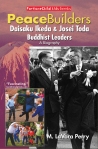
I recently reviewed your book PEACEBUILDERS, in which you share some aspects of the Japanese culture such as food and language. Have you spent time in Asia and abroad in general?

MLP: Thanks so much for interviewing me, Nathalie!

To answer your question, I want to travel to Japan and all over the world. But, no, I haven’t been to Japan yet. I became more familiar with Japanese culture than I might have otherwise when I started practicing Buddhism. The form of Buddhism I practice, Nichiren, began in Japan. The people who brought this teaching to the U.S. and spread it worldwide were Japanese. Many of the practitioners I met when I started my practice were Japanese. So it was only natural that I became familiar with things Japanese. For PEACEBUILDERS, I researched traditional dishes, like oden, a winter stew, to make the book authentically reflect Japanese culture.

I am curious to know how you made the transition from Taneesha’s books to PEACEBUILDERS…

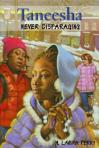
Long before I wrote Taneesha Never Disparaging, or its predecessor, Taneesha’s Treasures of the Heart, I knew I’d write PEACEBUILDERS. This may sound weird, but I actually dreamed of writing this book in 1976 when I was 14 years-old—years before I’d ever heard of Daisaku Ikeda or knew anything about Buddhism.

In recent years, I pitched the idea of PEACEBUILDERS to publishers, including Buddhist publishers. I pitched it to agents, too. But, I think because Daisaku Ikeda is not as well known in the U.S. as he is in Asia, agents told me they saw no market for it. It could also be that my pitched letter sucked.

Even so, I might have found a publisher for it anyway. But I made the mistake many writers make–I submitted the manuscript before it was in top shape. So every publisher I submitted to rejected it.

By the time I’d gone through the critique and revision processes to the degree the story needed to be fit for publication, I realized that even if a publisher picked it up, due to Daisaku Ikeda’s advanced age, I could not guarantee that the book would be published in time for him to be able to know children around the world were being inspired by his story and that of his beloved teacher, Josei Toda.

I heard the clock of age loudly bonging—my age (48) and Daisaku Ikeda’s age (82). So I decided to publish PEACEBUILDERS through my company, Forest Hill Publishing, LLC. I also decided to release it on the date that Josei Toda passed the task of building world peace to Daisaku Ikeda and all young people in 1958—March 16, which Soka Gakka International (SGI) Nichiren Buddhists celebrate as “World Peace Day.”

Do you intend PEACEBUILDERS to become a series, or is it a stand-alone book?

I’m working on companion books to PEACEBUILDERS.

LaVora, we read in your biography that you have been practicing Buddhism since 1987. If I may ask, how did you embark on that spiritual journey?

In 1986, I was living New York. A year earlier, I’d moved there from my hometown of Cleveland, Ohio to become an actress after I was kicked out of Ithaca College’s theatre arts program because I’d been too depressed to attend classes.

Sometime after midnight on February 16, 1986, I was walking the streets of Forte Greene Brooklyn with no where to go. The guy I lived with was in our apartment with his “real “girlfriend” who had come down from upstate and discovered, that night, that her boyfriend was mine, too.

The two of them were in the apartment, where I’d heard my “boyfriend” say about me: “I don’t love her!,” and about his other girlfriend: “I love YOU!” After that, I walked out into the night, feeling totally alone and demoralized.

As I walked down the sidewalk, three smiling woman approached me and invited me to a Buddhist meeting. They looked so happy—just the opposite of how I felt. I went to the meeting with them and joined the SGI-USA Buddhist organization that night.

But I didn’t start practicing Buddhism until the fall of 1987 when a friend convinced me to do the practice—chant the words Nam-myoho-renge-kyo while imagining my desires. The day I did this, I landed my first performing job since arriving in New York two years earlier. For the first time ever, I felt I could change reality. After that, I was in. I’ve been chanting ever since.

How does your spiritual life influence your work as a writer and a publisher?

My spiritual life is my life. If I’m not taking care of my spiritual business, everything goes haywire.

As an actress, you starred in plays and movies. Does such an experience give you a particular approach or strategy in writing for children? And does that come into play in the workshops that you lead?

“Starred in movies” sounds way bigger than anything I’ve ever done. But, yes, my acting background definitely impacts my writing.

When I conduct school workshops, I incorporate drama into reading my stories. And when I’m writing, I read out loud to hear how the words sound—to hear if dialogue sounds the way my characters talk, if the narrative flows, if the sentence structure works. If I have a character performing a certain task, I might act it out to see if it is physically possible to carry out the task the way I’ve described it being done, and to see what words most precisely convey what the character is doing.

You started Forest Hill Publishing in 2004. You have successfully self-published, and you even published other authors such journalist Beverly Robinson and Chicken Soup for the Soul author Nancy Gilliam.

I personally judge a book by its content, not its press. Despite success stories like yours or Zetta Elliot whose self-published book recently got picked up for publication by Amazon, what would you attribute the prejudice suffered by self-published authors?

Again, “success story” sounds bigger than what I’ve achieved—but I plan to live up to it. In any case, I am deeply grateful that you judge a book on its merits because I respect your opinion. I can’t wait to read Zetta’s novel, A Wish After Midnight. People like you and Ari over at the Reading in Color blog have totally whetted my appetite for it.

That said, I think the responsibility for eliminating the prejudice against self-published books ultimately lies with the authors of these books, me included. While industry bias exists, and prejudice exists, the cold hard fact is that too many self-published books are poorly written and riddled with typos.

I once heard Newbery award-winning author Linda Sue Park say that instead of saying “My manuscript is just as good as other books I’ve read,” before we writers start submitting a manuscript to publishers, we should be able to say, “My manuscript is as good as the best books I’ve ever read.”I think we self-publishers need to apply the same high standard to our books.

I’d drive myself crazy trying to take a purely external approach to breaking down the mountain of prejudice that is very real in this world and that functions to keep people like me down. I think one of the most effective ways for me to fight this battle is to become so good at what I do that people can’t help but want want what I produce. I’m okay with the fact that I’m not there yet. I won’t stop until I get there.

What was the most challenging experience when you created Forest Hill Publishing, LLC, and How does one start a publishing company?

Money has been my biggest obstacle as a publisher. With sufficient cash, hiring editorial, design, and marketing staff would be a snap.

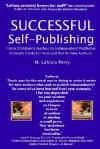
Beyond that, I’d like to point readers to my book Successful Self-Publishing—From Children’s Author to Independent Publisher, A Simple Guide for New and Not So New Authors. It predates blogging, FaceBook, and Twitter; so it needs updating and I have no idea when I’ll do that. But even so, it lists effective strategies I used to start Forest Hill Publishing on a virtually non-existent budget and sell thousands of books as a result. These strategies are just as relevant now as when first Successful Self-Publishing launched.

What has been your most rewarding experience?

The most rewarding thing for me as a writer is when a reader says “I like your book.” Nothing beats that kind of genuine affirmation.

Does Forest Publishing intend to publish other writers? If yes, what are you currently looking for?

Right now, Forest Hill will consider all types of projects. Regardless of the project, we require our authors to assume most of the responsibility for selling their books.

What are the submission guidelines?

Forest Hill Publishing’s guidelines are posted on our “About Us” page.

Last but not least: the success and growing recognition you’ve earned does not come without an efficient marketing strategy! *Hat down* Any tips for the writer getting ready to promote his or her first book?

Read Successful Self-Publishing and check out the marketing and promotion resources I list on my personal website. Set up your own website and blog. Use FaceBook, Twitter, and any other media that’s relevant to people in your target audience and widely used by them. Recognize that bookstores are typically not the best places to sell books. Keep your eyes open for non-traditional bookselling opportunities, andcreate such opportunities.

Are there any questions you wished I had asked?

I’ve launched a PEACEBUILDERS essay contest for grades K – 12. The deadline to enter is March 16. Details are on my BookCover kjidlit blogI got the idea for the contest from Olugbemisola Rhuday-Perkovich ran for her debut novel, 8th Grade Super Zero .

A few of the the writers groups and associations listed on my website really help me develop as a writer and learn about the industry—the Society of Children’s Book Writers and Illustrators, the Highlights Foundation writers workshop in Chautauqua New York, which offers a scholarship, and most recently, the relatively new, but dynamic, Association of Children’s Authors and Illustrators of Color.

Also, March 19-21, the newly formed Multicultural Literature Advocacy Group holds its first conference in Mobile, Alabama. There’s still time to register. I hope many writers of color, and those who support the cause of diversity in publishing, will attend. I’ll be presenting a publishing workshop.

Lastly, I once made the mistake of ordering a few hundred copies of Successful Self-Publishing for an event at which I sold about five books. I’m now selling them at a big discount. Details are on my Fear-It’s So Yesterday, blog.

LaVora, thank you again for your time and for sharing your experience. I look forward to Forest Hill Publishing’s upcoming projects!

Again, thank you, Nathalie! You have a tremendously giving and expansive spirit. I’m really touched that you asked me for this interview.

For more information on LaVora Perry, visit
o LaVora’s Website
o Her blog: Fear-It’s So Yesterday
o Forest Hill Publishing, LLC
o Facebook
o Twitter

LaVora’s interviews
o by Amy Bowllan for Writers Against Racism, at the School Library Journal
o To learn what the “M” stands for in M. LaVora Perry and more, read the following interview she gave at the Brown Bookshelf.
o Multiculturalism Rocks! review of PEACEBUILDERS.

Books by LaVora Perry:

Sunday, March 7, 2010

The Sunday Salon: Female Characters in Literature

Ana has a great Sunday Salon post today about women characters in literature. And I’d like to carry on the same conversation she asks. How would you answer today’s query:

There is quite a bit of debate about a woman’s strength versus weakness. How do you define a strong or weak woman character? Have you ever unconsciously or consciously taken a specific character and read her as a representation of all women. Do you think female archetypes accurately reflect the shortcomings and strengths of our gender? Ana asks, “Do you find that you tend to be more critical of female characters than of male ones? What are some examples of heroines or female villains that you think were well-written? What about ones that you felt were not?”

I read predominantly women's literature or books with female leads and that is because I am actively seeking out our voice and role in the larger society.

I am by nature a critical reader; I am always asking questions like the ones Ana poses. Am I doing harm? I don't think so. If I am, then at some point because of my circle of peers, I expect I'll be corrected or challenged when I get it wrong. Getting it wrong isn't a bad thing; it's an opportunity to get it right.

I don't like weak female characters but flawed characters do not bother me. If we are going to examine our humanness then I expect the character to have flaws.

I don't have a problem with a female character having weakness when it is examined against strengths. What I do object to is the idea of women needing men to be whole, to function, to be fully woman. That is an entirely different message from a woman who finds love fulfilling or a woman who had not recognized her own strengths and later does.

I think the literary critics just as historians in general have failed women. However, the recorder documents the world as he sees it and experiences it and by large, the world has been seen through men's eyes. I think men can get it right and I think women have responsibility to speak up when men or women get it wrong.

How you define wrong is subjective, it is fluid and it requires a constructive and open dialog.

I read a quote once that said paraphrased, you might not know how to build up your self-esteem but you know how to stop lowering it.

I think with women characters, you know what is wrong for you. I think we need to be actively engaged in defining what is right.

New Crayons: What's New On Our Shelves

Remember when you were a kid and getting new crayons was a big deal? Getting new books holds the same kind of magic for some of us big kids. Every week on Sunday, I post what's new in our box. I think crayons is a pretty cool metaphor for multicultural lit. Every week we receive a book is a good week.


This week we received:

Arc & Hue by Tara Betts. Get your poetry own. Tara is a gifted writer, teacher and mentor. Visit her on Facebook and do pick up her collection.


Saving Maddie by Varian Johnson. I really enjoyed My Life As A Rhombus. Mr. Johnson is back with the tale about preacher kids. Check out Edi's review at Crazy Quilts.

Vasilly- Miles From Nowhere by Nami Mun and The Book of Night Women by Marlon James. These are going to be part of the upcoming Tournament of Books. The list of books in the tournament are at the end of the linked page. There's some diversity in the tournament and books by Kamila Shasie and Victor LaValle are also taking part.


What did you get this week from the library, bookstore or on trade?

Drop us a link to your crayon post and you'll be entered in a random drawing for a free book from our Prize Bucket.


Color Online Quiz: Celebrating Women's History Month

Quiz #92
Answer the question and your name will be entered in a monthly drawing. Post your reply to the comment box. Must include your e-mail to be eligible to win. Winners choose their own book from our Prize Bucket.

1908. She was an Egyptian community activist. She founded the first charity run by Muslim women in Egypt dedicated to the welfare of children called "Jam'iyyat al-Safaqa bi'laAtfal" ("Society of Compassion for Children")

Who was she?